
BUSINESS
L Catterton Installs a Kraft Heinz Operator at Kettle Cuisine
L Catterton named Kraft Heinz veteran Peter Hall as Kettle Cuisine CEO to run deals after the Freshly meal-kit collapse.

Kettle Cuisine named former Kraft Heinz executive Peter Hall as chief executive on August 26, 2026, succeeding Liam McClennon after 11 years. Hall last ran Kraft Heinz’s largest North American Elevation unit, a book of about $7 billion covering Heinz, Kraft, and Philadelphia across retail and Away From Home and 12 manufacturing facilities.
The person introducing him is not a board of chefs. It is Nik Thukral, president of L Catterton, the private-equity firm that holds a majority stake and wants partnerships and acquisitions in the next phase of growth.
L Catterton Hands Kettle Cuisine to a Kraft Heinz Operator
Kettle Cuisine, the Lynn, Massachusetts maker of refrigerated and frozen soups, broths, sauces, sides, and entrees, appointed Peter Hall as chief executive and said he would build on customer partnerships while looking for deals. Hall brings more than 12 years at Kraft Heinz, where he worked retail and foodservice in more than one market.
Thukral called him the right leader for that next phase and pointed to longstanding customer ties and culinary manufacturing skill already inside the company. Hall’s own first remarks sounded less like a soup founder and more like a branded-foods operator who intends to run on customer data.
Kettle Cuisine has built an impressive business, with deep customer relationships, distinctive culinary and manufacturing capabilities, and a talented team. I’m excited to build on those strengths and further enhance Kettle’s position as the go-to fresh prepared foods partner in the United States. Our ambition is to be consumer-led and insight-driven, anticipating what our customers and their consumers need and delivering for them with consistency, creativity, and speed.
Peter Hall, Chief Executive Officer, Kettle Cuisine statement, August 26, 2026
That language is doing a specific job. A PE-backed manufacturer that sells into grocery and foodservice does not need a celebrity chef. It needs someone who has already sat on both sides of the cooler, retail and Away From Home, and who can fold a bought plant into an existing network without losing the accounts that pay for the kettles.
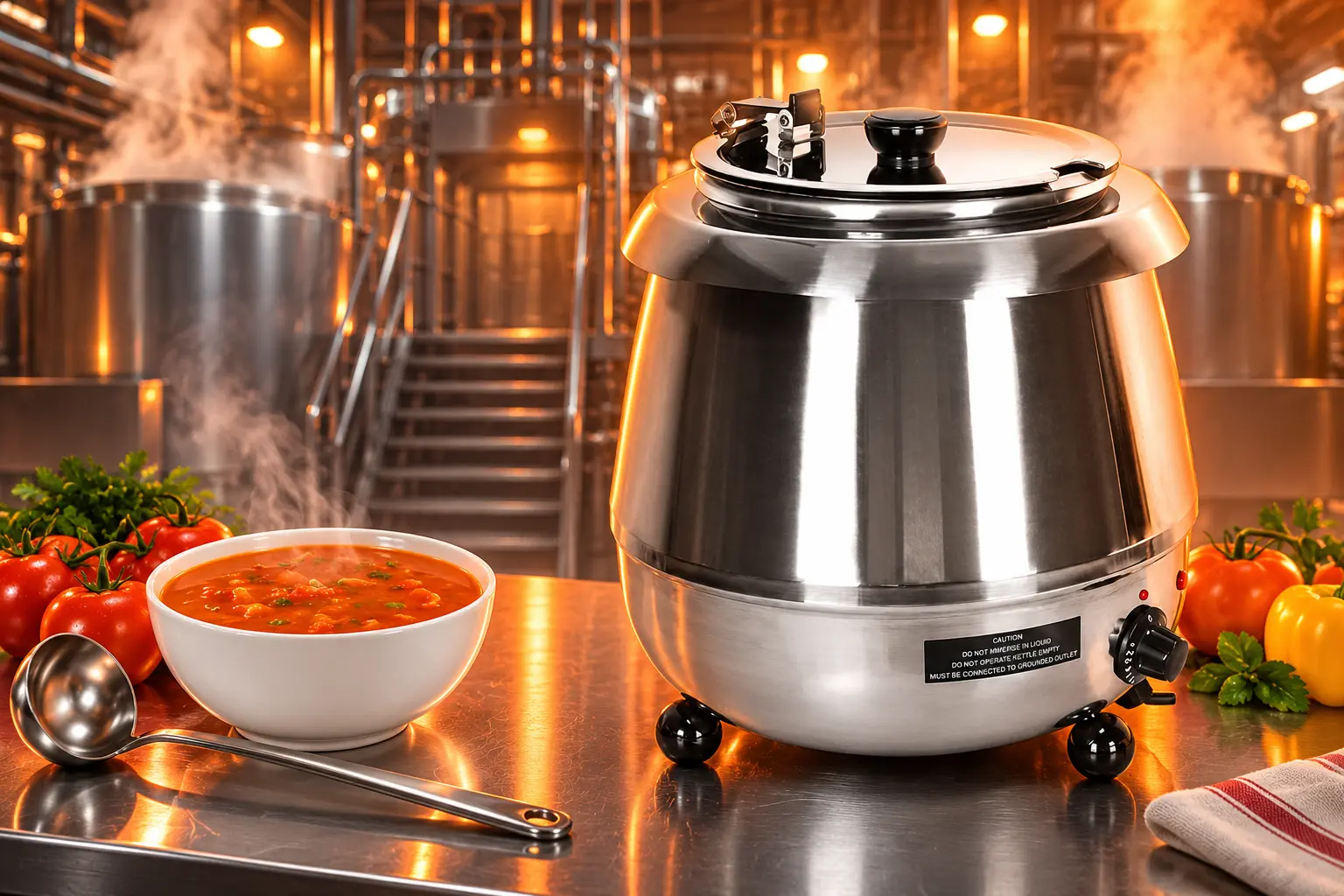
The Meal Kit That Died Inside Kettle Cuisine
Hall inherits a company that is still described as a scratch soup house, and also the corporate leftover of Nestlé’s bet on American meal delivery. In 2017 Nestlé USA acquired a minority interest in Freshly, the New York prepared-meal service. In October 2020 it bought the rest in a deal valued at $950 million, with up to $550 million more in earnouts if the brand hit later targets.
On November 29, 2022, Nestlé put Freshly into a joint venture with L Catterton’s Kettle Cuisine. L Catterton took 59% and the right to run the combined business. Nestlé kept 41%. Then-chief executive Mark Schneider, speaking at the group’s investor seminar that day, grouped Freshly with another costly 2020 purchase and said they were “two transactions that did not meet our objectives fully.” He added, “The environment of 2020 fooled us,” and described higher customer-acquisition costs, weaker retention, and a thinner outlook once home delivery cooled.
The consumer service did not survive the merger as a going concern. Freshly told customers they could keep ordering through January 17, 2023, with a last ship date of January 21, 2023. Its site said it was “with a heavy heart” that the meal delivery service would cease operations. A combined-company spokesperson said the plan was to pivot Freshly toward retail prepared meals. That retail brand did not become the public face of Kettle Cuisine, and trade copy now calls Freshly defunct.
THE FRESHLY CLOCK
- 2017: Nestlé USA buys a minority stake in Freshly and puts its US food division president on the board.
- October 2020: Nestlé buys the remainder for $950 million, plus up to $550 million in earnouts.
- November 29, 2022: Freshly is folded into a Kettle Cuisine joint venture; L Catterton owns 59% and Nestlé 41%.
- December 2022: Freshly files kitchen and warehouse closures, including 454 jobs at the Savage, Maryland distribution center.
- January 21, 2023: Last home deliveries go out; the direct-to-consumer service shuts.
The joint venture was sold as two freshness businesses finding each other. What L Catterton actually kept, once the subscription box stopped, was Kettle’s wholesale kitchens plus a dead D2C brand and a Nestlé minority slice. McClennon, who had already been CEO for seven years when that structure landed, steered the company through the unwind. Hall is the first chief executive hired after it.
McClennon Spent 11 Years Buying Plants
McClennon became CEO in August 2015, the same year Kainos Capital took Kettle Cuisine, and he arrived from the top job at Greencore USA. The company itself still tells a 1986 origin story: a door-to-door soup run for restaurants that would not cook stock in house. Under McClennon the work was to turn that regional kettle shop into a national refrigerated and frozen platform.
Kainos put more than $300 million into buying complementary businesses, expanding cook capacity, adding high-speed fill lines, and building from-scratch bone broth. In August 2016 Kettle bought Del Monaco Foods, a Morgan Hill, California contract maker of soups and sauces, and called itself the first coast-to-coast fresh soup supplier. On April 8, 2019, it acquired Harry’s Fresh Foods in Portland, a private-label manufacturer of soups, sauces, and specialty items, and repeated the coast-to-coast claim.
Deal records show L Catterton then bought Kettle Cuisine from Kainos Capital and CPP Investments on June 1, 2022, a secondary buyout that put the Connecticut consumer PE firm in control months before the Freshly paper was signed. The company now says it runs four production facilities in Massachusetts, Wisconsin, California, and Washington and sells to retailers, clubs, restaurants, foodservice, and national brands.
KETTLE CUISINE OWNERSHIP AND ADD-ONS
| Date | Event | What changed |
|---|---|---|
| 1986 | Company founded | Scratch soup for restaurants, Massachusetts roots |
| August 2015 | Kainos era and McClennon CEO | Buy-and-build starts; more than $300 million later goes into plants and add-ons |
| August 2016 | Del Monaco Foods | California soup and sauce capacity; coast-to-coast pitch |
| April 8, 2019 | Harry’s Fresh Foods | Portland custom manufacturing added to the network |
| June 1, 2022 | L Catterton buyout | Secondary deal from Kainos Capital and CPP Investments |
| November 29, 2022 | Nestlé-Freshly joint venture | L Catterton 59%, Nestlé 41%, Freshly folded in |
Soup still sets the calendar in those kitchens in a way ketchup does not. West-coast output has long jumped when cold weather hits, which is a seasonal factory problem, not a brand-campaign problem. Hall is walking into that rhythm with a brief written by the owner, not by the kettles.
What Peter Hall Ran at Kraft Heinz
The scale gap is the hire. Kettle puts traditional culinary methods next to industrial cook capacity in four US plants. Hall’s last job was the other order of magnitude.
HALL’S LAST UNIT VERSUS KETTLE CUISINE
- The P&L: Hall’s Kraft Heinz Elevation unit did about $7 billion of sales; Kettle does not publish a comparable figure in the appointment statement.
- The plants: He oversaw 12 manufacturing facilities, three times Kettle’s four.
- The brands: Heinz, Kraft, and Philadelphia sat in that unit, spanning grocery and Away From Home.
- The extra pieces: The Elevation portfolio he described internally also included Kraft Heinz Ingredients and Primal Kitchen.
He did not start in Chicago. More than a decade before the Elevation job, he walked into Hayes Park in London to sell Heinz beans, ketchup, and soup to UK retailers, then moved with the company through Canada and into US foodservice. The Elevation post was the largest unit in that system, which is why L Catterton can present him as a consumer operator rather than a factory technician.
Kraft Heinz, while he was there, was itself being carved into platforms with names like Taste Elevation. That is a branded-condiment machine with national advertising and slotting fights. Kettle’s customers are chefs, grocers, and foodservice operators who need a clean-label soup that shows up on time. The transferrable skill is running a multi-plant P&L across retail and restaurants, not matching a ketchup ad to a bone-broth kettle.
The Brief Includes Partnerships and Acquisitions
Kettle’s statement is blunt about Hall’s to-do list. He is to deepen customer partnerships and execution, then expand reach “both organically and through selective strategic partnerships and acquisitions.” Thukral’s quote puts the same thought in PE English: capitalize on the position already built.
Selective, in this company’s history, has meant buying other kitchens that already cook for someone else’s label. That is a different motion from launching a meal-kit brand, which is the motion that just failed inside the same holding company.
WHAT SELECTIVE HAS MEANT HERE
- Buy a cookhouse: Del Monaco and Harry’s were custom manufacturers with plants and accounts, not consumer websites.
- Sell coast to coast: Each add-on was used to tell national retail and chain customers that soup no longer had to move across the country from one kettle.
- Keep the culinary claim: McClennon, on the Harry’s deal, said Kettle would stay in artisan, clean-label food while taking the efficiencies of scale production.
- Avoid another D2C stack: The Freshly chapter closed the door on subscription delivery; Hall’s public brief does not reopen it.
The appointment itself barely registered outside food-trade wires, which is how portfolio CEO swaps usually travel. There is no consumer brand moment to argue about, and no public fight over recipes. The argument is inside the cap table: after one failed adjacency, the majority owner has hired a man whose last map had 12 plants and told him to look for more.
Nestlé Took 41 Percent and Stepped Back
Nestlé is still the quiet third name in this story. It paid $950 million, plus a contingent $550 million it later fought over with former Freshly investors, then accepted a 41% minority in a vehicle L Catterton would manage. Schneider’s public hope at the time was that Kettle’s hotel and restaurant relationships, in a labor-short foodservice market, might recover some of what the D2C model had lost.
Kettle’s 2026 announcement does not mention Nestlé. It names L Catterton as an investor and lets Thukral talk. That is how a majority owner sounds when the operating company is being pointed at grocery and foodservice again, and when the meal-kit logo is no longer on the letterhead.
Hall now has four US plants and a written brief to add capability by partnership and acquisition. The owner that brief answers to is L Catterton, which already ran Kettle through one merger that did not leave a living consumer brand.
Frequently Asked Questions
Who Is Peter Hall, the New Kettle Cuisine CEO?
He is a Kraft Heinz lifer who started at Hayes Park in London selling Heinz beans, ketchup, and soup, then moved through Canada and the US Away From Home channel before becoming president of the North American Elevation unit, a post that also covered Kraft Heinz Ingredients and Primal Kitchen.
Who Led Kettle Cuisine Before Peter Hall?
Liam McClennon became CEO in August 2015 after serving as CEO of Greencore USA, a prepared-foods business, and remained through both the Kainos Capital years and the L Catterton buyout before retiring after 11 years.
Who Owned Kettle Cuisine Before L Catterton?
Kainos Capital owned the company, with CPP Investments as a co-seller, and they completed a secondary buyout to L Catterton Partners on June 1, 2022, before the Nestlé-Freshly joint venture was announced later that year.
When Did Freshly Stop Delivering Meals to Homes?
Freshly accepted customer orders through January 17, 2023, and made its last shipments on January 21, 2023, after which its website said the meal delivery service was ceasing operations.
How Did Nestlé First Get Involved With Freshly?
Nestlé USA took a 16% minority stake in 2017 as lead investor in a new funding round, joined Freshly’s board through Food Division president Jeff Hamilton, and used the money in part to fund an East Coast kitchen as Freshly prepared to go nationwide, then bought the rest of the company in 2020.
Hall’s first public assignment is the one Thukral already named in the release. Grow the four-plant company by partnerships and acquisitions, with L Catterton as the majority owner on the other side of that plan.

Nvidia RTX Spark Laptops Make Local AI a RAM Bill

A Drone Strike in Bulgaria’s EEZ Leaves NATO Idle

Sharma Unwinds Game Pass After Xbox Hit Freefall

Shawn Layden Says Sony’s Disc Cut Hits the Faithful 20 Percent

The EU Cabin Bag Law Frees Only a Personal Item

Thameslink Will Pad 60,000 Ironing-Board Seats From 2027

How Tall Was Adolf Hitler Really? Debunking the Myth of his Height

Micron Sells the Memory Shortage as Five-Year Contracts

Royal Caribbean Sends Los Angeles Ships to Singapore and Brisbane

U.S. Forces Clear Hormuz Mines, Then Hit Minelayers Again
-
 NEWS2 months ago
Thameslink Will Pad 60,000 Ironing-Board Seats From 2027
-
 SCIENCE3 years ago
How Tall Was Adolf Hitler Really? Debunking the Myth of his Height
-
 NEWS2 months ago
Micron Sells the Memory Shortage as Five-Year Contracts
-
 BUSINESS2 months ago
U.S. Forces Clear Hormuz Mines, Then Hit Minelayers Again
-
 NEWS2 months ago
Royal Caribbean Sends Los Angeles Ships to Singapore and Brisbane
-
 NEWS2 months ago
Twenty Controllers Closed Norwich Airport for a Bank Holiday
-

 BUSINESS2 months ago
Sweetmore Bakeries Buys Fantasy Baking for Bar Work
-
 BUSINESS2 months ago
Burger King Rebuilds Chicken Nuggets After Calling Them Rubbery