
BUSINESS
PayPal Falls Through the $60.50 Bid It Rejected
PayPal stock closed below the $60.50 offer its board called too cheap after Stripe and Advent walked, while Affirm’s record-profit spike faded by the bell.

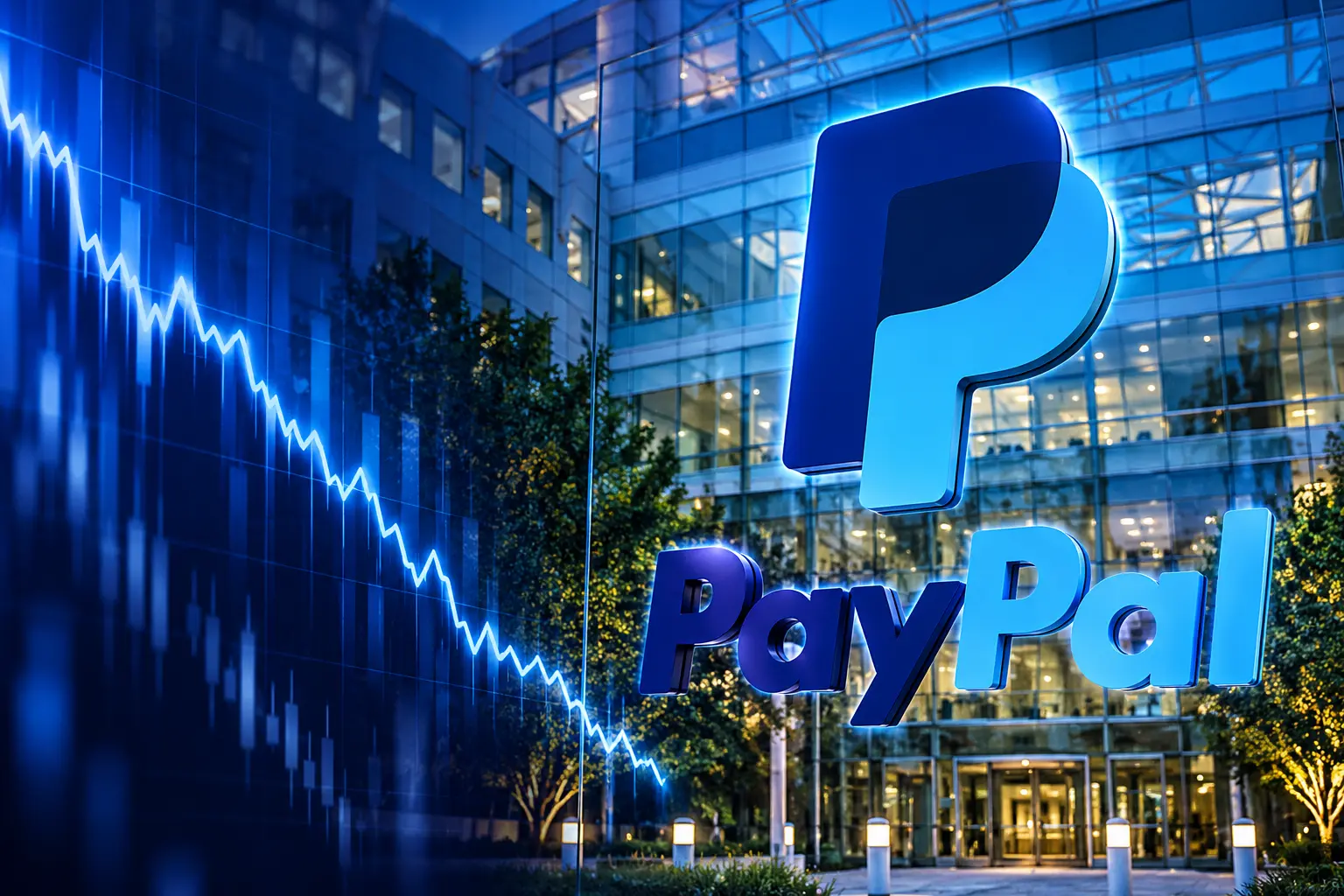
PayPal stock closed at $53.66 on August 28, $6.84 below the $60.50 bid its board had called too low, after Stripe and Advent walked away. The group of buyout firm Advent International and payments company Stripe had offered about $53 billion in July, and talks on a higher price ended without a deal.
Affirm, which reported its most profitable quarter on August 27 and opened the next morning at $86, finished that Friday at $77.76 and kept falling. By September 1 PayPal was at $52.40 and Affirm at $69.94, so the morning split that made one name a takeout casualty and the other a BNPL winner did not survive the tape.
The Stock Fell Through the Bid It Rejected
PayPal shares had closed August 27 at $61.47, 97 cents above the July offer, which is the sort of print that makes a cash bid feel stale. People familiar with the matter said that night that Advent and Stripe were no longer pursuing the company, and PayPal, Stripe, and Advent all declined to comment. The stock opened the next session already in the hole and finished down 12.71 percent, with an intraday low of $52.62 and about 36 million shares traded, more than twice recent average volume.
The slide did not stop at the Friday close. PayPal finished August 31 at $52.66 and September 1 at $52.40, leaving the shares $8.10 under the bid the board had not wanted to take. That is a 14.8 percent drop from the Thursday close, and it puts a hard number on what the takeout talk had been worth in the price.
PAYPAL AND AFFIRM FROM THURSDAY TO TUESDAY
| Session | PayPal close | Affirm close |
|---|---|---|
| August 27 | $61.47 | $77.49 |
| August 28 | $53.66 | $77.76 |
| August 31 | $52.66 | $74.45 |
| September 1 | $52.40 | $69.94 |
Affirm’s Friday tape is the other half of the joke. The stock opened at $86.00, 11 percent above Thursday’s $77.49 close, and printed a high of $90.44 on 29 million shares before settling at $77.76, up 0.35 percent on the day. Monday took it to $74.45. Tuesday’s 6.06 percent drop left it 9.7 percent below the pre-earnings close, so the session that was sold as a 13 percent surge ended as a round trip and then some.
How the $60.50 Offer Came Apart
Stripe’s name first attached to PayPal after a slump in February, when the private payments firm had just marked a $159 billion valuation and PayPal was a fraction of the roughly $360 billion it commanded in 2021. Enrique Lores, the former HP chief, took over as PayPal president and CEO in March after the board ousted Alex Chriss. Block, Stripe, and Advent approached together in April, then Block dropped out before a formal offer went in, leaving Stripe and Advent as equal partners.
THE BID CALENDAR
- February 2026: Stripe is linked to a possible purchase of all or part of PayPal after the shares slump.
- March 2026: Lores succeeds Chriss and starts a three-unit split covering checkout, Venmo, and Braintree plus crypto.
- April 2026: Block, Stripe, and Advent approach together; Block later exits the group.
- July 2026: Stripe and Advent offer $60.50 a share, about $53 billion, when the stock had been trading near multiyear lows.
- August 2026: PayPal’s board treats that price as inadequate and the sides talk about going higher, with the shares climbing through the offer.
- August 27, 2026: People familiar with the matter say the group is no longer pursuing a deal; all three firms decline to comment.
The July bid was already a stretch on financing and antitrust, and it got harder once the stock ran past $60.50 on the earnings beat and the rumor. Bernstein analysts wrote that management was unlikely to accept a price that was not meaningfully above $70, and that it was unclear whether Stripe and Advent could even fund a number that high. The buyers left rather than chase the print. People familiar with the matter have said they could still return later, which is another way of saying there is no competing public bid on the table now.
Lores Has the Turnaround Without a Floor
PayPal’s own second-quarter results for June 30 are the standalone case the board is now stuck defending. Net revenue rose 5 percent to $8.682 billion. Total payment volume rose 10 percent to $486.4 billion, or 9 percent in constant currency. Non-GAAP earnings were $1.38 a share, down 1 percent and still above the company’s guidance, while GAAP earnings fell 3 percent to $1.25. Active accounts stood at 439 million. Branded checkout volume grew 2 percent in constant currency, which is stabilization, not a breakout, and Venmo volume grew 14 percent for a seventh straight quarter of double-digit gains.
Lores said he was encouraged by the progress, that branded checkout had further stabilized, and that the firm was raising full-year non-GAAP targets on the back of Venmo, Braintree, and financial services. The company raised full-year non-GAAP guidance to about $5.38 a share and about $15.6 billion of transaction-margin dollars, with at least $6 billion of adjusted free cash flow and about $6 billion of buybacks still in the plan. Cash, cash equivalents, and investments were $15.3 billion against $13.4 billion of debt. Those figures did not move on August 28. The bid that had been sitting under them did.
With Stripe and Advent out of the picture, PayPal’s turnaround now rests squarely on Enrique Lores and his leadership team. PayPal needs to win back market share in its high-margin branded checkout business, where Apple Pay and Shop Pay have gained traction, while developing new products that deepen merchant engagement and create additional revenue streams.
Troy Hooper, co-head of ECM Americas, Mergermarket research note
Hooper also said PayPal still has a trusted brand, a large user base, and a full payments platform, and that it continues to trade at a discount to peers and to its own history. Two payments companies had already looked at those same assets and left, first Block in April and then Stripe, which is a colder read than any slide in an earnings deck. Stripe spent part of August buying OpenRouter, an AI model marketplace, on a separate track, which is a reminder that the firm has other places to put capital besides a $53 billion take-private.
The Record Quarter That Did Not Stick
Affirm’s June quarter, reported after the close on August 27, was the fundamental event that was supposed to carry the other side of Friday’s tape. Founder and chief executive Max Levchin called it the most profitable quarter the company has ever posted, even without a tax allowance release, and said the core business was firing on all cylinders. Gross merchandise volume rose 36 percent to $14.1 billion. Revenue rose 33 percent to $1.17 billion. Revenue less transaction costs, the cut Affirm keeps after transaction expense, rose 39 percent to $589 million. GAAP operating margin reached 13 percent, up 6 points, and adjusted operating income was 30 percent of revenue.
AFFIRM’S JUNE QUARTER
- Full-year GMV: Fiscal 2026 volume reached $50.2 billion, up 37 percent from $36.7 billion a year earlier.
- Customers: Active consumers grew 21 percent to 27.8 million, and transactions per active consumer rose 20 percent to 7.0.
- Repeat use: The firm logged 52.9 million transactions in the quarter, up 41 percent, with about 571,000 active merchants.
- Next year: Management guided fiscal 2027 GMV above $64 billion and adjusted operating margin above 30.5 percent.
That was the 11th straight quarter of 30 percent or faster GMV growth, and the company still sits at about 80 of the 250 largest e-commerce sites and about 10 percent of e-commerce merchants. GAAP net income of about $1.6 billion in the quarter, and $4.62 of EPS against a 35-cent consensus, was swollen by the release of a valuation allowance on deferred tax assets, which is why Levchin put the caveat in the first sentence. The open at $86 treated the print as a clean beat. The close at $77.76, and the slide to $69.94 by September 1, treated the tax line as a one-time and the multiple as already full.
Michael Linford was named president and Pat Suh was named senior vice president and general manager of global markets, moves Levchin said would tighten execution so he could spend more time on the next products. Those promotions did not reprice the stock once the first hour of Friday was over. Credit-sensitive lenders also spent the following sessions under pressure from yields, which is a poorer excuse for PayPal than it is for Affirm and still does not restore a $90 print.
Exclusive Shop Pay Installments Reach Australia
The same Thursday afternoon, Affirm and Shopify launched Shop Pay Installments in Australia, powered exclusively by Affirm, which is the distribution win a Stripe-owned PayPal would have complicated. Rohit Mishra, Shopify’s vice president of product for payments and cross-border, called Shop Pay the world’s highest-converting checkout, adopted by more than 250 million buyers, and said the Australia launch gives merchants another way to meet shoppers who want to pay over time. Eligible buyers can split purchases into fortnightly or monthly plans, pick interest-free or interest-bearing terms, and see the total before they commit. Affirm underwrites each ticket and charges no late fees, account fees, or compounding interest.
The launch is Affirm’s return to Australia and the fourth market for Shop Pay Installments after the United States, Canada, and the United Kingdom. Credit is provided by Affirm Australia Pty Ltd under Australian Credit Licence 569362, with Shopify Commerce Singapore acting as a credit representative. Merchants turn the product on from the Shopify admin dashboard. In North America more than 90 percent of Affirm purchases come from repeat customers, which is the habit the firms want to copy into a market where Afterpay-style pay-later is already a default at checkout.
Shop Pay taking share in branded checkout is the same pressure Hooper named on the PayPal side. Affirm’s own 10-K for the year ended June 30 says the platform facilitated $50.2 billion in GMV and that Pay-in-X and 0 percent APR loans were 16 percent and 14 percent of that volume, with interest-bearing monthly installments still 70 percent. An exclusive Shopify button in a fourth country does not show up in those figures yet. It does show where the next dollars are supposed to come from, and it is a channel PayPal does not control.
Block Left First, Then Stripe Walked
The private files on PayPal have now been opened by the three firms that would have known how to use them. Block walked in the spring. Stripe and Advent submitted $60.50, ran into a board that wanted more, and left when the public price overtook their own bid. Stripe would have gained Venmo, branded checkout, a consumer wallet, crypto rails, and a path to less reliance on the card networks. Advent would have had to stretch private-equity math over a company whose shares were no longer languishing near $40 billion of value. Neither side signed.
WHO HAD A LOOK
- Block: Joined the April approach, then exited before the July offer, the first payments operator to pass.
- Stripe: Stayed as an equal partner with Advent, would not raise through a stock that had already printed above $60.50, and kept buying elsewhere.
- Advent International: The buyout capital that was supposed to help take PayPal private, now gone with the bid.
- PayPal’s board: Called $60.50 inadequate, never formally answered the offer, and now owns a price that sits $8.10 below it.
A live bid works as a floor because the market prices in some chance that someone pays up. Remove the bidder and that floor goes with him, which is the 12.71 percent. What did not change on August 28 is the cash PayPal throws off, or the $1.8 billion of adjusted free cash flow in the second quarter, or the $1.5 billion it spent buying back about 33 million shares. On a trailing 12-month basis the company returned $6.0 billion by repurchasing about 111 million shares. The buyer walked because the seller wanted more. That is not the same thing as the cash engine seizing up, and it is also not a reason to pretend $60.50 is still sitting under the stock.
Buybacks Are Now the Bid That Remains
Mizuho Securities cut its price target to $51 from $60 and kept a Neutral rating after the walk-away. That $51 sits under Friday’s $53.66 close and only a little under Tuesday’s $52.40, so the research desk that just lost the takeout is not modeling a bounce back through the old offer. Bernstein’s $70 floor for a deal the board would actually take is now a number without a bidder attached to it. PayPal’s board of directors declared a $0.14 cash dividend, payable on September 25 to stockholders of record as of September 4, which is a modest cash return beside a $6 billion buyback authorization that gets more powerful the lower the shares go.
WHERE THE TARGETS NOW SIT
- Bernstein: Management is unlikely to take a bid that is not meaningfully above $70, a level the withdrawn group never reached.
- Mizuho: Target cut to $51 from $60, Neutral, a mark that treats the takeout premium as gone.
- PayPal’s own plan: About $5.38 of non-GAAP earnings, $6 billion-plus of adjusted free cash flow, and $6 billion of buybacks for 2026, plus at least $1.5 billion of gross run-rate cost saves over two to three years.
Lores still has to show that branded checkout can do more than grow 2 percent, that the three-unit split is more than an org chart, and that Apple Pay and Shop Pay are not going to keep eating the high-margin button. Affirm still has to show that a tax-aided EPS print and an Australian Shopify switch are enough to hold a multiple after a $90 high that lasted minutes. The $60.50 that PayPal would not take is the price the market just refused to hold, and the only bid still working is the one the company writes to itself in the open market.
Disclaimer: This article is news reporting and analysis of publicly traded payments companies and is for information only. It is not investment advice, a recommendation to buy or sell PayPal, Affirm, Klarna, Sezzle, Shopify, or any other security, and it is not a prediction of future prices or deal outcomes. Readers should consult a licensed financial adviser or other qualified investment professional who can consider their own objectives, risk tolerance, and tax situation before making any decision. Share prices, bid terms, earnings figures, and deal status reflect the company filings, statements, and market data cited here and can change without notice, including if Stripe, Advent, or another buyer returns.

Nvidia RTX Spark Laptops Make Local AI a RAM Bill

A Drone Strike in Bulgaria’s EEZ Leaves NATO Idle

Sharma Unwinds Game Pass After Xbox Hit Freefall

Shawn Layden Says Sony’s Disc Cut Hits the Faithful 20 Percent

The EU Cabin Bag Law Frees Only a Personal Item

Thameslink Will Pad 60,000 Ironing-Board Seats From 2027

How Tall Was Adolf Hitler Really? Debunking the Myth of his Height

Micron Sells the Memory Shortage as Five-Year Contracts

U.S. Forces Clear Hormuz Mines, Then Hit Minelayers Again

Royal Caribbean Sends Los Angeles Ships to Singapore and Brisbane
-
 NEWS2 months ago
Thameslink Will Pad 60,000 Ironing-Board Seats From 2027
-
 SCIENCE3 years ago
How Tall Was Adolf Hitler Really? Debunking the Myth of his Height
-
 NEWS2 months ago
Micron Sells the Memory Shortage as Five-Year Contracts
-
 BUSINESS2 months ago
U.S. Forces Clear Hormuz Mines, Then Hit Minelayers Again
-
 NEWS2 months ago
Royal Caribbean Sends Los Angeles Ships to Singapore and Brisbane
-
 NEWS2 months ago
Twenty Controllers Closed Norwich Airport for a Bank Holiday
-

 BUSINESS2 months ago
Burger King Rebuilds Chicken Nuggets After Calling Them Rubbery
-

 BUSINESS2 months ago
Sweetmore Bakeries Buys Fantasy Baking for Bar Work