
BUSINESS
Meta’s $17 Billion Teen Deal Hands the Next Move to Rivals
Meta’s August 26 deal pays states up to $17 billion over ten years, but the stricter teen caps wait on TikTok and YouTube, and families are not paid.

Meta agreed on August 26, 2026, to pay states up to $17 billion over ten years and to lock teens out of Instagram and Facebook after midnight. California Attorney General Rob Bonta announced the deal eight days after trial opened in Oakland, and Chief Judge Yvonne Gonzalez Rogers entered a consent judgment the same afternoon. Meta denies the claims. The cash lands in installments. The tighter teen caps land only if TikTok and YouTube copy them.
That second switch is the part of the contract that outlasts the press conference. A two-hour default and a midnight blackout are the floor. A one-hour cap and a 10 p.m. lock wait on rivals Meta did not have in the dock.
The States Get Their Money Over Ten Years
Bonta, speaking for a bipartisan group of 51 attorneys general, put the coalition payment at up to $17 billion over ten years. California’s share is $1.5 billion to $2.1 billion, earmarked in the papers for preventing or treating mental-health and other harms tied to social media use, with the Legislature and governor still to decide how the money is spent.
The Oakland case began as People of the State of California v. Meta Platforms, filed on October 24, 2023, inside the federal teen-addiction docket, MDL 3047. California, Colorado, Kentucky, and New Jersey tried consumer-protection claims first. A wider group of states pressed the Children’s Online Privacy Protection Act, saying Meta collected data from users it knew were under 13 without telling parents or getting consent. Trial opened on August 18, 2026, in the U.S. District Court for the Northern District of California. Instagram head Adam Mosseri testified during that first week. Mark Zuckerberg had been expected later.
Meta had told the court the four lead states were seeking as much as $1.4 trillion in penalties, a figure the company called untethered from reality. The August 26 papers buy a release of those state claims without a jury finding. They also say, in plain language, that nothing in the judgment creates a private right of action. Only the settling attorneys general and the court can enforce a breach.
Texas never sat in the Oakland well. On the same day, Attorney General Ken Paxton announced a side deal that sends over $1 billion to the State of Texas for youth mental-health work, crisis resources, digital literacy, after-school programs, and school grants, plus a two-hour teen cap of its own. New Mexico is outside the coalition for a different reason. It already tried Meta and won. Florida refused to sign.
What Changes for Teens on Instagram and Facebook
Bonta said Meta must make the product changes within months. The executed deal commits the company to daily limits and nighttime blocks for teenage users, plus age checks aimed at keeping children off the apps. A parent can loosen the defaults. A teen cannot.
PHASE I VERSUS THE RIVAL TRIGGER
| Rule for users under 18 | Default after the judgment | If other platforms match |
|---|---|---|
| Daily time | 2 hours across Facebook and Instagram, clock resets at midnight | 60 minutes on each app |
| Night lock | Midnight to 6 a.m. local time, parent can lift | 10 p.m. to 7 a.m. |
| Push notifications | Off 10 p.m. to 7 a.m., and 8 a.m. to 3 p.m. from August 15 to June 15 | Night window follows the wider lock |
The two-hour clock is leakier than the headline. Time in messaging, longform video, and settings does not count. A teen who lives in DMs and long clips can stay inside the apps after the cap on the feed has run out. Arizona Attorney General Kris Mayes said the company must also force “productive pauses” after 15 minutes of continuous use, and again at 60 and 90 minutes, to break a scroll.
OTHER DEFAULTS THE STATES LOCKED IN
- Like counts: Numbers of likes and reactions stay hidden from users under 18.
- Cosmetic filters: Image filters built around cosmetic procedures are banned for that age group.
- The feed: Teens get an option for a non-personalized feed that does not use the ranking system built to keep them scrolling.
- Reports: Meta must answer 90 percent of teen reports of potentially harmful content within six hours.
- Age checks: Within one year, commercially available age-assurance tools used in the settling states must keep false “over 18” calls at or below 10 percent for ages 16-17 and 3 percent for ages 13-15, and the company must find and remove users under 13.
- The auditor: An independent auditor, paid by Meta, gets broad access and a channel to the attorneys general for ten years.
- Speech about safety: An injunction bars further false or misleading statements about Meta’s safety features.
Parents can tighten any of those knobs. They cannot be loosened without a supervising parent. If Meta cuts a pre-trial deal with another state in the first 24 months that imposes a lower daily cap, a harder night lock, or tougher school-hour limits, the settling states get that term within 30 days.
TikTok and YouTube Decide How Dark Night Mode Gets
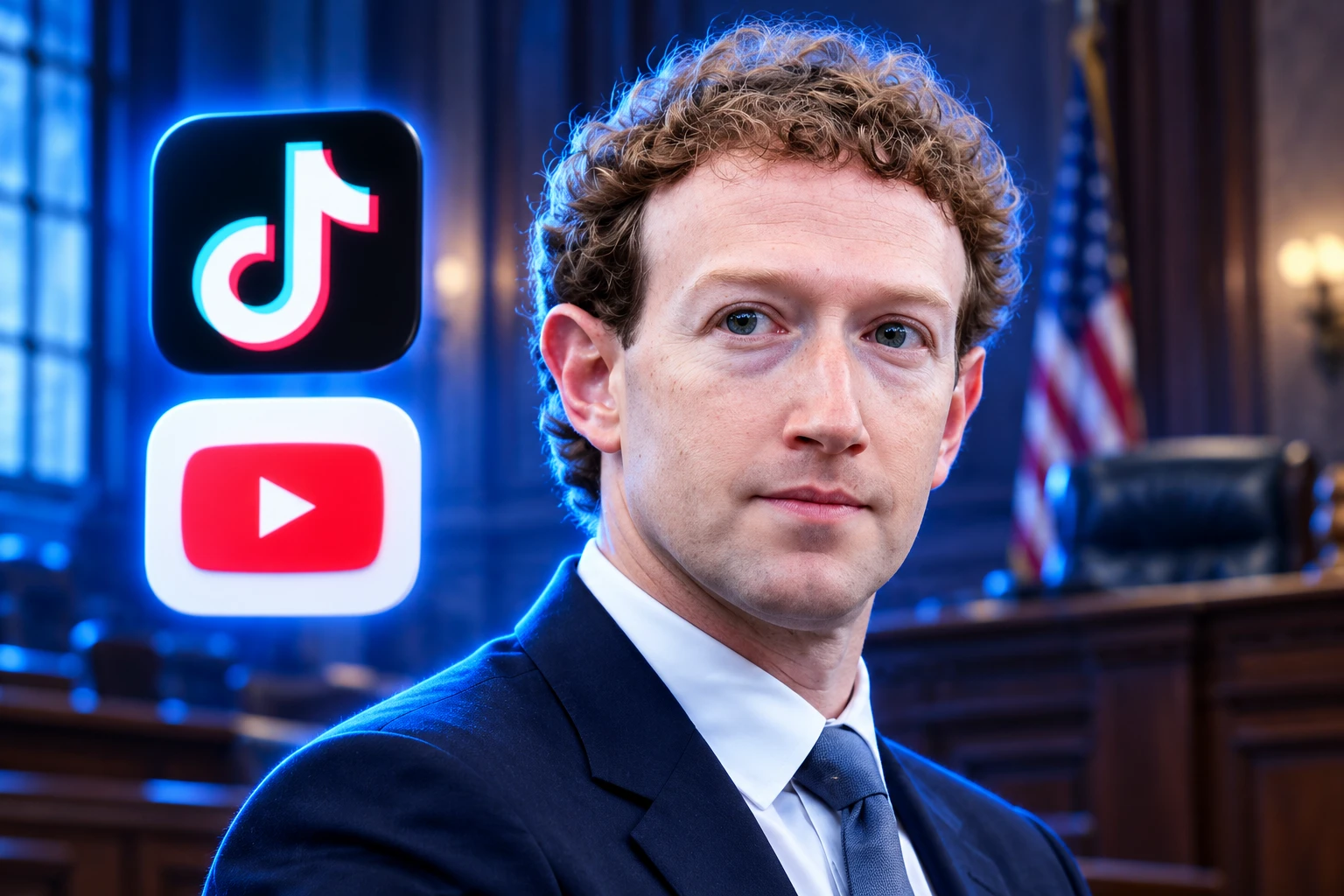
The floor is national in practice because Meta will not run a midnight lock in Oakland and a wide-open feed in a neighboring zip code. The ceiling is not. Bonta’s own term sheet says the daily cap drops to one hour, and the night block stretches from 10 p.m. to 7 a.m., only if other social media platforms agree to similar terms. Mayes named Snapchat, TikTok, and YouTube as the companies whose matching terms would drop each Meta app to 60 minutes and hold that line for ten years.
That clause does work Meta could not do from the witness stand. A lockout that rivals skip becomes a migration path. Teens who hit a wall on Instagram at midnight still have an unlocked For You page in their pocket, and a company that paid to close its own app after dark has a direct interest in closing the others too. Tennessee Attorney General Jonathan Skrmetti said the rest of the large platforms need to catch up, and that his office intends to make sure they do. Meta chief legal officer C.J. Mahoney said the new tools will let parents manage how their children use the apps, and that how well the design works depends on all other social media platforms following Meta’s lead.
Today, we have secured a settlement with Meta that will make social media less dangerous for our kids and make a world of a difference for children and their families.
Rob Bonta, California Attorney General, August 26, 2026
Bonta also said the company had agreed to time limits, a halt on school-hour notifications, a block in overnight hours, and a ban on plastic-surgery filters. Those are real product edits. They are also the edits Meta can ship without taking the ranking engine apart, which is why the rival-trigger matters more than the applause line.
Florida Stayed Out, and So Did the Families
Florida Attorney General James Uthmeier rejected the coalition papers. He called the payouts peanuts next to the harm he says Meta’s design inflicted on children, and a slap on the wrist for a company that, in his words, will pay more to lawyers than to the states. He said Florida will see Meta at trial.
The judgment is just as blunt about who cannot use it. It creates no right for a parent, a teen, a school district, or any other non-party to sue on these terms. The release carves out claims of private individuals, and it carves out pending suits by schools, cities, tribes, and other local governments in the federal MDL and in California’s coordinated proceeding. The states took the check. The people who filed the personal-injury cases did not.
WHAT WE KNOW
- Entered judgment: Gonzalez Rogers found the deal fair and reasonable, and the court approved the settlement on August 26, 2026.
- Who can enforce: Only the settling states and the court. A teen locked out at midnight cannot sue on the consent judgment.
- Who is unpaid: Individual plaintiffs and school districts remain on their own dockets.
WHAT IS UNCONFIRMED
- Rival matching: No public commitment from TikTok, YouTube, or Snapchat to take the 60-minute cap or the 10 p.m. lock.
- Florida’s trial: No date is set in these papers for Uthmeier’s case.
- When the clock starts: Bonta said the product changes come within months. The precise ship dates sit in the implementation schedule, not in the press release.
A night lock that only Meta honors will be read by some users as a speech control and by others as a nudge to open a different app. Either way, the pressure the clause puts on ByteDance and Google is the point of writing it this way. Meta paid to define the standard, then dared the rest of the market to live under it.
New Mexico Already Collected a Verdict
The Oakland deal did not arrive in a vacuum. New Mexico tried Meta on its own, and the company lost in public, twice, before the coalition sat down in the second week of trial.
THE VERDICTS THAT RAISED THE PRICE OF A LOSS
- October 24, 2023: California and other states file the complaint that becomes the Oakland trial, accusing Meta of ensnaring youth on Facebook and Instagram and of violating COPPA.
- March 24, 2026: A Santa Fe jury finds Meta committed 75,000 violations of New Mexico’s Unfair Practices Act and imposes the maximum $5,000 on each, a $375 million civil penalty.
- August 6, 2026: Judge Bryan Biedscheid holds that Meta’s platforms are a public nuisance, orders a $567 million abatement fund, and imposes five years of court-supervised reforms, bringing the New Mexico total to $942 million in New Mexico.
- August 18, 2026: The Oakland trial opens before Gonzalez Rogers.
- August 26, 2026: The coalition settles, the consent judgment is entered, and Texas announces its separate payment.
Biedscheid rejected the argument that Section 230 of the Communications Decency Act shielded Meta from liability for products it designed. Attorney General Raúl Torrez said Meta built products it knew would fuel addiction, deepen a youth mental-health crisis, and expose children to sexual exploitation, then lied to parents and policymakers about the danger. Meta said it disagrees with the New Mexico rulings and will appeal. The $567 million fund is slated for prevention, screening, care coordination, treatment, and oversight, with $420 million of it marked for treatment.
A Los Angeles jury had already found Meta and Google liable in March 2026 in a private case and awarded $6 million. Those losses, and the prospect of Zuckerberg on the Oakland stand, are the backdrop against which a ten-year payout to states starts to look like a ceiling Meta could live with.
The Recommendation Engine Was Not on the Table
Arturo Bejar, a former Facebook safety engineer who testified in Oakland, spent the days after the announcement saying the states stopped short. On August 31 he said he has spoken to around 40 bereaved parents, that social media played a meaningful role in their kids’ deaths, and that these changes would not have saved one of those lives if they had been in place. He said the first page of the deal lets Meta define harm in terms of work it is already doing.
The limitations that are in the agreement are the equivalent of saying: Well, you can smoke as many cigarettes as you can in two hours a day. It doesn’t make the cigarettes any safer.
Arturo Bejar, former Facebook safety engineer
He also said the agreement could codify safety theater, and that Instagram will be used a little less without becoming safer. Meta pointed to the non-personalized feed option and to parental controls as answers to that critique. The ranking system that chooses the next clip is still the ranking system. The two-hour wall meters access to it. It does not rebuild it.
That is the trade the attorneys general accepted on August 26: a check paid over a decade, a midnight lock a parent can lift, age checks under an auditor, and a clause that makes TikTok and YouTube the ones who decide whether the cap ever drops to 60 minutes. Florida is still headed for a courtroom. The families in the MDL still have to prove their own cases. The feed, until a rival signs the same paper, still runs after the clock runs out on everything except DMs and longform video.
Disclaimer: This article is news reporting on a civil settlement and related court orders, and it is for information only. It is not legal advice, medical advice, or a recommendation about any claim, product setting, or use of Facebook or Instagram. Readers who think they have a claim, or who need guidance on a child’s account, should consult a licensed attorney or a qualified clinician before acting. Figures, parties, and deadlines reflect the public filings and official statements described above and may change as implementation, appeals, and remaining cases move.

Nvidia RTX Spark Laptops Make Local AI a RAM Bill

A Drone Strike in Bulgaria’s EEZ Leaves NATO Idle

Sharma Unwinds Game Pass After Xbox Hit Freefall

Shawn Layden Says Sony’s Disc Cut Hits the Faithful 20 Percent

The EU Cabin Bag Law Frees Only a Personal Item

Thameslink Will Pad 60,000 Ironing-Board Seats From 2027

How Tall Was Adolf Hitler Really? Debunking the Myth of his Height

Micron Sells the Memory Shortage as Five-Year Contracts

U.S. Forces Clear Hormuz Mines, Then Hit Minelayers Again

Royal Caribbean Sends Los Angeles Ships to Singapore and Brisbane
-
 NEWS2 months ago
Thameslink Will Pad 60,000 Ironing-Board Seats From 2027
-
 SCIENCE3 years ago
How Tall Was Adolf Hitler Really? Debunking the Myth of his Height
-
 NEWS2 months ago
Micron Sells the Memory Shortage as Five-Year Contracts
-
 BUSINESS2 months ago
U.S. Forces Clear Hormuz Mines, Then Hit Minelayers Again
-
 NEWS2 months ago
Royal Caribbean Sends Los Angeles Ships to Singapore and Brisbane
-

 NEWS2 months ago
Twenty Controllers Closed Norwich Airport for a Bank Holiday
-

 BUSINESS2 months ago
Burger King Rebuilds Chicken Nuggets After Calling Them Rubbery
-

 BUSINESS2 months ago
Sweetmore Bakeries Buys Fantasy Baking for Bar Work