
BUSINESS
Japan’s Record Yen Intervention Has Already Lost Its Bounce
Japan’s record yen intervention has faded back toward 160, so Washington now wants a Bank of Japan rate hike on Sept. 18.

Japanese authorities spent ¥15,399.3 billion ($96.5 billion) buying yen from July 30 through Aug. 26, the Finance Ministry said. The dollar was back at 160.39 on Wednesday before slipping under 160 again.
That round trip is the whole story. Tokyo and Washington put up the largest yen-buying month on record, then the rate gap and a fresh jump in oil sold the currency back to the same neighborhood that forced them in.
A Record 15.4 Trillion Yen Buying Bill
The Finance Ministry posted a record 15,399.3 billion yen total for the July 30 to Aug. 26 window, the largest monthly yen-buying, dollar-selling operation it has published. A daily breakdown of those sessions will not land until the quarterly file, expected in early November.
The same office had already confirmed ¥11,734.9 billion of yen-buying in April through June, with the yen-dollar pair again the only market named. Add the two official prints and 2026 intervention is already ¥27.13 trillion, above the prior full-year mark of about ¥15 trillion set in 2024.
Bank of Japan account data from early August suggested the July 30 session alone may have reached 9.6 trillion yen. That figure is still an estimate. The last confirmed single-day record remains April 30.
YEN-BUYING ROUNDS SINCE 2022
| Window | Official amount | Context |
|---|---|---|
| Oct. 21-24, 2022 | ¥6.35 trillion | Largest yen-buying burst at the time |
| April-May 2024 | ¥9.79 trillion | After the dollar crossed 160 yen |
| July 11-12, 2024 | ¥5.53 trillion | After a 38-year low near 162 |
| April 30-May 6, 2026 | ¥11,734.9 billion | Three sessions in thin Golden Week trading |
| July 30-Aug. 26, 2026 | ¥15,399.3 billion | Record monthly total; U.S. joined on July 31 |
The April-June file is the one with dates. Authorities sold dollars and bought yen on April 30, May 4 and May 6, and the April 30 daily record of ¥6,278.7 billion beat the prior one-day mark of ¥5.92 trillion from April 29, 2024. May 4 was ¥780.2 billion. May 6 was ¥4,675.9 billion.
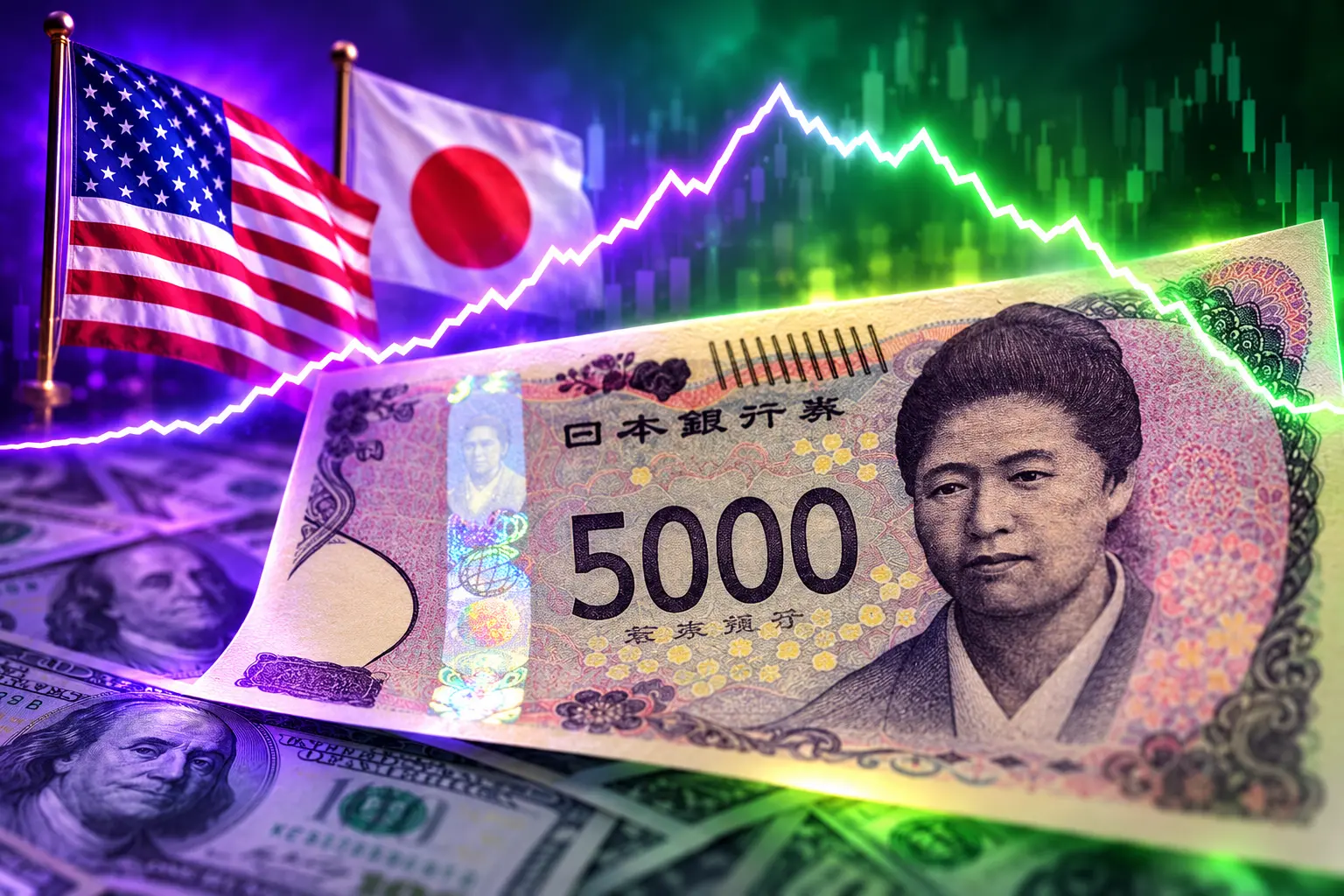
The Bounce to 155 Did Not Stick
The yen had traded as weak as 163.99 per dollar on July 23, then near 164 later that week, a low not seen in about 40 years. Officials stepped in on July 30 and July 31 as the pair sat around 163. South Korea timed won-buying with Japan’s move, Seoul officials said at the time.
By Aug. 3 the dollar had been shoved down to 155.20 yen. From Aug. 10 the pair parked near 159.50. It was 159.65 when the ministry printed the monthly total on Aug. 28, then 159.81 on Sept. 1 after two sessions on the far side of 160.
THE DOLLAR-YEN PATH FROM 164 TO 155 AND BACK
- July 23, 2026: Yen trades at 163.99 per dollar, then near 164 later in the week, the weakest in about 40 years.
- July 30-31, 2026: The Bank of Japan buys yen; the United States joins on July 31 in New York hours.
- Aug. 3, 2026: Dollar-yen prints as strong as 155.20 for the yen; Finance Minister Satsuki Katayama and U.S. Treasury Secretary Scott Bessent confirm the joint operation.
- Aug. 10, 2026: The pair settles near 159.50 and stays there for the rest of the month.
- Aug. 28, 2026: The ministry publishes the ¥15,399.3 billion total.
- Aug. 31, 2026: Katayama and Bessent meet in Asheville, North Carolina, on the sidelines of a G20 finance gathering.
- Sept. 2, 2026: Dollar-yen hits 160.39, then drops back below 160.
A late-August survey of economists found more than two thirds calling the July joint operation largely or completely ineffective. The tape since Aug. 10 has not argued with them. About 7.8 yen of strength from the 163 area to 155.20 was on the board at the peak. Most of it is gone.
Washington Bought Yen for the First Time Since 1998
Katayama and Bessent said on Aug. 3 that Japanese and U.S. authorities had carried out a joint yen-buying, dollar-selling operation on July 31, the first of that kind in about 28 years. The last U.S.-Japan joint move, in 2011, went the other way: both sold yen after the earthquake and tsunami.
The New York desk work was unusual in another respect. The Treasury sold euros for yen rather than selling dollars, a choice that kept the operation from dumping U.S. currency into the same market it was trying to calm. President Donald Trump confirmed that the Treasury had assisted Japanese authorities. Bessent said then that Washington would not hesitate to join another operation if markets turned disorderly again.
By Aug. 31 that appetite had cooled. After a meeting of about 30 minutes in Asheville, Katayama told reporters the two sides had restated the July language and that Tokyo’s position was unchanged: it will act if moves are disorderly. She would not say whether the latest drift toward 160 counted. A senior Japanese finance official present said Bessent did not ask for a rate hike in the room. Outside the room, Bessent had already moved the target.
I have information that the market doesn’t have, and it’s my belief that the Japanese government and the BOJ will do the things that will lead to a stronger yen.
Scott Bessent, U.S. Treasury secretary, on CNBC
He also said he could not set the yen’s natural level and that the useful tool was a signal. Asked about another joint foray, he treated recent trading as orderly enough to leave alone. The cash operation had been the friendship gesture. The follow-up is a rate rise.
Why the Rate Gap Ate the Intervention
The Bank of Japan held its policy rate at 1.00% at the July meeting, the level it reached with a June hike, the highest in three decades. The vote was 8-1. Board member Hajime Takata wanted an immediate move to 1.25%. Since December 2025 the bank has delivered only 50 basis points of tightening, and cheap yen funding is still the easy side of a dollar trade.
Finance Minister Katayama said on Aug. 28 that Japan would try to lift the yen’s credibility by raising long-term growth, and that coordination with Washington was “extremely strong.” Prime Minister Sanae Takaichi’s extra spending has worked against that pitch. Traders have treated her budget as a reason to stay short yen even after the ministry emptied a record clip of reserves.
THE POLICY GAP THE YEN STILL FACES
- Japan’s rate: The Bank of Japan is at 1.00% after an 8-1 hold in July, with Takata the lone vote for 1.25%.
- September pricing: A 25 basis point move on Sept. 18, which would take the rate to 1.25%, is now fully priced.
- The other side: Markets have 17 basis points of Federal Reserve hikes priced for the Sept. 16 meeting, and the 2-year U.S. yield printed a year-to-date high of 4.41%.
- The leftover gap: Even after a Japanese hike, U.S. short rates still pay far more than Tokyo does, so the carry remains open.
Charu Chanana, chief investment strategist at Saxo, said a September hike is already heavily anticipated and that with U.S. yields still high and oil worsening Japan’s terms of trade, the yen probably needs a more hawkish path beyond September, not one move, to get away from 160 for good. That is the objection the record bill never answered. Intervention can snap dollar-yen lower for a few hours. It cannot pay Japan’s oil bill or close a multi-point rate gap, so the 160 handle keeps getting tested.
A Fed Window That Avoids Dumping Treasuries
The constraint on another ¥15,399.3 billion month is not only politics. Japan still has to find the dollars. Official reserve assets were $1.287 trillion at the end of July, a $0.38 billion dip from $1.288 trillion in June. Foreign currency holdings were $1.090 trillion, of which $927.33 billion sat in securities and $162.29 billion in deposits. Japan is the largest foreign holder of U.S. Treasuries, with a stock above $1.1 trillion as of May.
Selling that stock to fund yen-buying is the spillover Washington cares about. After the April-May operations, custody holdings of Treasuries at the Fed slipped $8.7 billion in the week to May 6, a move some desks read as Japan raising dollars the old way. Bessent’s answer is the Foreign and International Monetary Authorities repo facility, a 2020 Fed backstop that lets approved official accounts pledge Treasuries overnight or for up to seven days instead of selling them into the cash market. The per-counterparty cap has been described as $60 billion. Bessent has said the facility should be upsized, and Japan’s ministry has named it among the tools it can use for market liquidity.
HOW THE FIMA REPO BACKSTOP WORKS
- The pledge: A foreign official account can temporarily exchange Treasury holdings for dollar liquidity at the Fed rather than selling the bonds outright.
- The yen leg: Those dollars can then be sold to buy yen, which is the intervention Tokyo actually wants.
- The unwind: If the yen later strengthens, Japan can buy dollars back cheaper, repay the Fed, and recover the collateral.
- The U.S. interest: The facility is built to stop official holders from dumping Treasuries in a hurry, which is the channel that lifts American yields.
New York Fed researchers who designed the facility put it in those terms: it exists so foreign authorities can raise dollars without a fire sale of U.S. assets. For this yen episode that is the bargain inside the joint operation. Washington will help Tokyo defend 160 if Tokyo does not pay for that defense by shoving the Treasury market. The cheap yen still has to be made less cheap at the Bank of Japan.
Ueda’s September Meeting Is Already Priced as a Hike
Governor Kazuo Ueda met Bessent in Asheville as well. A U.S. Treasury official told Japanese public television that Bessent used that sitting to argue for rate hikes. Ueda then spoke to reporters after the G20 session, and the wording was the clearest signal he has given that September is live.
From the perspective of conducting policy with a risk management approach as the underlying inflation rate approaches 2%, we have to believe that we need to pay greater attention than before to upside risks in our policy conduct.
Kazuo Ueda, Bank of Japan governor, to reporters after the G20 meeting
Takata, still the board’s loud hawk, said Japan’s economy has entered a phase “underpinned by the dispelling of the norm of prices and wages not increasing easily” and that “2026 represents a regime change where rate hikes will not be carried out at a fixed pace but will instead be conducted in nimble and data-dependent manner.” Lee Hardman at MUFG wrote that a 25 basis point September hike is fully priced and that Ueda’s line is the strongest yet, and he also wrote that the repricing has not been enough to reverse the yen’s weakening trend.
A late-August poll of economists had already shifted hard: 57% expected a move to 1.25% in September, up from 5% in the July survey. Takaichi’s office has been described as supporting an early hike, which would be the third increase in nine months and the fastest tightening pace since the asset-bubble collapse. Bessent, talking fiscal policy, said Japan should “sit back and enjoy the success of Abenomics and let that run,” a line some analysts read as a warning against another spending burst from the prime minister.
Katayama, after the Asheville meeting, put the shared objective in one sentence: an orderly yen is essential for global markets, including those of the United States, and continued Japan-U.S. coordination contributes to that goal. The ministry still says it has a broad range of tools. The market has stopped treating those tools as the event. The event is now Ueda’s decision on Sept. 18, two days after the Federal Reserve meets.
Brent Near $100 Is Selling the Yen Again
Japan imports almost all of its energy, and about 95% of that supply comes from the Middle East. That is the other half of the round trip. Hardman noted that Brent has pushed back toward $100 a barrel this week after fresh U.S. strikes on Islamic Revolutionary Guard Corps sites and an Iranian operation against American bases. President Trump said he “couldn’t care less if they sign a worthless, to them, agreement.”
Higher crude hits Japan as a terms-of-trade shock: more dollars out for oil, a wider current-account hole, and another reason to sell yen. It also lifts U.S. inflation odds, which is why those 17 basis points of Fed hikes are on the board for Sept. 16. If both banks tighten 25 basis points the same week, the rate gap barely moves. The yen-buying bill does not get a second chance on that math.
Exporters disliked the path to 155.20 because a stronger yen cuts overseas earnings when they are converted home. Import-heavy firms and households disliked 164 more, because energy, food and components all arrive in foreign currency. The ministry chose the second pain. The dollar at 160.39 on Wednesday showed how little of that choice is locked in.
Some desks called the Wednesday drop from 160.39 a fresh official bid. Maybe it was, maybe it was just covering into 160. Either way the pattern is the same one April and July already taught: a large yen purchase can clear the screen for a morning. By afternoon the oil print and the U.S. 2-year are still there, and so is the 160 handle.
The Finance Ministry has now put a number on that lesson. ¥15,399.3 billion bought a print at 155.20. Sixteen days before the Bank of Japan meets, the dollar is back where Tokyo started.
Disclaimer: This article is news reporting and market analysis for information only. It is not investment advice, a currency forecast you should trade on, or a recommendation to buy or sell yen, dollars, Japanese government bonds or U.S. Treasuries. Readers who are considering any position in foreign exchange or rates should consult a licensed financial adviser or broker who can review their own objectives and limits. Figures, meeting odds and policy statuses are those given by the named officials and data releases as of Sept. 2, 2026, and they can change with the next print or the Sept. 18 decision.

Nvidia RTX Spark Laptops Make Local AI a RAM Bill

A Drone Strike in Bulgaria’s EEZ Leaves NATO Idle

Sharma Unwinds Game Pass After Xbox Hit Freefall

Shawn Layden Says Sony’s Disc Cut Hits the Faithful 20 Percent

The EU Cabin Bag Law Frees Only a Personal Item

Thameslink Will Pad 60,000 Ironing-Board Seats From 2027

How Tall Was Adolf Hitler Really? Debunking the Myth of his Height

Micron Sells the Memory Shortage as Five-Year Contracts

U.S. Forces Clear Hormuz Mines, Then Hit Minelayers Again

Royal Caribbean Sends Los Angeles Ships to Singapore and Brisbane
-
 NEWS2 months ago
Thameslink Will Pad 60,000 Ironing-Board Seats From 2027
-
 SCIENCE3 years ago
How Tall Was Adolf Hitler Really? Debunking the Myth of his Height
-
 NEWS2 months ago
Micron Sells the Memory Shortage as Five-Year Contracts
-
 BUSINESS2 months ago
U.S. Forces Clear Hormuz Mines, Then Hit Minelayers Again
-
 NEWS2 months ago
Royal Caribbean Sends Los Angeles Ships to Singapore and Brisbane
-

 NEWS2 months ago
Twenty Controllers Closed Norwich Airport for a Bank Holiday
-

 BUSINESS2 months ago
Burger King Rebuilds Chicken Nuggets After Calling Them Rubbery
-

 BUSINESS2 months ago
Sweetmore Bakeries Buys Fantasy Baking for Bar Work