
BUSINESS
Smucker Wants Trader Joe’s Uncrustables Lookalikes Destroyed
After a 2007 patent wipeout, Smucker is using Uncrustables trade dress to keep Trader Joe’s in Ohio court and to seek destruction of the frozen sandwiches.

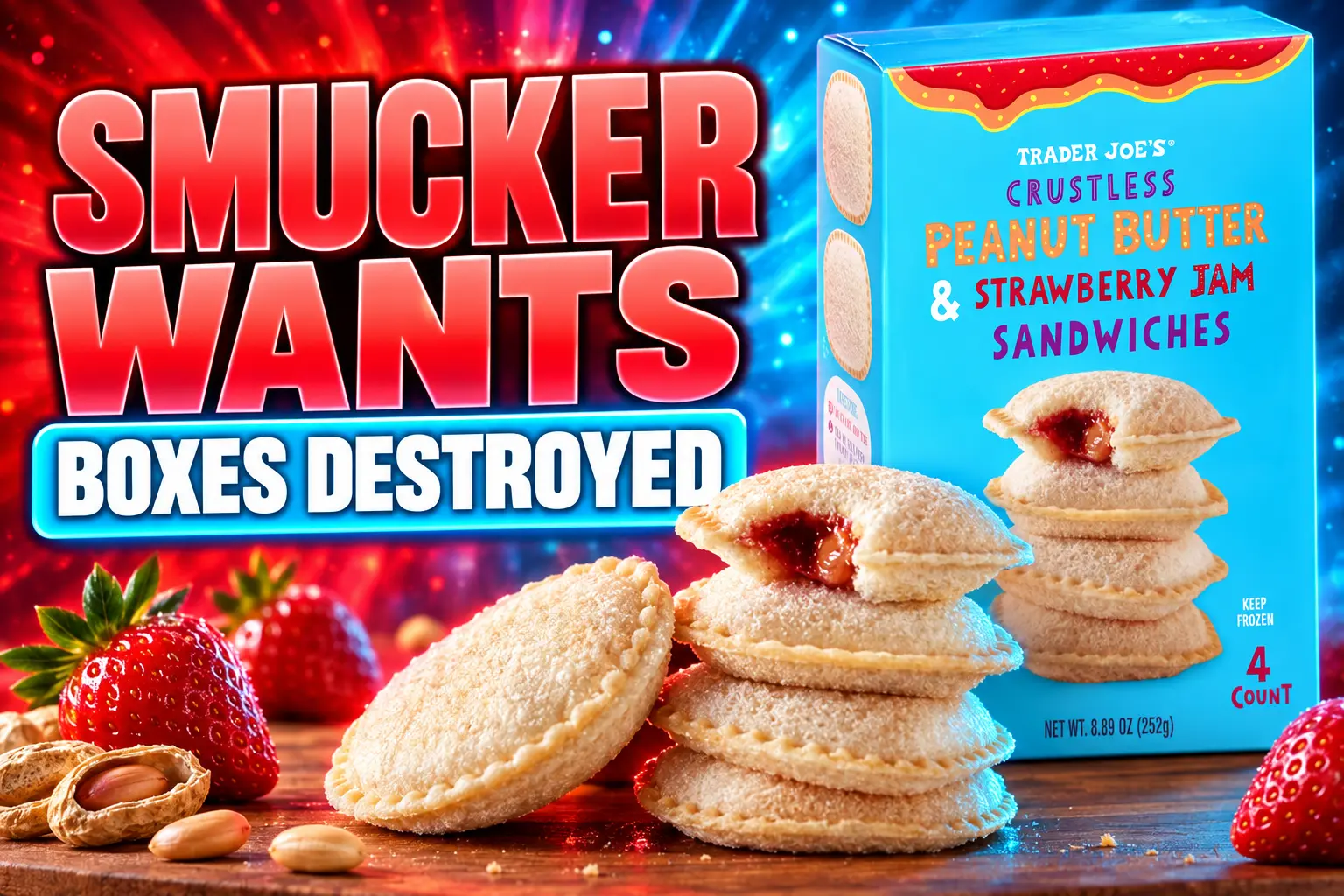
U.S. District Judge John R. Adams on August 28, 2026 refused to dismiss J.M. Smucker’s Uncrustables trademark case against Trader Joe’s. The grocer’s frozen Crustless Peanut Butter & Strawberry Jam Sandwiches, listed at $3.79 for four, stay in an Ohio courtroom, and Smucker still wants those boxes handed over so the food can be destroyed.
The ruling is a pleading-stage win, not a trophy. Adams did not find that a round, crimped PB&J is as famous as Nike. He found that Smucker had alleged enough, about ads, sales, registrations, and public recognition, to take discovery on whether the look of the sandwich can be owned at all.
Judge Adams Lets the Uncrustables Suit Proceed
The file is The J. M. Smucker Company v. Trader Joe’s Company, case 5:25-cv-02181, in the Northern District of Ohio. Smucker, based at One Strawberry Lane in Orrville, sued on October 13, 2025 for trademark infringement, unfair competition, false designation of origin, trademark dilution, Ohio deceptive-trade claims, and matching common-law counts.
Trader Joe’s, a California grocer at 800 South Shamrock Avenue in Monrovia, asked the court on January 9, 2026 to throw out the dilution count and to send the rest to the Central District of California. Adams denied Trader Joe’s dismissal bid and kept the case in Ohio. A case-management conference, he wrote, would be set by a later order.
While TJ claims that these allegations relate more to the brand than the marks at issue, the Court finds that the allegations of the complaint are sufficiently tied to the marks to allow the matter to move forward with discovery.
Judge John R. Adams, Aug. 28, 2026 order, Northern District of Ohio
Federal dilution law treats a mark as famous only when the public at large sees it as a source tag, the “household name” test. Adams listed Nike, Pepsi, and Hershey’s as the kind of names that have cleared that bar. He then stressed he was not measuring the fame of the word Uncrustables. He was measuring whether Smucker had plausibly pled fame for the design marks around the sandwich itself.
Ship the Sandwiches to Orrville for Destruction
Money is only half of the ask. In the complaint’s prayer for relief, Smucker wants an injunction covering the sandwiches, the boxes, and the ads, and it wants Trader Joe’s to deliver the sandwiches for destruction, along with containers, labels, wrappers, signs, and other materials that carry the accused look, including the products shown in the complaint.
That delivery-and-destroy line is a standard trademark remedy, written here against frozen food. If a judge later grants it, the losing inventory does not get restickered or donated. It goes to Smucker to be destroyed.
Smucker told the court it is not trying to clear the freezer aisle of crustless PB&Js. “Smucker does not take issue with others in the marketplace selling prepackaged, frozen, thaw-and-eat crustless sandwiches,” the complaint says. “But it cannot allow others to use Smucker’s valuable intellectual property to make such sales.”
The intellectual property, as Smucker draws it, is the round pie-like shape with “distinct peripheral undulated crimping,” plus pictures of a whole round sandwich and of a sandwich with a bite that shows the filling. The complaint calls Trader Joe’s product an “obvious copycat” and points to the grocer’s own product page. It also claims the boxes use a similar blue and a similar bitten-sandwich shot.
The Squircle and the Functional Crimp
Trader Joe’s says the sandwiches are not round. They are “squircles,” squares with rounded corners. It also says the crimped edge is how you keep peanut butter and jam from leaking, so Smucker should not be allowed to monopolize a useful seal.
The grocer’s own listing undercuts the idea that the crimp is hidden. It describes salted peanut butter and strawberry jam inside white bread whose crimped crusts that seal the filling have been pressed and trimmed. Thaw one hour at room temperature, or two in the fridge. The box is vegan, four sandwiches, 8.89 ounces, 200 calories and 7 grams of protein per 63-gram sandwich.
That sentence is the whole fight in miniature. Smucker reads the crimp as a brand cue shoppers have been trained to see since 1996. Trader Joe’s reads it as kitchen physics. Trade dress law requires both non-functionality and a likelihood of confusion, and Adams has not decided either one.
On packaging, Trader Joe’s argued that the current Uncrustables box dates only to 2024 and is too new to support a dilution claim. It also went after the cartoon sandwich Smucker registered with rights dating to February 2024, the round body with eyes, arms, legs, and shoes.
Smucker reaches too far. Its sandwiches’ appearance and cartoon avatar are no Nike swoosh or McDonald’s golden arches.
Trader Joe’s Company, January 9, 2026 court filing
THE MARKS IN THE OCTOBER COMPLAINT
- The sandwich shape: U.S. Registration No. 2,623,577, registered September 24, 2002, claimed in use since 1996, and called incontestable in the complaint.
- The whole-sandwich picture: Registration No. 2,883,529, also tied to 1996 use.
- The bitten sandwich: Registration No. 5,941,408, used since 2000, showing filling in the bite.
- The cartoon sandwich: Registration No. 7,871,982, with rights Smucker dates to February 2024.
Those registrations are why the case is about more than a lunchbox habit. Product-configuration marks are hard to win and easy to overclaim, which is why Trader Joe’s compared the crimp to the swoosh and then asked a judge to end the dilution count before discovery.
The Sealed Sandwich Patent Did Not Survive
Smucker has been here before, with a different statute. U.S. Patent No. 6,004,596, titled “Sealed crustless sandwich,” issued on December 21, 1999. It described bread layers, a filling, and a crimped edge that sealed the filling inside. For a few years, that paper was the fence around the category.
Albie’s Foods, a Michigan grocer and caterer, did not fold. After a cease-and-desist fight in 2000, it asked the U.S. Patent and Trademark Office in March 2001 to reexamine the patent. Smucker narrowed claims, including toward a version that held jelly between layers of peanut butter. The examiner still rejected them. The Board of Patent Appeals and Interferences later found the narrowed wording too vague. Smucker missed the deadline to answer, and on September 25, 2007 the office issued a reexamination certificate cancelling all claims.
FROM PATENT TO TRADE DRESS
- 1996: Smucker, through predecessors, begins using a pie-like crustless sandwich with wavy crimped edges.
- 1998: Smucker buys the brand for $1 million and sells it as Uncrustables.
- December 21, 1999: Patent 6,004,596 issues on a sealed crustless sandwich.
- September 24, 2002: The round crimped-sandwich design registers as a trademark.
- September 25, 2007: The patent’s claims are cancelled on reexamination.
- Late summer 2025: Trader Joe’s puts its crustless PB&Js in stores; Smucker sues on October 13, 2025.
Once the patent died, the method of sealing a PB&J was free. The remaining tool was brand identity: the name, the blue lettering, the bite photo, and the three-dimensional shape. That is the swap at the center of the Trader Joe’s case. A form the patent office would not protect as an invention is now alleged, in Ohio, as a famous design.
Copycats That Already Changed Shape
Other sellers already treated the round crimp as the expensive part. In 2020 Smucker sent Chubby Snacks a cease-and-desist letter over trademark; Chubby Snacks changed its sandwiches to clouds. Walmart’s Great Value crustless peanut butter and jelly sandwiches are sold square, a shape that does not try to be a pie.
Smucker’s complaint is built for that fork in the road. Competitors may sell a frozen, crustless, thaw-and-eat PB&J. They may not, Smucker says, sell one that looks like Uncrustables and is packed like Uncrustables. Trader Joe’s is the first national grocer in this cycle to test that line in a federal answer instead of a redesign.
WHO KEPT THE ROUND CRIMP
| Seller | Shape | Where it stands |
|---|---|---|
| Uncrustables | Round, wavy crimp | Asserting registered design marks |
| Trader Joe’s | Round or “squircle,” crimped | In litigation in Ohio |
| Walmart Great Value | Square | Sold as a store brand |
| Chubby Snacks | Cloud-shaped | Changed after a 2020 Smucker letter |
Winning this kind of case against a grocer is not the usual ending, which is why the destruction demand reads as leverage as much as logistics. Shoppers who can see the words “Trader Joe’s” on the box are not grabbing a Jif-branded lunch by mistake. The closer question is whether the puck itself, sitting next to Uncrustables in a freezer, is doing brand work the law will police.
Trader Joe’s also sells the category under a category name. Crustless Peanut Butter & Strawberry Jam Sandwiches describes the food. It does not coin a house brand. That choice may help on confusion, and it does nothing for Smucker’s shape claim if a round crimp is protectable on its own.
How Uncrustables Became a $1 Billion Brand
The complaint, filed in October 2025, said Uncrustables was “fast on their way to being a $1 billion brand” and that Smucker had invested over a billion dollars across 20 years in the brand and the design rights. It said the company makes about 1.5 billion Uncrustables a year at three plants, in Kentucky, in Colorado (opened in 2019), and in Alabama (opened in 2024). It called Uncrustables the No. 1 frozen handheld in its U.S. category and said the sandwiches turn up from school cafeterias to the NFL.
By fiscal 2026 those forward lines had become a company talking point. In prepared remarks for the fourth-quarter results, issued June 9, 2026, Smucker presented Uncrustables as a $1 billion brand. Mark Smucker, the chief executive, tied that figure to years of investment. The remarks said Uncrustables sales rose 8% in the fourth quarter, the brand’s strongest quarter of that fiscal year, and that the brand added about 3 million households over the prior year.
UNCRUSTABLES AS SMUCKER PITCHES IT
- The brand: Reached $1 billion in fiscal 2026 sales, per Smucker’s June 9, 2026 remarks.
- The volume: About 1.5 billion sandwiches a year, per the October 2025 complaint.
- The plants: Three factories in Kentucky, Colorado, and Alabama.
- The spend claim: Over $1 billion across 20 years on goodwill and design rights, alleged in the complaint.
The parent company is larger than the sandwich. Smucker traces itself to 1897, is in a fifth generation of family control, and told the court that about 90 percent of U.S. households have a product from its portfolio. Uncrustables is the line it is trying to wall off with design law, and the Uncrustables sandwich flavors now run from grape and strawberry into raspberry, honey, chocolate hazelnut, apple cinnamon, and reduced-sugar wheat versions.
Trader Joe’s sells one flavor. The price gap is the private-label pitch in a number: $3.79 for four, with no artificial preservatives on the ingredient list. The legal risk is that a cheaper round crimp, photographed with a bite, is exactly the product Smucker spent a billion-dollar brand campaign teaching people to recognize.
Orrville Keeps This Fight at Home
Trader Joe’s wanted the case in California because that is where it is based and where its third-party sandwich producer is, in Los Angeles County. Adams said those non-party witnesses mattered, then discounted the burden. Depositions can be taken in California or on a screen, he wrote, and a supplier in a commercial relationship is unlikely to refuse to help its customer.
Ohio, he found, has a local interest because Smucker is headquartered in the district and because the accused sandwiches are sold there, including at Trader Joe’s stores in Westlake and Woodmere. The facts of who designed which mark sit in both states. When the factors came out “relatively balanced,” the plaintiff’s choice of Orrville’s home court carried “substantial weight.”
The unnamed co-packer is the party with the machines. If the crimp is a tool for sealing filling, that factory chose it for yield and mess. If the crimp is a mark, that factory copied a shape Smucker has been registering since 2002. Venue in Akron means the first round of documents and depositions will be read by a judge who already declined to treat the fame claim as empty.
None of that destroys a sandwich. Adams scheduled no trial date in the August 28 order. Trader Joe’s listing still offers the four-pack at $3.79, with the same crimped seal the grocer says is functional and Smucker says is a mark. The next fight is discovery on whether shoppers see a pie-crimped PB&J and think Uncrustables, and whether a court will ever order those frozen pucks boxed up and sent to Orrville to be destroyed.

Southwest Lounges Will Open Behind a New Chase Card

Smucker Wants Trader Joe’s Uncrustables Lookalikes Destroyed

Air Force DASH Sprint Opens a Government-Owned C2 Layer

AI Wildfire Detection Satellites Force a Carbon Recount

Gulf Oysters Take the Blame for a Wound-Borne Scare

Burger King Rebuilds Chicken Nuggets After Calling Them Rubbery

Twenty Controllers Closed Norwich Airport for a Bank Holiday

Thameslink Will Pad 60,000 Ironing-Board Seats From 2027

Royal Caribbean Sends Los Angeles Ships to Singapore and Brisbane

Micron Sells the Memory Shortage as Five-Year Contracts
-
 BUSINESS2 weeks ago
Burger King Rebuilds Chicken Nuggets After Calling Them Rubbery
-
 NEWS2 weeks ago
Twenty Controllers Closed Norwich Airport for a Bank Holiday
-
 NEWS2 weeks ago
Thameslink Will Pad 60,000 Ironing-Board Seats From 2027
-
 NEWS2 weeks ago
Royal Caribbean Sends Los Angeles Ships to Singapore and Brisbane
-
 NEWS3 weeks ago
Micron Sells the Memory Shortage as Five-Year Contracts
-
 BUSINESS2 weeks ago
Sweetmore Bakeries Buys Fantasy Baking for Bar Work
-
 BUSINESS3 weeks ago
U.S. Forces Clear Hormuz Mines, Then Hit Minelayers Again
-

 NEWS2 weeks ago
Frontier Miles Cuts Basic Fares After the Barclays Pact