
NEWS
Matt Clifford Leaves the ARIA Chair After Anthropic Dual Role
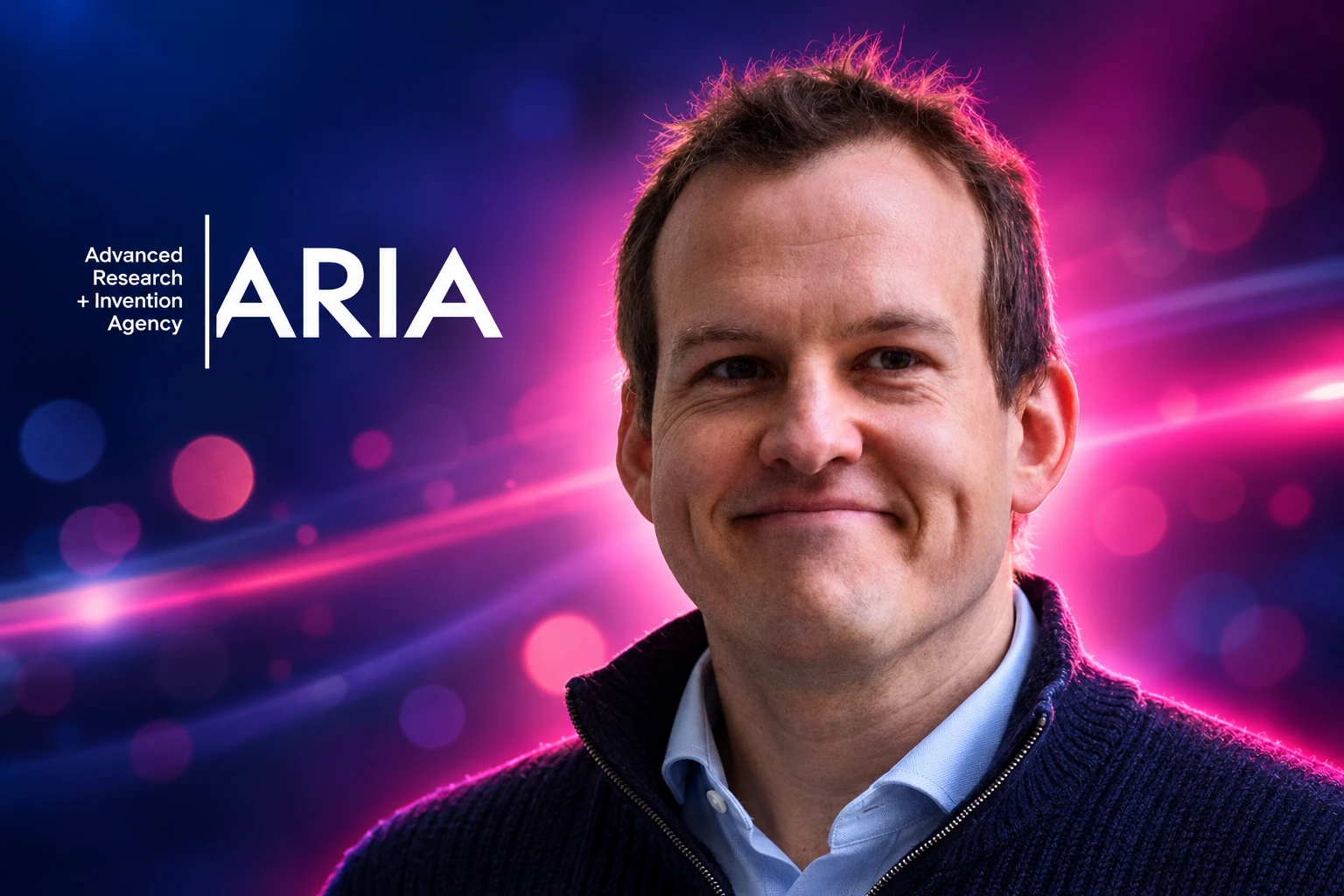
Matt Clifford will remain ARIA chair until 6 November after dropping a dual Anthropic role the department had already cleared.

Matt Clifford will leave the ARIA chair on 6 November, five days after saying he could keep that job while working for Anthropic. He chairs the UK’s Advanced Research and Invention Agency, which spends public money on high-risk science, including work tied to AI.
The reversal does not end the overlap. The Secretary of State asked him to stay until that November date, with safeguards against possible conflicts still in place, while a search for a new chair begins.
The Dual Role Lasted Five Days
On 2 September 2026, Clifford said he was joining Anthropic as managing director of international affairs, leading the company’s work with governments outside North America. He said he would be based in London and work across Europe, Asia-Pacific and beyond, alongside Tino Cuéllar and Anthropic’s chief executive, Dario Amodei, and president, Daniela Amodei.
“I’m staying on as Chair of ARIA and Entrepreneurs First, but stepping back from everything else to focus on this important work,” he wrote on X that morning. Anthropic said he would recuse himself from ARIA matters that touched the company, and that he did not make procurement or programme-level spending decisions there anyway.
Dame Chi Onwurah, the Labour MP who chairs the Commons Science, Innovation and Technology Committee, called that plan a “clear conflict of interest” the same day. She said movement between public and private work was within the rules, and that she did not want to stop it. Remaining as chair of a body that invests taxpayer money in cutting-edge research, much of it AI-related or AI-enabled, was a different problem, she said, and she wanted the AI minister, Kanishka Narayan, to set boundaries.
THE FIVE DAYS THAT UNWOUND THE PLAN
- 2 September 2026: Clifford announces the Anthropic post and says he will keep the ARIA chair and his chair role at Entrepreneurs First.
- 2 September 2026: Onwurah warns of a clear conflict of interest and asks the AI minister for safeguards.
- 4 September 2026: The committee logs a letter from Onwurah to the Minister for Artificial Intelligence on AI safety and ARIA governance.
- 7 September 2026: Clifford says he will step down so the Anthropic job does not become “a distraction,” and agrees to stay until 6 November.
An ARIA spokesperson said the Department for Business, Innovation, Science and Trade had already put “clear mitigations” in place to manage a possible conflict, and that Clifford had then chosen to step down. The structure that the department signed off lasted five days in public.
Who Approved the Dual Role?
Anthropic said the plan to keep Clifford in the ARIA chair had been agreed with the agency and with the department that appoints the chair. A separate team, it said, handled its commercial relationship with ARIA. Clifford, in that account, had no involvement in or sight of those talks.
That is the official version of how a full-time government-affairs job at a frontier lab sat next to the chair of a public funder. It is also the version Parliament has now put in writing. Onwurah said on 7 September that the conflict had been addressed by the decision to stand down, then kept the file open.
WHAT WE KNOW
- The sign-off: ARIA says the Department for Business, Innovation, Science and Trade reviewed the dual role and agreed mitigations, including recusal from ARIA business where a conflict could arise.
- The reversal: Clifford presented the exit as his own call on 7 September, after completing what he called his first full term in August.
- The hangover: He stays in post until 6 November at the Secretary of State’s request, with those safeguards still attached.
WHAT IS UNCONFIRMED
- The assessments: The conflict-of-interest papers the department used have not been published.
- The 7 September letter: The committee lists correspondence from the Secretary of State on the resignation; its answers to Onwurah’s questions are not public.
A government spokesman said ministers were grateful for Clifford’s leadership as inaugural chair and that he would stay for a two-month interim period, with appropriate mitigations, while a successor process starts. That is the same safeguard language that covered the dual role before it met the committee.
ARIA Was Built to Sit Outside Whitehall
ARIA is the UK’s DARPA-style funder, set up under the Advanced Research and Invention Agency Act 2022. Programme choice is meant to sit with the agency, not with ministers. The chair is still a Secretary of State appointment, and the first chair was named on 19 July 2022, alongside founding chief executive Ilan Gur.
Clifford was given a second term in September 2025. The agency’s own accounts record a term-end date of 14 August 2030. When he said on 7 September that he had finished his first full term “last month,” he was already a year into that second stint.
ARIA ON THE BOOKS, YEAR TO 31 MARCH 2026
- Live portfolio: The agency had £514.1 million in active funding agreements, up from £295.0 million a year earlier.
- Commitments: Chief executive Kathleen Fisher said the organisation had committed over £500 million across its programmes.
- Reach: Those programmes backed more than 200 research and development Creator teams, with 15 programmes approved by year-end.
- Chair pay: Clifford’s fee sat in the £25,000 to £30,000 band.
Fisher, a former DARPA programme manager and office director, became chief executive in February 2026 after a global search Clifford oversaw from the board. The same accounts describe a July 2025 collaboration agreement with the UK AI Safety Institute, now the AI Security Institute, and a pivot inside the Safeguarded AI programme. In February the agency put £50 million into a Scaling Inference Lab. It also funded 12 projects through an AI Scientist call.
The chair does not pick those grants line by line. The board still oversees performance, risk appetite and how public money is steered toward AI work that is moving fast. That is the job Clifford said he could hold while leading Anthropic’s talks with governments, including the British one.
A February Pact Already Tied London to Anthropic
The overlap was not a paper conflict about a company ARIA might one day meet. The UK government and Anthropic had already put their names on a February 2025 memorandum of understanding on AI opportunities. Peter Kyle, then Secretary of State for Science, Innovation and Technology, signed it with Dario Amodei on 13 February 2025.
DSIT and Anthropic, through Anthropic’s partnership with AI Security Institute (AISI), will continue their research collaboration to understand the capabilities and security risks of AI systems, and work together to mitigate these risks to enable the significant AI opportunities.
UK-Anthropic memorandum of understanding, 13 February 2025
The pact is voluntary and not legally binding. It still sketches a joint agenda that runs through public services, science, supply chains and the startup base, and it says it does not prejudice future procurement. Clifford’s new job is to lead Anthropic’s engagement with governments outside North America. The British state is already on that list as a partner, and ARIA is already in a commercial relationship with the same company.
He is also the person who wrote the AI Opportunities Action Plan published on 13 January 2025. The government took forward all 50 recommendations and named him the prime minister’s AI Opportunities Adviser the same day. In June 2025 he said he would leave that unpaid post at the end of July for family reasons. A later GOV.UK register still listed the adviser term through 12 January 2026, which is why the public record of when that hat came off is messier than the LinkedIn version.
Clifford Is Not Bound by Sunak’s Conditions
Rishi Sunak, who as prime minister hired Clifford into the 2023 AI Safety Summit operation, later took a senior adviser post at Anthropic. The Advisory Committee on Business Appointments set conditions on that move, including a two-year ban on lobbying ministers and a bar on advice about bids or contracts with the UK government or its arm’s-length bodies.
Clifford is not covered by the same net. A Civil Service Commission spokesman said that because he was a ministerial appointee, not a civil servant, he would not be bound by business appointment rules. His adviser terms did require him to talk to senior officials about how non-public information from the role would affect later investment plans. They did not impose a lobbying ban of the Sunak type.
TWO ANTHROPIC HIRES, TWO RULE BOOKS
| Person | Anthropic job | UK constraint on government work |
|---|---|---|
| Rishi Sunak | Senior adviser | ACOBA two-year lobbying ban from last day as minister, plus a bar on contract advice |
| Matt Clifford | Managing director, international affairs | Not bound by business appointment rules, as a ministerial appointee rather than a civil servant |
Sunak left office in July 2024, so that two-year clock was built for a former prime minister, not for a sitting public chair. Clifford’s published register from his adviser days already ran long: Entrepreneur First, a string of private shareholdings, and an ongoing seat on the AI Safety Institute advisory board as of the 12 February 2025 update. The dual-hat problem at ARIA sat on top of a career that was designed to move between Number 10, a public funder and private tech.
Two More Months of the Same Safeguards
Clifford’s 7 September post is the document the exit now rests on. He called the ARIA years a privilege, praised Fisher, and said he would remain “the agency’s biggest fan.” Then came the line that keeps the conflict in place until winter.
It’s been a huge privilege to serve as @ARIA_research's founding Chair over the last four years. Having completed my first full term last month, I have decided to step down to ensure my new role at Anthropic doesn’t become a distraction from ARIA’s incredible work.
I have often… pic.twitter.com/1oXAycZpgZ
— Matt Clifford (@matthewclifford) September 7, 2026
“The Secretary of State has asked me to stay on for a short transitory period until 6 November to allow BIST to launch a process to select a new Chair,” he wrote. “I’ve agreed to do this, with appropriate safeguards against potential conflicts in place.” From 7 September to 6 November is 60 days. For those two months he is still the chair of a public agency that has a commercial relationship with Anthropic, and he is already the Anthropic executive who deals with governments.
Recusal can keep him out of a named contract file. It cannot change what other board members, programme directors and officials know about who he now works for, or what foreign ministries will hear when the same person talks about ARIA’s “bold national experiment” and about Anthropic’s offer to governments. The department’s first answer was that this could be managed. The committee’s answer, five days later, was that it could not. The compromise is to run the rejected model until a new chair is found.
He is keeping the Entrepreneurs First chair. That was always the private half of the 2 September plan. The public half is what broke.
Onwurah Still Wants the Assessments
Onwurah’s 7 September note is short because the personnel question is only half of what she asked. The other half is how a cleared dual role existed at all.
It’s right that the conflict of interest between the taxpayer funded ARIA and Anthropic has been addressed through Matt Clifford’s decision to step down as ARIA’s Chair.
However, important questions remain. Last week, I wrote to the government seeking clarity on how this situation arose, what conflict of interest assessments were undertaken and what safeguards are in place to protect confidence in ARIA’s governance. I expect a detailed response in the upcoming weeks.
Dame Chi Onwurah MP, Chair, Science, Innovation and Technology Committee, 7 September 2026
THE QUESTIONS STILL ON THE COMMITTEE FILE
- How it arose: Who inside the department judged that a full-time Anthropic government-affairs post was compatible with the ARIA chair.
- What was assessed: Which conflict tests were run, and whether they covered ARIA’s existing commercial relationship with Anthropic and the February pact with DSIT.
- What still applies: Which safeguards bind Clifford for the 60 days he remains in post, and who enforces them once he is on Anthropic’s payroll.
Narayan, the AI minister, is the minister she tagged on 2 September. The Secretary of State who asked Clifford to stay is the minister who must now run a chair appointment under the ARIA Act. Fisher still has a board to answer to while that process starts. Clifford will be in the room until 6 November, then gone from the public side of a policy world he spent four years building, and already seated on the company side of it.

Kering’s Growing Houses Cannot Outrun a Shrinking Gucci

Studio Staff and Bitcoin Buyers Built the Eminem Leak Case

A Mutated H1N1 Strain Is Hitting Younger Immunity First

Albert Heijn Returns at One-Third as Rivals Take Share

Art Basel Paris Ends After One Public Day

Thameslink Will Pad 60,000 Ironing-Board Seats From 2027

How Tall Was Adolf Hitler Really? Debunking the Myth of his Height

Micron Sells the Memory Shortage as Five-Year Contracts

Royal Caribbean Sends Los Angeles Ships to Singapore and Brisbane

U.S. Forces Clear Hormuz Mines, Then Hit Minelayers Again
-
 NEWS2 months ago
Thameslink Will Pad 60,000 Ironing-Board Seats From 2027
-
 SCIENCE3 years ago
How Tall Was Adolf Hitler Really? Debunking the Myth of his Height
-
 NEWS2 months ago
Micron Sells the Memory Shortage as Five-Year Contracts
-
 NEWS2 months ago
Royal Caribbean Sends Los Angeles Ships to Singapore and Brisbane
-
 BUSINESS2 months ago
U.S. Forces Clear Hormuz Mines, Then Hit Minelayers Again
-

 BUSINESS2 months ago
Sweetmore Bakeries Buys Fantasy Baking for Bar Work
-

 BUSINESS2 months ago
L Catterton Installs a Kraft Heinz Operator at Kettle Cuisine
-

 NEWS2 months ago
CISA’s 100 Water System Hacks Hit One-Operator Plants