
NEWS
USDA Password Resets Leave Farmer Payment Tools Offline
A USDA password reset after a Monday security incident froze farm loan and payment tools during ARC/PLC signup, with December 11 still the deadline.

A USDA security reset took farmer loan and payment apps offline for days after the department’s cyber center found an incident on Monday, November 16. Undersecretary Richard Fordyce said Friday the week-long event was a cyberthreat, not a software update, and that no personal data was lost.
The freeze hit the desks that move money. Farm Service Agency loan software, NRCS payment tools and client apps used to check aid status went dark while producers were still signing up for 2026 Agriculture Risk Coverage and Price Loss Coverage coverage, with a December 11 cutoff that officials refused to move.
A Monday Email Ordered a Department-Wide Reset
Chris Rottler, acting assistant chief information officer for USDA’s Farm Production and Conservation Business Center, told staff in a Monday email that the Cybersecurity and Privacy Operations Center had “uncovered a security incident.” Congress funded that center in 2009 to handle cyber events across the department. Its public brief is short: protect USDA’s systems and “the Business of USDA.”
The cure was wider than a single locked account. Rottler wrote that the Information Services Division had to “reset all database passwords in all environments, and this is requiring us to reset all applications causing outages.” That is the sequence county offices felt. A compromised credential, or the fear of one, became a forced restart of the apps that write loans and conservation checks.
A Tuesday note to employees, later obtained by farm reporters, warned that some screens might look alive before they were safe to use. “While some applications may appear to be coming back online, they have not yet been fully restored or verified for production use. Proceed at your own risk.” Staff were also told to proceed with caution and skip critical work. By Thursday, a technical bulletin said applications “may continue to experience intermittent outages throughout the week,” and some workers still could not hold a VPN session.
Public word moved slower than the reset. The Monday email stayed inside the building until Thursday, November 19, when the outage was described from internal notices. Two former USDA officials later said hackers had reached a system used to pay farmers. Fordyce, speaking a day after that, said the protective systems worked and that no data left.
THE WEEK INSIDE FPAC
- Monday, November 16: Rottler emails staff about a security incident and orders database password resets in all environments, forcing application restarts.
- Tuesday, November 17: An internal note tells employees that apps coming back online are not yet verified for production use.
- Thursday, November 19: A technical bulletin warns of intermittent outages through the week; FSA Administrator Bill Beam confirms trouble to farm reporters; GAO issues a separate food-sector cyber review.
- Friday, November 20: Fordyce, in Kansas City, calls the event a cyberthreat, says no personally identifiable information was lost, and aims to have most systems up by close of business or over the weekend.
Resetting every database password in every environment is how one bad credential becomes a week of dark screens. Shared logins across test, staging and production turn a narrow incident into a department-wide restart, which is what farmers met at the county office counter.
County Offices Lost Loan Software and ProTracts
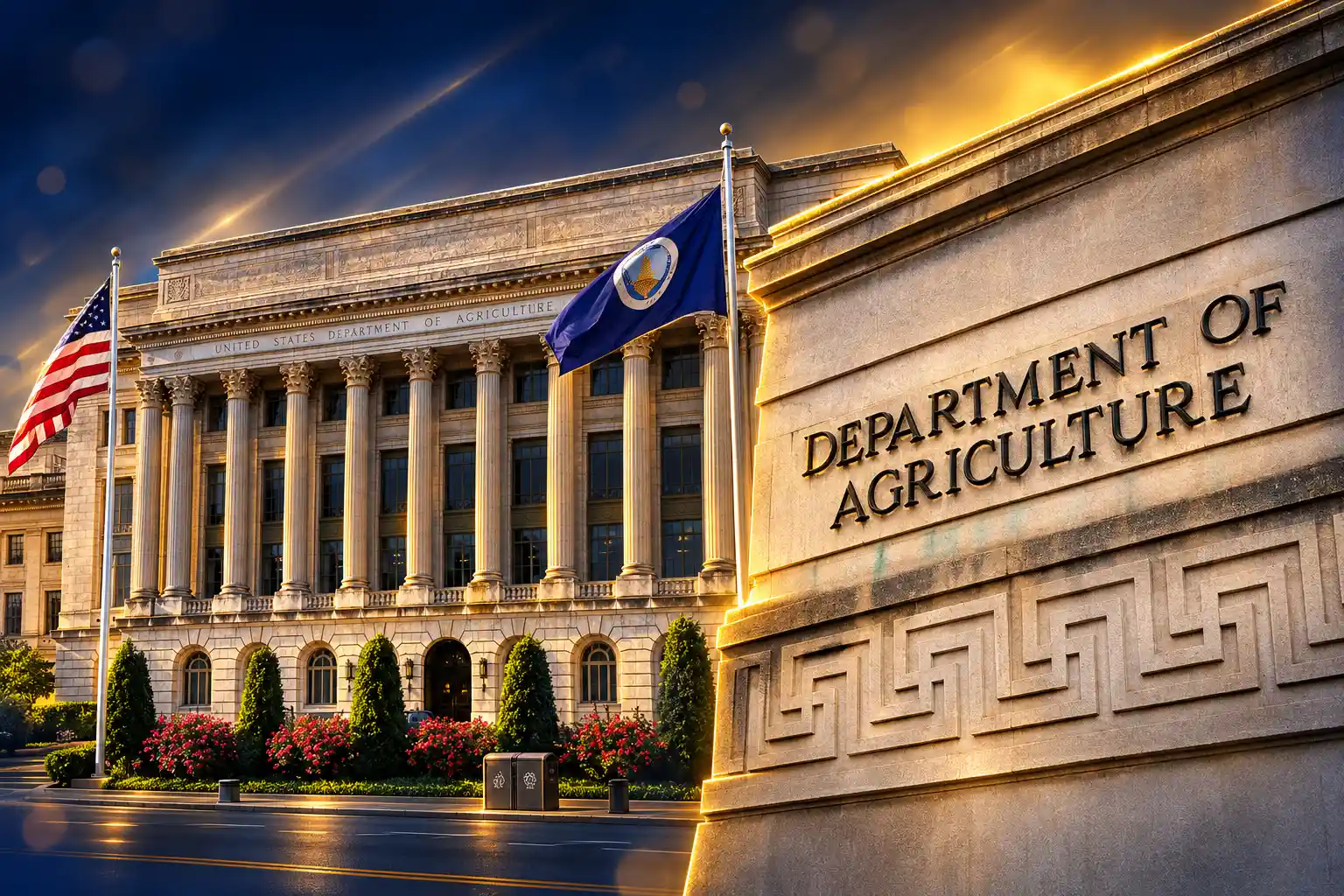
The outage was not a blank USDA.gov page for a few hours. Local Farm Service Agency and Natural Resources Conservation Service shops lost the programs they use to process producer loans, release conservation payments and map projects. Beam, speaking Thursday, said he had heard of outages, had talked with IT leadership, and thought staff were working through “a lot of this stuff.”
Fordyce later named the same cluster as a week-long cyberthreat that delayed farmer loans, payments and conservation work. Employees pointed to three named tools and to the client-facing apps used to check loan and aid status.
TOOLS COUNTY OFFICES COULD NOT COUNT ON
| Tool | Office | What stalled |
|---|---|---|
| FSA loan software | Farm Service Agency | Producer loan files and related processing |
| ProTracts | NRCS | Conservation contracts and payments to farmers |
| Service Desk | NRCS | Mapping for conservation projects |
| Client-facing loan and aid apps | FPAC | Status checks and notifications for loans and other aid |
Crop insurance and harvest-loss safety-net tools sit in that same financial stack, according to the internal notices describing the outage. USDA has not published a farmer-by-farmer tally of checks held or loans delayed, so the dollar figure on the bottleneck is still unknown. The operational fact is simpler. If ProTracts cannot run, a conservation payment cannot be released from that desk, even if the underlying contract is intact.
Ryan Marquardt, vice president of the Iowa Farmers Union, said the disruption was in its fifth day on Friday and landed while farmers were selling grain and livestock, making loan payments and closing the year’s books. That is the second hit. Even if records were never copied off the network, software that cannot process a file still holds cash on the government’s side of the counter.
Fordyce Calls the Shutdown a Good-News Story
Fordyce spoke with reporters at the National Association of Farm Broadcasting conference in Kansas City on Friday, November 20, after earlier comments had treated the downtime as a software update. He corrected the label. The week-long event was a “cyberthreat,” he said, and “there was no Personally Identifiable Information (PII). No data was lost because the systems that protect against cybersecurity threats worked.”
He described “limited outages” and said programs were shut down to protect against the threat. Restoration, in his telling, required the same dark interval staff had already lived through.
The procedures to kick things back on require the systems to be shut down. And if not, we’ll work on that over the weekend. I’m confident that they’re making this a priority. But I think from my perspective, what is important is maybe this is a good news story that people that were trying to do harm weren’t able to do it because our systems work.
Richard Fordyce, Undersecretary for Farm Production and Conservation, National Association of Farm Broadcasting conference
He also left room for mixed causes. “I think that there could be multiple reasons why potentially systems aren’t operating,” he said, including maintenance on some FSA systems. The press office did not put out a written statement to match his remarks. For county staff who had been told not to do critical work, the good-news line and the idle loan queue existed at the same time.
December 11 Is Still the Enrollment Deadline
The outage collided with a signup that already had a short fuse. FSA opened 2026 ARC and PLC election and enrollment on September 16. The December 11 enrollment deadline is the last day to lock in that coverage. Miss it, and last year’s election can roll forward while the farm becomes ineligible for a 2026-crop payment.
Fordyce put the money on the calendar. If producers do not elect and enroll for 2026, he said, they will not be eligible for ARC and PLC payments in October 2027. On Thursday, before the cyber label was public, reporters asked Beam about a delay after a slow harvest. He said no.
“We are not going to be able to move that deadline back,” Beam said. “Normally, that deadline would have been March 15th. So, March 15th will be the deadline for the ’27 crop year. We really can’t push it back anymore. We need to get that data in there.” Fordyce backed him on Friday. He said he did not believe the department would extend December 11.
He did offer a queue, not extra days. If a local office is booked, he said, a farmer who contacts the office and goes on a register is treated as having arrived in time. “As long as they’ve contacted the office and made an attempt to do the ARC and PLC elections before December 11th, they’ll be fine.” That workaround only works if the office can still answer the phone and keep a list while its loan software is in and out.
WHAT THE 2026 SIGNUP STILL REQUIRES
- The cutoff: December 11, 2026, remains the last day to elect and enroll for the 2026 crop year, with no extension announced.
- The penalty: A skipped 2026 enrollment can leave a farm ineligible for that crop year’s ARC or PLC payment, which Fordyce tied to checks in October 2027.
- The office path: Fordyce told producers to deal with local FSA offices, and said a register for overflow appointments counts as making the date.
- The next window: 2027-crop ARC and PLC enrollment runs to March 15, 2027, which Beam noted is the date this year’s signup used to occupy.
Those rules sit on a large check. On October 7, Secretary Brooke L. Rollins said FSA’s ARC and PLC would generate about $13.8 billion in gross payments for the 2025 crop year, the largest annual payout since the programs were created in the 2014 Farm Bill. Statute still applies a 5.7% sequestration cut to those payments, and the 2025 payment limit is $160,000. Sixteen crops triggered a PLC payment for that crop year, including corn, soybeans, wheat and seed cotton. FSA said it would issue 2025-crop payments as calculations were completed. A week of stalled county software does not cancel that pool. It can slow the paperwork that connects a farm to the next one.
The GAO Report Arrived in the Middle of the Outage
The same Thursday the outage became public, the Government Accountability Office released GAO-27-108656, a review of how USDA and the Food and Drug Administration handle cybersecurity for the food and agriculture sector. The watchdog said the agencies had met most cyber-related pieces of 16 duties in the Fiscal Year 2021 National Defense Authorization Act, and had only partially met or not met five of 16 cybersecurity requirements on information sharing and emergency preparedness. That leaves 11 duties met and five still open.
GAO told USDA to continuously collect cyber-threat information for the Cybersecurity and Infrastructure Security Agency, and to run emergency exercises and simulations for the sector, including a look at whether staff and money should be shifted to do the work. Both recommendations were listed as open. USDA disagreed with those two items and asked GAO to remove or redirect them. GAO kept them. HHS agreed with three parallel recommendations aimed at FDA, including a call for coordinated cyber-emergency plans.
The report is about the sector USDA oversees, not a forensic write-up of this week’s incident, and it does not name the Monday intrusion. Fordyce had no comment on it. The timing still sits on the same desk. Auditors spent the week of the outage telling Congress that USDA had not fully built the sharing and drill habits the law already required, while county offices waited on password resets.
GAO’s example of what a food-sector breach can do was older and bloodier than a loan queue: a 2021 ransomware attack on a global meat processor that shut large slaughterhouses and tightened meat supplies. This week’s event, on the evidence Fordyce gave, did not take food off shelves. It took payment software offline. Those are different failures. One poisons trust in the supply. The other holds operating cash at the FSA counter in November.
USDA Is Still Merging Hundreds of Farm Databases
Fordyce used the same Kansas City session to argue that a single data layer is safer than the current sprawl. “Depending on who’s doing the counting, there were between 400 and 600 disparate IT systems,” he said. “Having a singular data layer, I think, is really a smart thing from a cybersecurity standpoint.” He said USDA had already moved about half of its databases and platforms onto that layer.
Rollins had sketched the same mess earlier in the year at Commodity Classic. “We have been left with ancient technical architecture” with custom-built systems and databases “managed by over 1,000 different contractors that cost the taxpayer over $1 billion,” she said. The One Farmer, One File project is supposed to give a producer one record that follows them through USDA. “When this initiative concludes, producers will be able to access their USDA data in a single, modern, secure system built to today’s cybersecurity standards,” Rollins said. She had put the work on about a two-year clock.
A reset of every database password in every environment is what a sprawling estate costs when something looks wrong. Half-migrated systems still have to be restarted together if credentials are shared across the old stack and the new layer. The modernization pitch and the outage are the same architecture seen from two sides: fewer systems should mean a smaller blast radius, and until the merge is done, a security incident still means taking loan software, ProTracts and aid portals down as a set.
No Attacker Has Been Named
Fordyce’s no-PII claim and the former officials’ description of hackers on a payment system can both stand as stated. Access is not the same as a confirmed theft. USDA has not identified a group, a country or a ransomware strain, and it has not released a list of systems copied or left untouched. Staff frustration, described by people inside the department, came as much from thin briefings as from the downtime. Some workers first heard only vague talk of a possible breach and wondered whether USDA had been swept up in a separate week of aviation, bank, Microsoft and NSA outages that officials had already tied to maintenance, not a coordinated attack.
After a public report that payment systems were down, unexpected texts about USDA checks are the cheap follow-on. The sane path is the local office and the department’s own farm portal, not a link in a message that arrived this week.
WHAT WE KNOW
- The trigger: CPOC flagged a security incident, and Rottler ordered database password resets across all environments on Monday, November 16.
- The farm-office hit: FSA loan software, NRCS ProTracts and Service Desk, plus client apps for loan and aid status, ran with outages through the week.
- The official line: Fordyce on Friday called it a cyberthreat, said no PII was lost, and aimed to restore most systems by Friday evening or over the weekend.
- The deadline: Beam and Fordyce both said the December 11 ARC/PLC date will not move; a local register is the overflow valve.
WHAT IS UNCONFIRMED
- The actor: No group or nation has been named, and USDA has not said how far any intruder got.
- The data: Fordyce said nothing was lost; former officials said a farmer-payment system was reached. Those statements have not been reconciled in a department report.
- The money: No public figure shows how many loans, conservation checks or safety-net payments were delayed, or for how long.
- The all-clear: Friday’s restore-by-close target was a goal, not a posted confirmation that county software was stable.
County offices still have to finish 2026 ARC and PLC files against a date that has not slipped. The unnamed intruder may never be identified in public. The password reset already did the work that farmers can measure, which is idle loan software, a quiet ProTracts queue and a December 11 clock that kept running.

Netflix Bets on 15-Minute Sitcom Minimum Wage

Quarter-Cow Shares Sell Out as Grocery Beef Stays High

Hunger Games Hits $120 Million Without a Next Film

Disney+ Puts Hulu Live TV in One App This December

Merch Builds a Parallel Closet Beside Luxury Fashion

Thameslink Will Pad 60,000 Ironing-Board Seats From 2027

How Tall Was Adolf Hitler?

U.S. Forces Clear Hormuz Mines, Then Hit Minelayers Again

Micron Sells the Memory Shortage as Five-Year Contracts

Royal Caribbean Sends Los Angeles Ships to Singapore and Brisbane
-
 NEWS3 months ago
Thameslink Will Pad 60,000 Ironing-Board Seats From 2027
-
 HISTORY3 years ago
How Tall Was Adolf Hitler?
-
 BUSINESS3 months ago
U.S. Forces Clear Hormuz Mines, Then Hit Minelayers Again
-
 NEWS3 months ago
Micron Sells the Memory Shortage as Five-Year Contracts
-
 NEWS3 months ago
Royal Caribbean Sends Los Angeles Ships to Singapore and Brisbane
-
 NEWS3 months ago
Twenty Controllers Closed Norwich Airport for a Bank Holiday
-

 BUSINESS3 months ago
Sweetmore Bakeries Buys Fantasy Baking for Bar Work
-

 BUSINESS3 months ago
L Catterton Installs a Kraft Heinz Operator at Kettle Cuisine