
LIFESTYLE
Wales Radiology Freezes Leave Cancer Patients Deteriorating
Every radiology leader in Wales has seen patients worsen as hiring freezes doubled and £13.5 million went on temporary scan reports rather than consultants.

Every radiology department leader in Wales has seen patients’ conditions worsen because of staff shortages, the Royal College of Radiologists found. NHS Wales has 88 fewer consultant clinical radiologists than it needs, a 28% gap, in a radiologist shortage now landing in cancer clinics as missed reports and delayed treatment.
The college’s 2025 census, published on 18 June 2026 with a 100% response from radiology departments and cancer centres, is the first in which leaders report that deterioration. Betsi Cadwaladr University Health Board in north Wales says a private reporting partner has cut scan waits since April. Both statements are now on the record together.
Every Radiology Leader in Wales Has Seen Harm
Across the UK, 8 in 10 radiology leaders and half of cancer-centre leaders told the college they had seen patients worsen because staff were missing. In Wales the radiology figure is 100%. The census is the first in the series, which has run since 2008, to put that clinical outcome on the page.
For the first time, our census shows that patients’ conditions are deteriorating because of workforce shortages. Delays to diagnosis and cancer treatment are extremely dangerous, particularly in deprived and rural communities where shortages are worst. Despite our members’ extraordinary efforts, we simply don’t have enough clinical radiologists and clinical oncologists to meet rising demand. Recruitment freezes and growing reliance on outsourcing are making the situation worse not better.
Dr Stephen Harden, President, Royal College of Radiologists
Harden’s statement is the college’s UK summary of why patients’ conditions are deteriorating. Nine in 10 UK cancer-centre leaders also reported delays to patients starting radiotherapy or drug treatment, including chemotherapy, because of staff shortages.
In December 2025, 46,803 people in Wales, 34% of those waiting, had already passed the eight-week diagnostic target of none. Over 2025, 9,866 patients, 39%, waited more than two months to begin treatment for suspected cancer, almost double the 20% target. NHS Wales was also 13 clinical oncologists short, a 17% gap, against doctors who prescribe and oversee chemotherapy and radiotherapy.
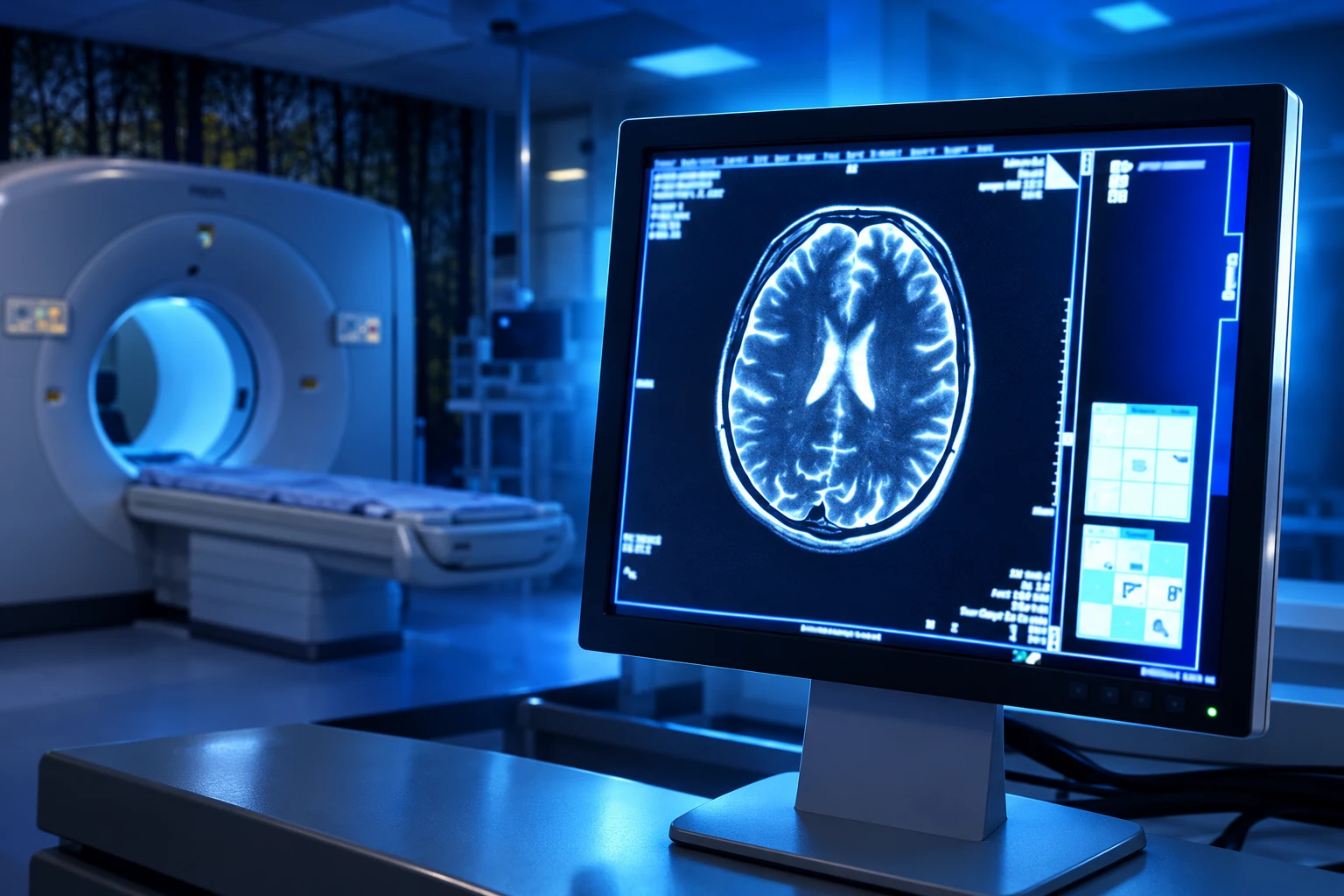
Hiring Freezes Almost Doubled in a Year
Wales already had more radiology departments under recruitment freezes than anywhere else in the UK. The college’s Wales briefing says those freezes almost doubled between 2024 and 2025, from 33% of radiology departments to 57%, as boards tried to balance budgets while demand kept rising.
THE FREEZE YEARS
- 2024: 33% of radiology departments in Wales report a recruitment freeze, and the radiology workforce grows by 1.1%.
- 2025: 57% of radiology departments in Wales report a freeze, against a UK radiology-department rate that moved from 19% to 38%.
- December 2025: 46,803 patients in Wales wait more than 8 weeks for a diagnostic test, 34% of the list, against a target of none.
- 18 June 2026: the college publishes the 2025 census and, for the first time, records patients worsening on the wait.
That 1.1% growth in 2024 sat against a UK five-year average of 5%. It also sat against a longer Welsh run that looked healthier on paper: since 2020, Wales’s permanent clinical radiology workforce had grown faster than any other UK nation’s, at 5.4% a year, while demand for complex imaging rose at least as quickly. One slow year under a freeze wiped the sense of catch-up.
UK-wide, 38% of radiology departments and 51% of cancer centres had a freeze in 2025. The college calls bans on permanent posts a false economy, because boards then buy locums, overtime and private reporting instead. Clinical directors told the census they still could not fill the rotas that do biopsies, sit in cancer meetings, and report the scans those meetings need.
North and West Wales Sit on a 42% Gap
The national 28% figure hides a split the college now groups with the North of Scotland and parts of the English North East and East Midlands as among the worst in the UK. North and west Wales are short 43 radiologists, a 42% gap. South Wales is short 45 radiologists, a 22% gap. Add the two and you get the national 88.
THE WALES CONSULTANT GAP
| Region | 2025 radiologist shortfall | Radiologists short | 2025 oncology shortfall | 2030 radiologist forecast |
|---|---|---|---|---|
| North and West Wales | 42% | 43 | 39% (6 doctors) | 48% |
| South Wales | 22% | 45 | 11% (7 doctors) | Not published |
| Wales | 28% | 88 | 17% (13 doctors) | 34% |
If nothing changes, the college forecasts a 48% radiologist shortfall in north and west Wales by 2030, and a 62% shortfall in clinical oncology. For Wales as a whole those 2030 figures are 34% and 29%. Small acute hospitals across the UK already sit at a 43% radiologist shortfall, against 30% in large teaching hospitals.
Patients outside Cardiff and south-east Wales also lack a round-the-clock interventional radiology service of their own. Mechanical thrombectomy for stroke, an image-guided pinhole procedure, depends on transfer arrangements with England or the south of Wales. The Wales briefing records a 22% shortfall of interventional radiologists in 2025, and says every clinical director surveyed had seen those procedures delayed or cancelled.
Beverly Scott, who lives with ovarian and peritoneal cancer, is in that north-west catchment. She was given five years to live at diagnosis, took part in trials at the Royal Marsden Hospital in London, and has now had 14 years of scans while treatment keeps the disease stable. She belongs to the Pwllheli and Pen Llŷn cancer support group in Gwynedd.
“You are anxious to know has the cancer spread, and until you get those results, that is going round in your head all the while,” Scott said. “For the past 14 years, I have lived with scans. In cases like mine, delays could cause the cancer to spread further and treatments wouldn’t work.”
Karen Jones, another member of the group, was first diagnosed with breast cancer in 2015, then colon cancer, then a return of the breast cancer in 2021. “Waiting for results is the worst part, will it be clear or not?” she said. “It is terrible, horrific and horrendous. You are in total limbo.”
The Outsourcing Bill Could Have Hired 113 Consultants
To cover the gaps in 2024/25, radiology departments in Wales spent £13.5 million on private reporting, ad hoc locums and overtime. The college says that sum equals 113 consultant radiologist salaries, more than enough to fill the entire 88-doctor gap. It was a fall on the previous year’s record, and it still did not buy a permanent list.
WHAT THE £13.5 MILLION BOUGHT
- Private reporting, locums, overtime: Combined spend of £13.5 million in 2024/25, equal to 113 consultant salaries.
- Quality worries: 86% of clinical directors report concerns about outsourced reports.
- Double-checking: 100% of clinical directors report extra local workload from reviewing those reports.
- Budgets: 100% of clinical directors report the costs going over budget.
UK radiology spent a record £362 million in 2025 on the same short-term mix, of which £241 million was outsourcing to private teleradiology firms, on a path the college puts at £454 million by 2030. That UK total would cover more than 3,000 consultant salaries, above the shortfall of over 2,300 radiologists (32%) and over 230 clinical oncologists (17%) the college now records. Modelling for the college says training 10% more radiologists a year would save about £100 million against continued patching, with 10 extra clinical oncology posts a year saving about £20 million.
Stress is already emptying the grade. All radiology clinical directors and all cancer-centre leaders in Wales flagged burnout tied to staff shortages. Average age of leavers over the last five years was 54 for clinical radiologists and 47 for clinical oncologists. Across the UK, 39% of radiologists and 44% of clinical oncologists are due to retire within 10 years. The college also estimates around 24,000 new cancer cases a year in Wales by 2035, an 11% rise from 2025.
Betsi Cadwaladr Points to a Third-Party Partner
Clara Day, executive medical director at Betsi Cadwaladr University Health Board, said she understood the census figures “can be very worrying for patients” and that the board was “actively recruiting” in radiology and oncology. “We are also strengthening our links with the North Wales Medical School to support future workforce development,” she said.
Day pointed to nurse-led clinics and new colorectal and breast metastatic nurse specialist teams under the board’s oncology strategy. “Robust arrangements are in place to maintain safe services, prioritise patients according to clinical need and to continue delivering high-quality oncology care for the people of north Wales,” she said. She added that, “despite a substantial increase in demand for imaging services,” a third-party provider had helped cut waiting times for scans and results since April, with reporting times monitored throughout.
The board has not named that provider. Welsh Government figures compiled by Digital Health and Care Wales still show how wide the diagnostic gap was at the point her clock starts. In April 2026, 43.0% of diagnostic pathways at Betsi Cadwaladr were waiting beyond the eight-week target, the highest share in Wales. Cwm Taf Morgannwg was at 2.0%. On the suspected-cancer pathway, 52.5% of Betsi patients started first definitive treatment within 62 days. The board also had the highest share of referral-to-treatment pathways waiting more than a year, at 18.6%, and more than two years, at 1.4%.
A private reporting contract can move a queue without adding a consultant who attends the cancer meeting, does the biopsy, or stays when the locum week ends. That is the tension Day’s update does not close. The college’s Wales directors have already said the outsourced pile comes back for local checking, and that the checking itself delays the result the patient is waiting on.
What Happened When a Scan Waited Four Months?
In March 2026 the Public Services Ombudsman for Wales issued a public-interest report on a prostate cancer patient at the same health board. A biopsy showed a PSMA PET scan was appropriate. The scan did not happen for almost four months. Because hormone therapy had to wait for that scan, the patient waited more than 180 days from the point of suspicion to definitive treatment, more than three times as long as the pathway required. The ombudsman found a clear service failure.
On the balance of probabilities, these delays more likely than not contributed to Mr C’s cancer being more advanced. The uncertainty this creates will sadly be an enduring injustice for Mr C and his family.
Michelle Morris, Public Services Ombudsman for Wales
Morris said it was the fourth report her office had issued in 9 years on delayed prostate cancer management at the board, and that a majority of actions in an improvement plan agreed with the Royal College of Surgeons remained outstanding. The board cited staff sickness and capacity, reasons her office had heard in earlier cases, and accepted the new recommendations, including an audit of PSMA PET waits over two years and a Duty of Candour review of how the pathway passed 180 days.
The college cites research that each month’s delay to starting cancer treatment can raise the risk of death by around 10%. Scott’s fear that a late scan lets a stable cancer move is the same mechanism in a different tumour. Jones’s “total limbo” is what the wait feels like before anyone can even measure that shift.
The Clinic Visit That Ends Without an Answer
Dr Owen Nicholas, a consultant oncologist in Swansea and chair of the college’s Welsh committee, put the shortage in the room where the result is supposed to be explained. “It is not getting better and the patients are now getting affected,” he said.
“There is a challenge, where you sit in front of a patient who is extremely anxious to know has the treatment worked or has it come back. For you to have to say, ‘sorry I don’t know, because I don’t have the report in front of me’, or perhaps you cancel an appointment because a scan report has not come back. The primary concern is for the patient, but it is not very nice for a clinician to have to do that over and over again.”
On 27 October 2026, Nicholas and Harden took that warning to a radio audience. Two days later the college posted the same line from its own account: patients’ conditions are deteriorating, and north and west Wales are the worst hit. The argument has not moved far beyond those two voices and the Gwynedd patients who live on the scan cycle. It is still a specialist alarm, not a fight over the freeze that helped produce it.
On Tuesday, Welsh Chair Dr Owen Nicholas and @DrStephenHarden told @BBCWales @BBCRadioWales patients' conditions are deteriorating due to shortages of radiologists and cancer doctors, with North & West Wales worst affected by shortages. Listen from 33:00 https://t.co/c2dGDAmiVy pic.twitter.com/Haef1Ftn5A
— The Royal College of Radiologists (@RCRadiologists) October 29, 2026
The Wales briefing’s first asks are simple: new consultant posts, more training places, a draw for doctors into north and west Wales, and less money for the reporting contracts that already cost more than the missing salaries. Leave the path as it is, and the 2030 forecast for that region is a 48% radiologist gap and a 62% gap in clinical oncology. Nicholas’s sentence does not need a gloss. It is not getting better, and the patients are now getting affected.
Disclaimer: This article is news reporting and analysis of workforce figures, official waiting-time data and a published ombudsman investigation. It is for information only and is not medical advice, a diagnosis, or a guide to any individual’s cancer care, scans or treatment schedule. Readers who are worried about a test, a delay or a change in symptoms should speak to their own GP, oncologist or specialist nurse, who can interpret results against that person’s history. The counts, percentages and service statuses here reflect the Royal College of Radiologists’ 2025 census as published in June 2026, Welsh Government performance data for April 2026, and the ombudsman’s March 2026 report, and those figures can be revised in later releases.

Josh Sinn Draws the Heaviest AFL Betting Ban Since 2019

Rolapp Shuts the PGA Door as DeChambeau Heads to Europe

Apple TV Renews Slow Horses Past the Last Novel

Oasis Lifts UK Music to £8.4 Billion as Venues Shrink

Beyoncé Hits 100 Grammy Nominations on a Vault Track

Thameslink Will Pad 60,000 Ironing-Board Seats From 2027

How Tall Was Adolf Hitler?

U.S. Forces Clear Hormuz Mines, Then Hit Minelayers Again

Micron Sells the Memory Shortage as Five-Year Contracts

Royal Caribbean Sends Los Angeles Ships to Singapore and Brisbane
-
 NEWS3 months ago
Thameslink Will Pad 60,000 Ironing-Board Seats From 2027
-
 HISTORY3 years ago
How Tall Was Adolf Hitler?
-
 BUSINESS3 months ago
U.S. Forces Clear Hormuz Mines, Then Hit Minelayers Again
-
 NEWS3 months ago
Micron Sells the Memory Shortage as Five-Year Contracts
-
 NEWS3 months ago
Royal Caribbean Sends Los Angeles Ships to Singapore and Brisbane
-

 BUSINESS3 months ago
Sweetmore Bakeries Buys Fantasy Baking for Bar Work
-
 NEWS3 months ago
Twenty Controllers Closed Norwich Airport for a Bank Holiday
-

 BUSINESS3 months ago
L Catterton Installs a Kraft Heinz Operator at Kettle Cuisine