
AUTO
Porsche Bets a $400,000 911 Can Replace Lost Volume
Porsche is exploring a $400,000 911 to replace volume profit, even as 911 sales rise while China deliveries sink.

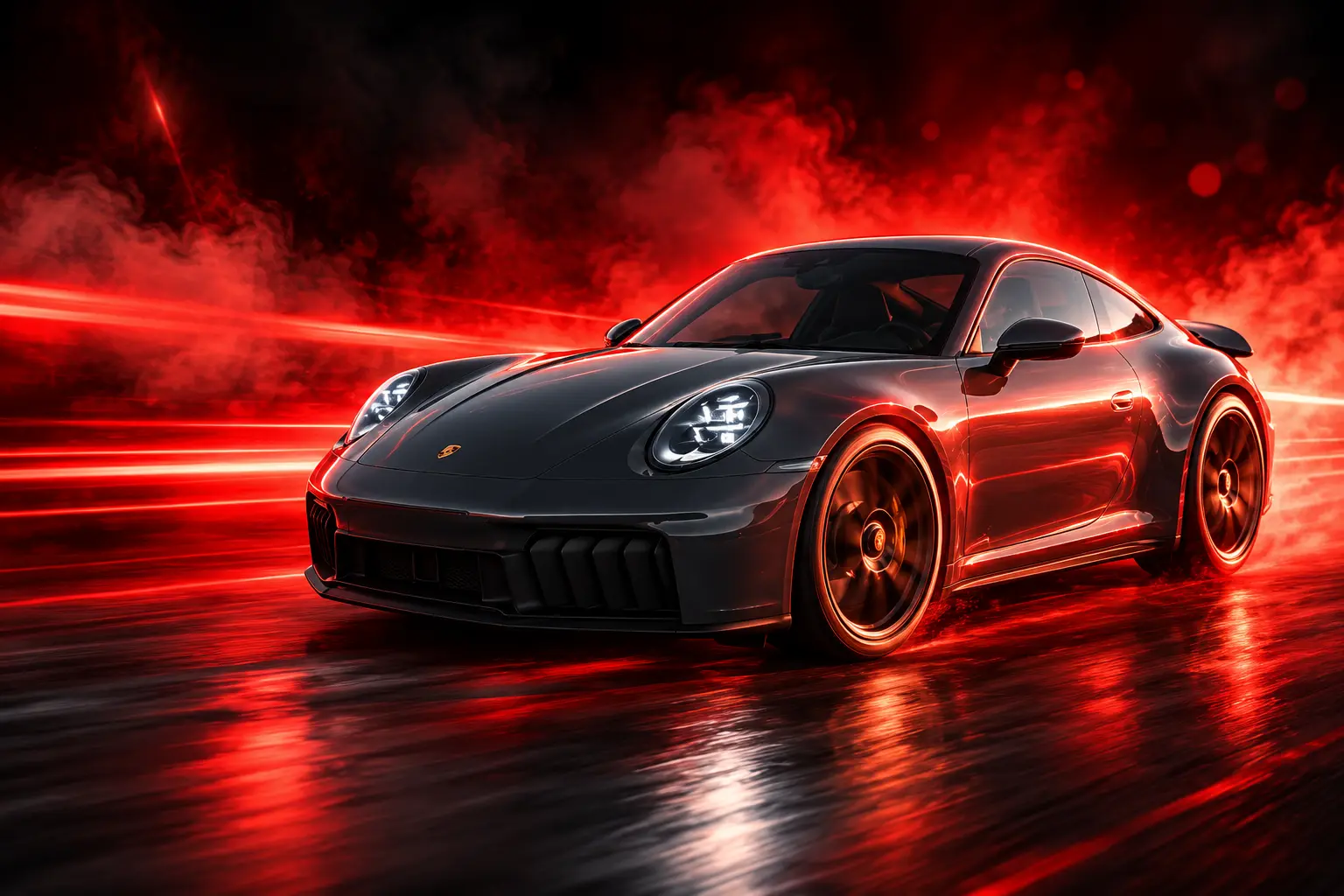
Porsche is studying a 911 that would start at $400,000, a 200 percent premium over the current base Carrera, after operating profit fell 99 percent. Alexander Fabig, vice president for product offering and individualization, said future halo 911s could wear reserved GT2 or Turbo GT badges.
In the first nine months of 2026, 911 deliveries rose 12 percent even as the company handed over 16 percent fewer cars. The sports car that still sells is being asked to fund a smaller Porsche.
Future Top 911s Could Triple the Base Price
A 911 Carrera coupe from $135,500 is the floor of the U.S. range, before a $2,350 destination fee. Fabig said future products could exceed a 200 percent premium over that car, which is how a starting price of $400,000 or more enters the conversation.
The last 992.1 capstone, the 911 S/T, listed at $290,000 when Porsche revealed it in 2023, in a run of 1,963 cars. The GT3-based 911 S/C convertible already sits 95 percent above the cheapest 911 on sale. A $400,000 car would not be a small step on that ladder. It would put a regular-production 911 badge in a band that used to belong to limited runs and the options sheet.
911 STICKER PRICES IN THE UNITED STATES
| Model | Starting MSRP |
|---|---|
| 911 Carrera Coupe | $135,500 |
| 911 Carrera T | $148,000 |
| 911 Carrera S | $156,200 |
| 911 Carrera GTS | $181,000 |
| 911 GT3 | $235,800 |
| 911 Turbo S Coupe | $270,300 |
| 911 Turbo S Cabriolet | $284,300 |
| 911 S/T (992.1, 2023) | $290,000 |
| Future halo (200 percent premium) | $400,000 or more |
Buyers already pay a second Porsche on the way out the door. Edmunds figures put the average new Porsche at $81,813 before options and at $128,663 as configured, or $46,850 in extra equipment per car, about $5,000 under the average price of any new car sold in 2025. The $400,000 911 would move that extraction from the tick boxes onto the window sticker.
A 99 Percent Profit Drop Forced the Turn
For the first nine months of 2025, Porsche posted operating profit of 40 million euros against 4,035 million euros a year earlier, a 99.0 percent fall. Return on sales dropped to 0.2 percent from 14.1 percent. Revenue was 26.86 billion euros, down 6.0 percent, and deliveries were 212,509, also down 6.0 percent.
The company booked about 2.7 billion euros in extraordinary charges in that period for a product-strategy reset, battery activities and related cuts, and it expected about 3.1 billion euros of realignment costs for the full year. A 15 percent U.S. import tariff applied from August 1, 2025. China, once a profit engine, was called out as weak in the luxury segment. Finance chief Jochen Breckner said 2025 would be the trough and that improvement would show from 2026.
On October 27, 2026, the nine-month figures showed that bounce, and also how it was earned. Operating profit rose to 1.74 billion euros ($1.94 billion) and return on sales to 6.9 percent. Revenue still fell 5.9 percent, to 25.28 billion euros. Realignment charges in the period were about 500 million euros, down from 2.7 billion euros. Deliveries fell to 178,532. Porsche is trying to make money on fewer than 200,000 cars a year. The $400,000 911 is how that math gets written onto a badge people still recognize.
THE YEAR PORSCHE REPRICED ITSELF
- October 24, 2025: Nine-month operating profit lands at 40 million euros, down 99.0 percent, with 2.7 billion euros of realignment charges.
- August 14, 2026: Sonderwunsch and Manthey reveal the Flachbau RS, a factory one-off built from a 2018 911 GT2 RS.
- October 15, 2026: Chief executive Michael Leiters unveils the Mission S in Queens as a mid-engined line above the 911.
- October 26, 2026: Fabig describes 15 one-off projects priced from under $2 million to $15 million and a 200 percent 911 premium.
- October 27, 2026: Nine-month operating profit rebounds to 1.74 billion euros on 16 percent fewer deliveries; 911 volume is up 12 percent.
The recovery is real, and so is the smaller company underneath it. Charges rolling off will not keep the margin up by themselves once that base effect fades.
The 911 Is the Only Model Line Still Growing
Porsche delivered 42,217 911s in the first nine months of 2026, up 12 percent, the only model line that rose. The Cayenne remained the volume leader at 59,586. North America was still the largest region, at 56,088 vehicles, down 13 percent. China fell 33 percent, to 21,493 from 32,195.
WHERE PORSCHE DELIVERED FEWER CARS
| Region | Jan-Sep 2025 | Jan-Sep 2026 | Change |
|---|---|---|---|
| Worldwide | 212,509 | 178,532 | -16% |
| North America | 64,446 | 56,088 | -13% |
| China | 32,195 | 21,493 | -33% |
| Germany | 22,492 | 20,954 | -7% |
| Europe (excluding Germany) | 50,286 | 44,949 | -11% |
| Overseas and Emerging Markets | 43,090 | 35,048 | -19% |
A 911 that is already taking share inside a shrinking company is a strange candidate for a closed club. The temptation in Stuttgart is obvious: the car that still has a queue is the one that can take a higher number. The risk is that the queue is there because the 911 is still the Porsche a driver can use, not because it has become a commission object.
Sonderwunsch Has 15 One-Offs in the Shop
Fabig said the in-house Sonderwunsch shop is running 15 one-off projects priced from just under $2 million to $15 million. That is not a configurator exercise. It is new parts, new tools and years of engineering for a single owner. He also described a middle band of “few-offs,” cars rarer than a normal limited run but not unique.
The working example is already on the road. Sonderwunsch, Style Porsche, Weissach, Porsche Motorsport and Manthey spent almost three years turning a like-new 2018 911 GT2 RS with the Weissach Package into a factory one-off slantnose 911, the Flachbau RS, shown in Monterey. The brief from the customer was short: more performance, a Flachbau look, and a rear wing in the manner of the 911 GT3 R rennsport.
Converting the car to a slantnose model proved to be very challenging, even though we left the drive unchanged, in agreement with the customer. Our aim was to reinterpret the iconic look of the 935 without compromising on safety, technology or road legality.
Alexander Fabig, Vice President Product Offering and Individualisation, Porsche newsroom
The conversion cut 31.6 kg, used three test cars, and put 50 laps on the Nürburgring Nordschleife. At 340 km/h in the high-downforce setting, the new wing makes 554 kg of downforce on the rear axle. Grant Larson, who also designed the 2018 935 tribute, drew the front. Porsche sold 948 factory Flachbau versions of the Type 930 Turbo between 1982 and 1989, so the shape has a price history as well as a race history. The current Flachbau RS customer one-off is that idea with a modern invoice.
In the footsteps of Moby Dick: together with @manthey_racing, #Porsche has transformed a like-new 911 GT2 RS (Type 991.2) with Weissach Package from 2018 into an extraordinary factory one-off slantnose model. More: https://t.co/vu3meXmrCb pic.twitter.com/AqZKp0mFKK
— Porsche Newsroom (@PorscheNewsroom) August 14, 2026
Fifteen cars at $2 million to $15 million will not replace Macan volume. They do not have to. They have to drop enough profit per unit that Porsche can live with 178,532 deliveries instead of 212,509. Dealer markups on scarce GT cars have already pushed some 911s into the $400,000 band once an allocation is in play. Stuttgart wants that premium on its own invoice, not on a dealer’s.
An $800,000 Factory Reset for the Carrera GT
The same logic is being applied to cars Porsche already built. Factory recommissioning of the Carrera GT, the V10 supercar made from 2003 to 2006, runs about $500,000 to $800,000 per car, on top of the vehicle itself. Specialists strip the car, overhaul the mechanicals, and can add paint and cabin work the original owner never specified. One finished example went back out in a livery inspired by the No. 23 Porsche 917 that won Le Mans in 1970, with the odometer at zero.
THE CARRERA GT RECOMMISSION BOOK
- Original run: Porsche built 1,270 Carrera GTs between 2003 and 2006.
- Finished cars: 11 factory recommissions are complete.
- In the shop: 16 cars are in progress and 21 sit on a waiting list, 48 in the program.
- The bill: Owners pay about $500,000 to $800,000 per car, excluding the vehicle.
Forty-eight cars will not move the delivery total. At the top of that range, 48 jobs would still be tens of millions of dollars of workshop revenue on a fleet that no longer needs a new platform. Heritage is being run as a product line.
What a GT2 or Turbo GT Badge Would Cost Now
Fabig said the ultimate forms of the current 992.2-generation 911 could use reserved historical names such as GT2 or Turbo GT. Those badges have been kept on the shelf. Bringing one back at $400,000 or more would be a pricing decision first and a motorsport decision second. The GT3 already starts at $235,800 and the Turbo S coupe at $270,300. The jump to $400,000 is not another option pack. It is a different customer.
Some of that customer is already in the building. A GT3 S/C at a 95 percent premium, a sold-out S/T at $290,000, and GT cars that leave town with six-figure dealer extras have trained the top of the book to pay. The open question is whether a list price in that band still needs a 911 on the decklid, or whether the 911 becomes the thing you buy when you cannot get a one-off slot.
The EV reset is the other half of the argument. Electrified models were 35.2 percent of deliveries in the first nine months of 2025, including 23.1 percent fully electric and 12.1 percent plug-in hybrids, and 56 percent in Europe. That mix did not produce the old margin. A $400,000 911 with a flat-six reads, to anyone who watched the write-downs, like the combustion car being asked to cover a bet that did not pay.
The Mission S Sits in a New Band Above the 911
On October 15, 2026, Leiters pulled the cover off the Mission S on a Queens pier, the same place the 550 Spyder was photographed in 1953. He called it a mid-engined super sports car platform positioned above the 911, not a one-off hypercar, and a permanent addition to the range. He would not give a price beyond “much more” than a 911. The platform can take gasoline, hybrid or plug-in power, and a manual or a PDK, with customer demand deciding what gets built. It is not an EV.
If the Mission S takes the band above the 911, a $400,000 GT2 or Turbo GT is the 911’s attempt to occupy the floor of that new attic rather than the ceiling of the old showroom. Porsche still builds Cayennes and Macans. Combustion Macan production ended in summer 2026. The mix is being steered, not abandoned overnight.
Nine-month 911 volume is up 12 percent in a company that is down 16 percent. That is the spare fact the $400,000 sticker has to live with. The car that is carrying the range is the one Stuttgart now wants to treat like a commission.

Josh Sinn Draws the Heaviest AFL Betting Ban Since 2019

Rolapp Shuts the PGA Door as DeChambeau Heads to Europe

Apple TV Renews Slow Horses Past the Last Novel

Oasis Lifts UK Music to £8.4 Billion as Venues Shrink

Beyoncé Hits 100 Grammy Nominations on a Vault Track

Thameslink Will Pad 60,000 Ironing-Board Seats From 2027

How Tall Was Adolf Hitler?

U.S. Forces Clear Hormuz Mines, Then Hit Minelayers Again

Micron Sells the Memory Shortage as Five-Year Contracts

Royal Caribbean Sends Los Angeles Ships to Singapore and Brisbane
-
 NEWS3 months ago
Thameslink Will Pad 60,000 Ironing-Board Seats From 2027
-
 HISTORY3 years ago
How Tall Was Adolf Hitler?
-
 BUSINESS3 months ago
U.S. Forces Clear Hormuz Mines, Then Hit Minelayers Again
-
 NEWS3 months ago
Micron Sells the Memory Shortage as Five-Year Contracts
-
 NEWS3 months ago
Royal Caribbean Sends Los Angeles Ships to Singapore and Brisbane
-

 BUSINESS3 months ago
Sweetmore Bakeries Buys Fantasy Baking for Bar Work
-
 NEWS3 months ago
Twenty Controllers Closed Norwich Airport for a Bank Holiday
-

 BUSINESS3 months ago
L Catterton Installs a Kraft Heinz Operator at Kettle Cuisine