
BUSINESS
Australia’s Jobless Rate Hits the RBA’s 2027 Mark Early
Australia’s jobless rate hit 4.9% in October, a year ahead of the RBA forecast, while inflation still bars a cut from 4.85%.

Australia’s unemployment rate rose to 4.9% in October, the highest since October 2021, after employers cut 43,500 jobs. That monthly print matches the jobless rate the Reserve Bank of Australia had as a quarterly average only for the end of 2027.
The cash rate is still 4.85%, an 18-year high after five increases in 2026, because inflation is forecast to stay above 3% until late 2027. Traders spent 19 November pricing cuts that the inflation path still forbids.
A Second Month of Job Losses
The Australian Bureau of Statistics said employment decreased by 43,500 people in seasonally adjusted terms in October, to 14,738,600. Analysts had looked for a gain of about 25,000. September’s fall was revised to 36,400, which puts the two-month loss at 79,900, the largest such total in five years.
The number of unemployed people rose by 17,800 to 753,700. The jobless rate moved to 4.9% from 4.7%, the third monthly increase in a row after 4.6% in August. Hours worked fell 0.2% to 2,006 million, and the share of working-age people with a job dropped 0.3 points to 63.3%.
THE OCTOBER PRINT
- Unemployment rate: 4.9% in October, up from 4.7% in September and the highest since October 2021.
- Employment: Down 43,500 to 14,738,600 people, against a forecast rise of about 25,000.
- Participation: Down 0.2 points to 66.6%, which limited how far the jobless rate could climb.
- Underemployment: Eased 0.1 points to 6.2% even as hours and headcount fell.
The smoother trend series still showed employment up 7,200 and the trend jobless rate at 4.8%, so a single seasonally adjusted month can overstate a break. Two straight adjusted falls, a third rise in the jobless rate, and a drop in hours still point the same way. Over the year to October, employment rose by only 83,500 people, or 0.6%, while the number of unemployed people rose by 95,400, or 14.5%.
Sean Crick, ABS head of labour statistics, said a higher share of people stayed unemployed than is usual for October in the post-Covid years. “Employment remained steady in trend terms, meaning there was very little underlying growth in the number of employed people,” Crick said.
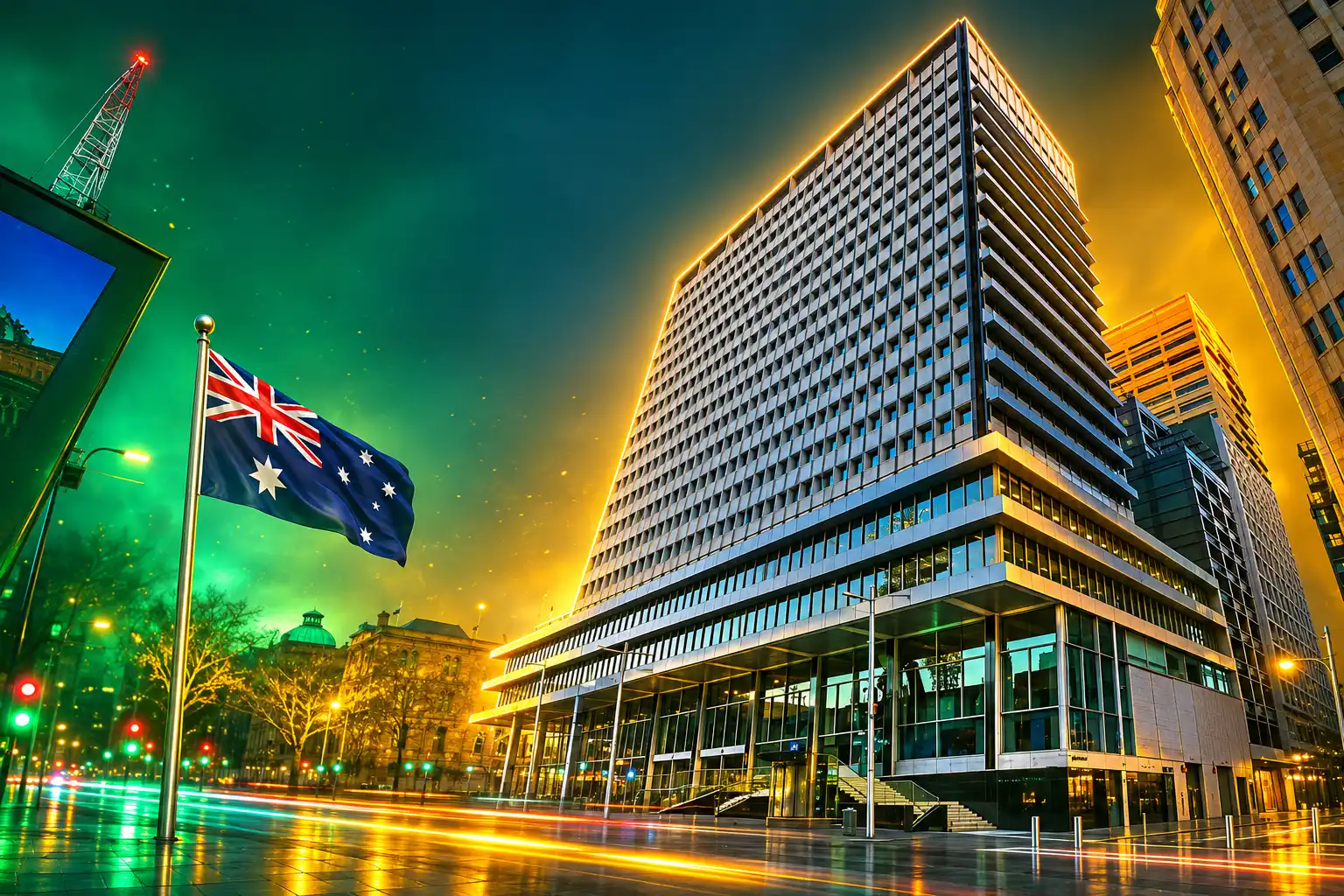
Joblessness Hits the RBA’s End-2027 Number Early
Staff forecasts finalised on 28 October, and published with the November Statement on Monetary Policy, put the unemployment rate at a quarterly average of 4.7% in the December 2026 quarter and 4.9% only in the December 2027 quarter. October’s monthly rate is already that later number. The bank still expects the jobless rate to rise to 5.1% by the end of 2028, and it still expects the number of jobs to grow, just not fast enough to hold the rate down.
THE RBA’S UNEMPLOYMENT PATH
| Horizon | Jobless rate (quarterly average) | Trimmed mean inflation |
|---|---|---|
| December 2026 | 4.7% | 3.6% |
| June 2027 | 4.8% | 3.5% |
| December 2027 | 4.9% | 2.9% |
| December 2028 | 5.1% | 2.4% |
Those jobless figures are quarterly averages, so one month does not rewrite the forecast on its own. It does land well outside the path the board had when it voted on 3 November. Headline CPI is still seen at 4.5% through the year to December 2026. Staff do not see inflation back inside the top of the 2-3% target until late 2027, and they do not see a return to the midpoint until mid-2028.
That lag is the bind. The labour market has already delivered the spare capacity the bank wanted later. Fuel, other goods and services, and domestic cost pressure have not. Crude oil and refined products had risen 20-25% since August when the board met, and staff assumed about two-thirds of the extra cost would pass through.
Where the 43,500 Jobs Went
Almost the entire October fall was part-time work. Full-time employment slipped by 2,900 to 10,228,700 people, while part-time employment fell by 40,600 to 4,509,900. September had the same shape: full-time jobs rose while part-time jobs were cut. Hours fell with the headcount, which is how firms reduce labour before they cut permanent roles.
WHERE THE CUTS LANDED
- Part-time work: Down 40,600 in October, the main source of the 43,500 fall in employment.
- Full-time work: Down only 2,900, so the core payroll held up better than the headline.
- Hours worked: Down 4 million, or 0.2%, to 2,006 million hours across all jobs.
- States: The jobless rate rose in every state except New South Wales, where it eased to 4.6% even as NSW shed 9,000 jobs; Victoria’s rate reached a five-year high of 5.4%.
Retail is already converting that squeeze into named redundancies that will not show up until later surveys. David Jones entered administration on 5 November. The Shop, Distributive and Allied Employees Association said about 1,500 jobs will go as 19 of 38 stores close, with 1,689 directly employed staff at those sites and only 170 offered other roles. Administrators put debts at least at A$459 million (US$310 million), including about A$11 million owed to 6,242 employees. Bernie Smith, the union’s New South Wales secretary, said the 170 redeployments were “barely one in ten.”
Those store closures sit after the October survey window, which ran from 27 September to 10 October, so they are a warning about the next prints rather than an explanation of this one. They still show where a high cash rate and weak household spending hit first: rostered hours, junior roles, and shop floors.
Youth Unemployment Returns to a Five-Year High
The jobless rate for people aged 15 to 24 rose to 11.3% in October from 11.1% in September, the highest since October 2021. In the post-Covid period from May 2022, that rate has averaged 9.2%. Male unemployment rose to 5.0% and female unemployment to 4.7%.
Young workers are heavily represented in part-time retail and hospitality, the same slice that took 40,600 of October’s losses. A participation drop of 0.2 points to 66.6% kept some of that weakness out of the headline rate, because people who stop looking are no longer counted as unemployed. The employment-to-population ratio, which does not depend on that search test, still fell 0.3 points to 63.3%.
“Similar to last month, we had a higher proportion of people remaining unemployed than we would usually see in October in the post-COVID-19 era,” Crick said. The yearly gap is the clearer signal: unemployed people rose faster than jobs over the 12 months to October, which is how a labour market that is still adding some work can still feel looser.
Six Votes to Hike, Three Votes to Wait
The Monetary Policy Board met in Sydney on 2 and 3 November and voted six to three to increase the cash rate target by 25 basis points to 4.85%. Three members wanted to hold at 4.60%. Governor Michele Bullock chaired the meeting. The published decision said inflation was still elevated and broadly based, and that the outlook had been revised materially higher, partly because of fuel and other commodity prices tied to the conflict in the Middle East, and partly because domestic capacity looked a little tighter than earlier thought.
THE PATH INTO THE JOBS PRINT
- 2026: Five cash-rate increases take the target to 4.85%, the highest in 18 years.
- 2 and 3 November 2026: The board lifts the rate by 25 basis points in a 6-3 vote, with the minority preferring 4.60%.
- 17 November 2026: Minutes show the three hold votes placed more weight on a sharper downturn and the cost in unemployment.
- 19 November 2026: The ABS prints a 4.9% jobless rate and a 43,500 fall in employment.
The majority judged that leaving policy too loose was the larger danger, given inflation risks still tilted up. The three who voted to wait said it was prudent to see how the 100 basis points already delivered in 2026 would land. Minutes recorded their concern in plain language.
These members expressed their concern that the economy might be near the point of entering a materially sharper downturn and pointed to the costs in terms of unemployment.
Minutes of the Monetary Policy Board Meeting, 3 November 2026
Housing was already in the room. The post-meeting statement said housing prices had fallen significantly. Minutes noted that lending for new housing had declined quite sharply and that scheduled household loan payments had risen to around their 2024 peak as a share of disposable income. Staff had also lifted their estimate of the unemployment rate consistent with low and stable inflation, which made 2026 capacity look tighter than the August round had assumed. The October labour print is the first full jobs survey since that split vote.
Inflation Still Blocks the Cuts Markets Just Priced
Overnight indexed swaps after the release put the odds of a 25-basis-point cut at the June 2027 meeting at 68%, and at about 90% for August 2027. About 45 basis points of easing was priced by the end of 2027, double what had been priced before the data. UBS, Nomura, the Commonwealth Bank of Australia and National Australia Bank all tip a first cut in August 2027, with inflation likely to keep the board on hold until then.
The Australian dollar fell 0.5% to $0.6680, a 10-month low. Three-year government bond futures rallied 17 ticks to 95.44, the highest since late August. Further tightening is off the table in that pricing. A near-term cut is not on it either, because the same forecasts that missed the jobless rate still have trimmed mean inflation at 3.6% in December 2026 and 3.5% in June 2027.
These data place the RBA in a very tricky position. It is still dealing with high inflation, which lags the economic cycle. However, it will also likely face growing criticism that it might have ‘overcooked’ the economy via tightening too much this year.
Andrew Ticehurst, senior economist, Nomura Australia
Belinda Allen, head of Australian economics at CBA, said the labour market is now at least back into balance and that the risk is it loosens further and faster than expected. “An on-hold decision in December is locked in for the RBA. February now feels an age away and the economy could be weaker by then if the labour market continues this way,” Allen said. Analysts at Citi Australia said they expect the cash rate to stay at 4.85% until the third quarter of 2027, then move back toward neutral.
Prices, the cash rate and the jobless rate are now moving together, which is a harder mix than a clean slowdown. The board can hold at 4.85% and wait for inflation to roll over. It cannot cut into a 4.5% CPI forecast and still claim it is serious about the 2-3% band. Households meanwhile keep paying an 18-year-high cash rate after the jobless rate has already reached the level staff had for the end of 2027.
October’s 4.9% is one month, and the trend series has not cracked in the same way. If the next labour-force survey, due 17 December for November, repeats the part-time fall, the three hold votes from 3 November will read as the earlier read. Until inflation actually cools, the cash rate stays where the majority put it, and the people who lost hours in October wait on a cut that markets have dated to the second half of 2027.
Disclaimer: This article is news reporting on official labour-force figures and central-bank policy, and it is for information only. It is not investment, financial or mortgage advice and it does not recommend any trade, loan or savings decision. Readers who may act on interest-rate or jobs data should speak with a licensed financial adviser or mortgage broker about their own position. Figures and market prices reflect the sources on 19 November 2026 and will change with later releases.

Netflix Bets on 15-Minute Sitcom Minimum Wage

Quarter-Cow Shares Sell Out as Grocery Beef Stays High

Hunger Games Hits $120 Million Without a Next Film

Disney+ Puts Hulu Live TV in One App This December

Merch Builds a Parallel Closet Beside Luxury Fashion

Thameslink Will Pad 60,000 Ironing-Board Seats From 2027

How Tall Was Adolf Hitler?

U.S. Forces Clear Hormuz Mines, Then Hit Minelayers Again

Micron Sells the Memory Shortage as Five-Year Contracts

Royal Caribbean Sends Los Angeles Ships to Singapore and Brisbane
-
 NEWS3 months ago
Thameslink Will Pad 60,000 Ironing-Board Seats From 2027
-
 HISTORY3 years ago
How Tall Was Adolf Hitler?
-
 BUSINESS3 months ago
U.S. Forces Clear Hormuz Mines, Then Hit Minelayers Again
-
 NEWS3 months ago
Micron Sells the Memory Shortage as Five-Year Contracts
-
 NEWS3 months ago
Royal Caribbean Sends Los Angeles Ships to Singapore and Brisbane
-

 NEWS3 months ago
Twenty Controllers Closed Norwich Airport for a Bank Holiday
-

 BUSINESS3 months ago
Sweetmore Bakeries Buys Fantasy Baking for Bar Work
-

 BUSINESS3 months ago
L Catterton Installs a Kraft Heinz Operator at Kettle Cuisine