
NEWS
Anthropic Takes Uncapped Gas Risk After Its Power Pledge
Anthropic’s IPO filing puts uncapped on-site gas costs on the company after a pledge that covered electric bills, not the pipes feeding LNG and home heat.

Anthropic’s IPO filing on October 26, 2026, says fuel costs at some on-site gas plants pass through to the company with no cap. The Claude maker, which has applied to list Class A shares on Nasdaq as ANT, put that warning in the same risk section that restates a public promise to hold households harmless on electric rates.
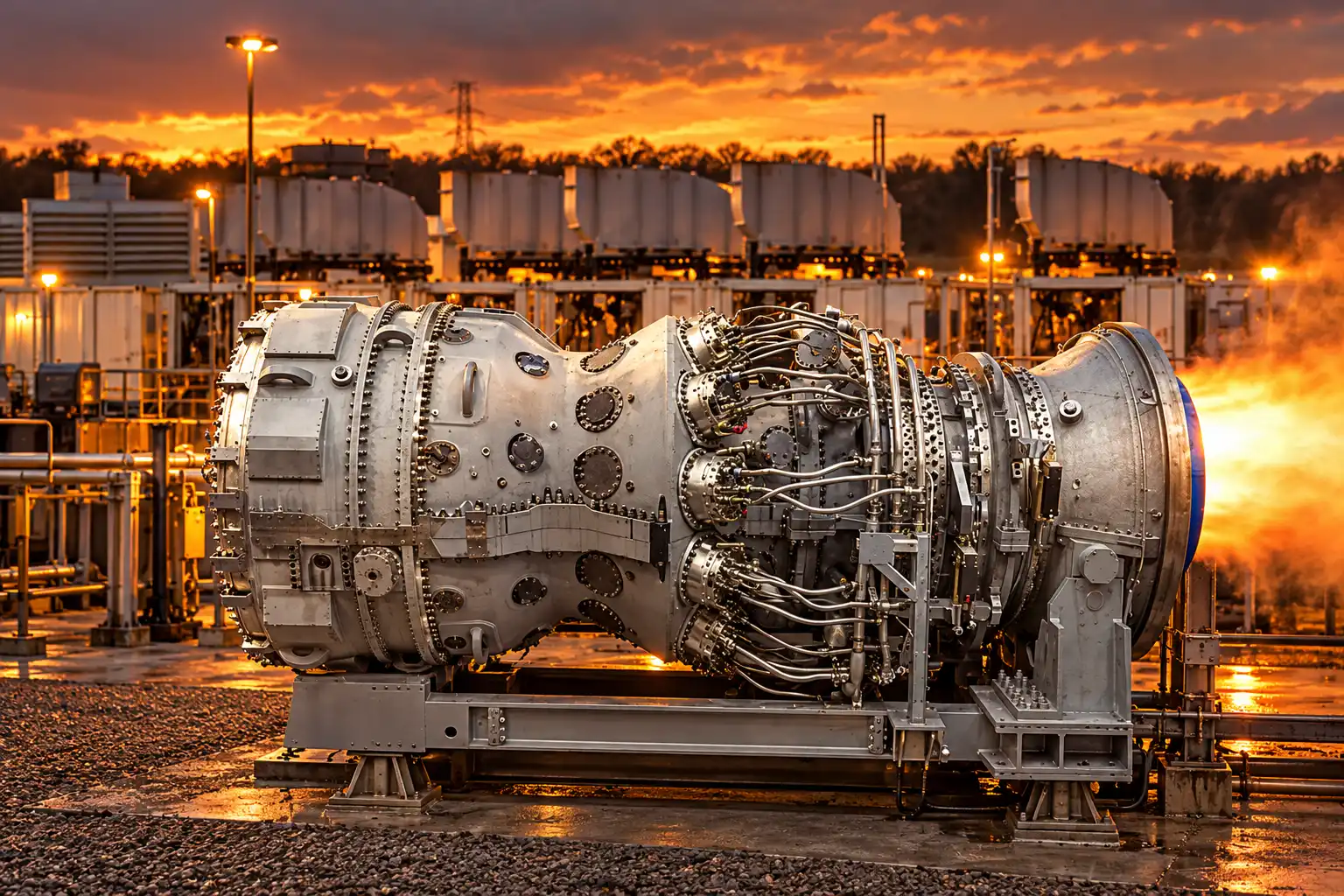
The filing does not treat gas as a distant climate footnote. It treats firm fuel and pipeline space as things that can delay a site, raise the bill, or both, once Anthropic is no longer only a renter of other companies’ clouds.
Anthropic Now Pays the Gas Bill With No Cap
For years the company bought training and inference time from large cloud platforms. The prospectus names Amazon, Google, Microsoft, and SpaceX among those counterparties, with long-dated cloud commitments that include at least $114.5 billion at Google, $110 billion at Amazon, and $44.9 billion at Microsoft. Renting kept the fuel problem on someone else’s balance sheet.
Direct leases and custom campuses change that. Under the heading Electrical Power and Fuel Constraints, Anthropic says some planned facilities rely on dedicated on-site natural-gas generation. Those plants still need pipes. They also need a contract for firm supply, which is gas a seller is obligated to deliver, not leftover molecules after everyone else has taken a cut.
Our arrangements generally provide for fuel and related costs to be borne by us on a pass-through basis without cost caps.
Anthropic, PBC, Form S-1, Electrical Power and Fuel Constraints
That sentence is the mechanism. A pass-through with no cap means a spike in the regional gas price, or in the fee to move gas down a crowded pipe, lands on Anthropic rather than on a developer who agreed to swallow it. The same section of the uncapped fuel pass-through in its S-1 lists the ways the arrangement can fail before a campus ever trains a model.
THE THREE FUEL RISKS IN THE FILING
- No firm gas: The company may be unable to secure firm supply and transportation while a facility is still being built, which can delay or kill the site.
- Pipes and deliveries: Once a plant runs, it remains subject to pipeline-capacity limits and disruptions that Anthropic says sit outside its control.
- The open bill: Because fuel is passed through without caps, the company stays exposed to higher gas prices and higher transportation costs.
Competition is the amplifier it names next. On-site gas is practical only in some jurisdictions, so the company expects more users to chase the same supply and the same pipeline capacity in those pockets, which could lift local prices and make firm fuel harder to lock.
The February Pledge Stops at the Electric Meter
On February 11, 2026, Anthropic said it would cover electricity price increases to consumers caused by its data centers. The policy covers two grid paths: paying 100 percent of the upgrades needed to interconnect a site, including shares that would otherwise hit ratepayers, and working to bring net-new generation online, or covering estimated demand-driven price effects where that generation is not yet running. The company said the US AI sector will need at least 50 gigawatts of capacity over the next several years and that AI firms should not leave American ratepayers with the tab.
We're committing to cover electricity price increases from our data centers.
To ensure ratepayers aren’t picking up the tab, we'll pay 100% of grid upgrade costs, work to bring new power online, and invest in systems to reduce grid strain.
Read more: https://t.co/avOFlvRNpa
— Anthropic (@AnthropicAI) February 11, 2026
The S-1 restates that pledge in the same electrical-power chapter as the gas warning. The two promises do not cover the same bill. Behind-the-meter plants are generators built on a campus so a data center does not wait years for a utility hookup. They burn gas that never goes through the customer’s electric meter. A household heating with gas in the same basin, or an LNG terminal filling tankers on the same coast, feels that demand as a commodity and pipeline problem. The February note does not say Anthropic will rebate a higher winter heating bill in Louisiana or a higher feed-gas cost at an export dock.
That is the trade the filing now has to live with. Leaving the grid can keep a ratepayer fight off the electric statement. It puts Anthropic into the fuel market as a buyer that has already agreed, in writing, to take price risk with no ceiling.
A Private Power Map From Texas to West Virginia
The geographic spread is how a local pipe shortage becomes a company-level risk. Last November Anthropic chose Fluidstack, a New York-headquartered builder, for a $50 billion Fluidstack data-center deal with campuses in New York and Texas and more sites to follow. Fluidstack said the work would create about 800 permanent jobs at an average salary near $144,000, plus about 2,400 construction jobs, with sites coming online through 2026.
We’re getting closer to AI that can accelerate scientific discovery and help solve complex problems in ways that weren’t possible before. Realizing that potential requires infrastructure that can support continued development at the frontier.
Dario Amodei, chief executive and co-founder, Fluidstack announcement
Gary Wu, Fluidstack’s co-founder and chief executive, said the firm was picked for speed, “enabling rapid delivery of gigawatts of power.” Speed is the point of skipping the interconnection queue. It is also why the fuel clause matters: a campus that lights up on its own turbines still has to buy gas every hour it runs.
The prospectus does not publish a neat list of which Anthropic megawatts sit on which plants. Public permits and partner filings already sketch a map that matches the S-1’s worry about Texas and other tight pockets, including a West Virginia campus that would be all gas, on site, if it is built at the scale its developer has described.
ANTHROPIC’S GAS-TIED SITES
| Place | Partner | Scale on the record | How power is supposed to arrive |
|---|---|---|---|
| New York and Texas | Fluidstack | $50 billion program, sites due through 2026 | Custom campuses; the S-1 says some planned sites use on-site gas |
| Cedar Creek, Bastrop County, Texas | Pacifico Energy plant; BlackChamber campus | 710 megawatts, 48 turbines, more than 2,800 acres | Dedicated gas plant for a data-center campus whose primary tenant is reported as Anthropic |
| Mason County, West Virginia | Nscale (Monarch) | About $44.6 billion of Anthropic agreements for roughly 460 megawatts; campus described as up to 8 gigawatts on site | Behind-the-meter gas; air permit still pending |
| Memphis area | SpaceX Colossus | Rented compute named in the S-1 | On-site gas turbines that have already drawn a lawsuit over unpermitted units |
Bastrop County’s commissioners in mid-October asked the Texas Commission on Environmental Quality for a formal public meeting on the Pacifico air permit. County filings put peak demand from more than 44,700 local homes at about 224 megawatts, which means the proposed plant is more than three times that household load. Neighbors are not arguing about Claude’s benchmarks. They are arguing about a 48-turbine station next door.
Bastrop’s 710-Megawatt Plant Faces a Hearing
Pacifico’s Cedar Creek project is the concrete specimen of the S-1’s Texas warning. Texas is the national hot spot for behind-the-meter data-center plants, so several developers are already bidding for the same wells and the same takeaway pipes. Anthropic wrote that it expects that contest to raise prices and to hurt its ability to contract for firm fuel. A county hearing does not create a shortage. It can slow the one plant a tenant was counting on, which is the other failure mode the filing names: a site delayed or abandoned for lack of gas and transportation.
Nscale’s West Virginia Campus Aims at 8 Gigawatts
Nscale, a UK developer that filed its own US IPO paperwork on September 18, 2026, has described Monarch, north of Point Pleasant in Mason County, as able to deliver up to 8 gigawatts of gross behind-the-meter power, with a first phase of 2 gigawatts of generation for 1.37 gigawatts of computing load. Anthropic’s contracted slice on the first building is about 460 megawatts, with payments listed around $44.6 billion. Talks on a second building have been reported and are not a closed deal. State water permits and an air permit for the gas plant are still outstanding. A campus that large, if it is built, would sit among the biggest gas plants in the country. It would also be a single-basin fuel order that has to clear Appalachian supply and pipe space before a chip ever shows up.
The Memphis rental is the preview, not the plan. SpaceX’s Colossus campuses have already been fought over unpermitted turbines. Anthropic still lists that counterparty. The pattern is the same one the S-1 now warns investors about: private gas can be stood up faster than a grid study, and the permit and fuel fights arrive on a lag.
On October 28 the company was advertising a Compute Country Lead for Japan whose brief is sites, energy, financing, and gigawatts, which is the same bottleneck in another jurisdiction, not a new number in the US filing.
116 Gigawatts Are Already Chasing the Same Fuel
Anthropic is late to this queue, then suddenly large in it. Cleanview, which logs each on-site data-center power plant from the first permit, said in October that Anthropic had gone from an insignificant buyer of behind-the-meter gas power to one of the largest. Its live tracker now lists 116 gigawatts of behind-the-meter plants across 108 projects, from announced to operating, holding 18,127 turbines, engines, and fuel cells. In July 2025 that stack was 20 gigawatts. The added 96 gigawatts is more than a fivefold jump in about 15 months.
CLEANVIEW’S BEHIND-THE-METER TALLY
- 116 gigawatts: Nameplate capacity from announced projects through plants already running.
- 108 plants: Separate on-site generators tied to data-center campuses.
- 18,127 machines: Individual turbines, engines, and fuel cells inside those plants.
- 20 gigawatts in July 2025: The baseline before the current announcement wave.
Most of that iron is still paper. An earlier Cleanview cut of the trend, at a smaller totals, found only about 2 gigawatts actually operating, a large share of it at xAI’s Colossus sites, with the rest permitted or merely announced. The S-1’s near-term risk is not that 116 gigawatts turns on next winter. It is that enough of the permitted and under-construction slice, in the same counties, shows up in the same gas-trading hubs to reprice firm supply for everyone who cannot wait for a substation.
BloombergNEF’s gas desk has put numbers on the next decade that sit on top of that build. It estimates grid-connected data centers alone could add 15 billion cubic feet per day of gas demand by 2035, with a conservative reading of on-site plants adding about another 3 billion cubic feet per day. Those figures are industry estimates, not Anthropic’s. They are the demand stack the company just joined as a direct fuel buyer.
Why Gulf Coast Gas Gets Bid by LNG and AI
The Southeast is the awkward overlap. LNG terminals on the Louisiana and Texas coasts already pull feed gas toward the water. The US Energy Information Administration’s Annual Energy Outlook 2026 has export volumes growing from 15 billion cubic feet per day in 2025 toward LNG exports rising past 30 Bcf/d by 2050 in most cases, with dry-gas production up 20 to 40 percent over the same horizon versus 2025. Power-sector gas use was 35.2 billion cubic feet per day in 2025 in that outlook. Data-center plants in those same states are now another call on the same molecules.
Enrique Gonzalez, BloombergNEF’s head of gas research for the Americas, has said it would not be surprising to see gas get more expensive in Louisiana and Texas, where the LNG projects are concentrated. Anthropic’s own language is narrower and more contractual: more users, same pipes, higher prices, harder firm deals. Gonzalez’s version is the market around that contract. If Henry Hub or a regional hub reprices, the S-1 says Anthropic eats the fuel line. An export terminal eats a tighter feed-gas market. A combined-cycle utility plant eats a higher burn cost that can still show up, after a lag, on a regulated bill.
Texas doubles the contest because it is both an LNG state and the densest behind-the-meter data-center map. A campus that went off-grid to avoid a five-year interconnection study still has to beat other campuses, petrochemicals, and liquefaction trains to a firm transport path. That is a different shortage from GPUs. Turbines can be parked on a pad in months. A pipe expansion cannot.
Home Furnaces Sit on the Same Pipes
Gonzalez argues that gas producers learned from 2022, when high prices pulled so much new supply that the spike broke. He does not expect a repeat of that extreme. He still says that if hub prices rise, the move can reach consumers unless lawmakers step in. Behind-the-meter data centers do not need a utility commission to raise a residential electric rate. They need a crowded basin. Heat pumps and gas furnaces in that basin still shop in the same wholesale market the new turbines do.
Anthropic’s February pledge was written for the first of those two worlds, the metered kilowatt-hour. The October prospectus is written for the second. The sequence in between is short.
HOW THE COMPANY MOVED ONTO GAS
- November 12, 2025: Fluidstack announces the $50 billion New York and Texas program, sold on rapid delivery of gigawatts.
- February 11, 2026: Anthropic pledges to cover consumer electricity increases from its data centers and to pay for grid upgrades in full.
- August 2026: Nscale’s West Virginia gas campus becomes a contracted Anthropic site at about 460 megawatts, with an 8-gigawatt on-site ceiling described in that developer’s later filing.
- October 14, 2026: Bastrop County asks Texas regulators for a public meeting on the 710-megawatt Pacifico plant tied to an Anthropic-linked campus.
- October 26, 2026: The S-1 tells investors that on-site fuel is a pass-through without caps and that solar, wind, batteries, nuclear, and geothermal “may not be available in the quantities or on the timelines we require, or may be available only at higher cost.”
Newer generation gets one sentence, and it is a dismissal on timing and price. The company is not arguing that gas is cleaner. It is arguing that gas is what can be stood up inside the window the models require. The cost of that window, on the terms it signed, is an open fuel invoice in basins that are already spoken for by exporters and by people who heat their houses.
Investors reading ANT’s risk factors are being told they own that invoice. The February ratepayer note still applies where Anthropic sits on a utility feeder. It does not cap the gas. The pipes will sort the rest.
Disclaimer: This article is news reporting and analysis of Anthropic’s Form S-1 and related energy data. It is informational only and is not investment advice, an offer to sell securities, or a recommendation to buy or sell ANT or any other stock. Readers should consult a licensed financial adviser and review the full registration statement and any later amendments before making investment decisions. Figures, contract statuses, and plant permits reflect the filings and datasets cited and can change as the offering, construction schedules, and gas-market conditions move.

Josh Sinn Draws the Heaviest AFL Betting Ban Since 2019

Rolapp Shuts the PGA Door as DeChambeau Heads to Europe

Apple TV Renews Slow Horses Past the Last Novel

Oasis Lifts UK Music to £8.4 Billion as Venues Shrink

Beyoncé Hits 100 Grammy Nominations on a Vault Track

Thameslink Will Pad 60,000 Ironing-Board Seats From 2027

How Tall Was Adolf Hitler?

U.S. Forces Clear Hormuz Mines, Then Hit Minelayers Again

Micron Sells the Memory Shortage as Five-Year Contracts

Royal Caribbean Sends Los Angeles Ships to Singapore and Brisbane
-
 NEWS3 months ago
Thameslink Will Pad 60,000 Ironing-Board Seats From 2027
-
 HISTORY3 years ago
How Tall Was Adolf Hitler?
-
 BUSINESS3 months ago
U.S. Forces Clear Hormuz Mines, Then Hit Minelayers Again
-
 NEWS3 months ago
Micron Sells the Memory Shortage as Five-Year Contracts
-
 NEWS3 months ago
Royal Caribbean Sends Los Angeles Ships to Singapore and Brisbane
-

 BUSINESS3 months ago
Sweetmore Bakeries Buys Fantasy Baking for Bar Work
-
 NEWS3 months ago
Twenty Controllers Closed Norwich Airport for a Bank Holiday
-

 BUSINESS3 months ago
L Catterton Installs a Kraft Heinz Operator at Kettle Cuisine