
LIFESTYLE
Halloween Candy Still Costs 71 Percent More After Cocoa Fell
Cocoa has fallen about half from its 2024 peak, yet Halloween candy still averages $16.96 per 100 pieces as makers hold prices.

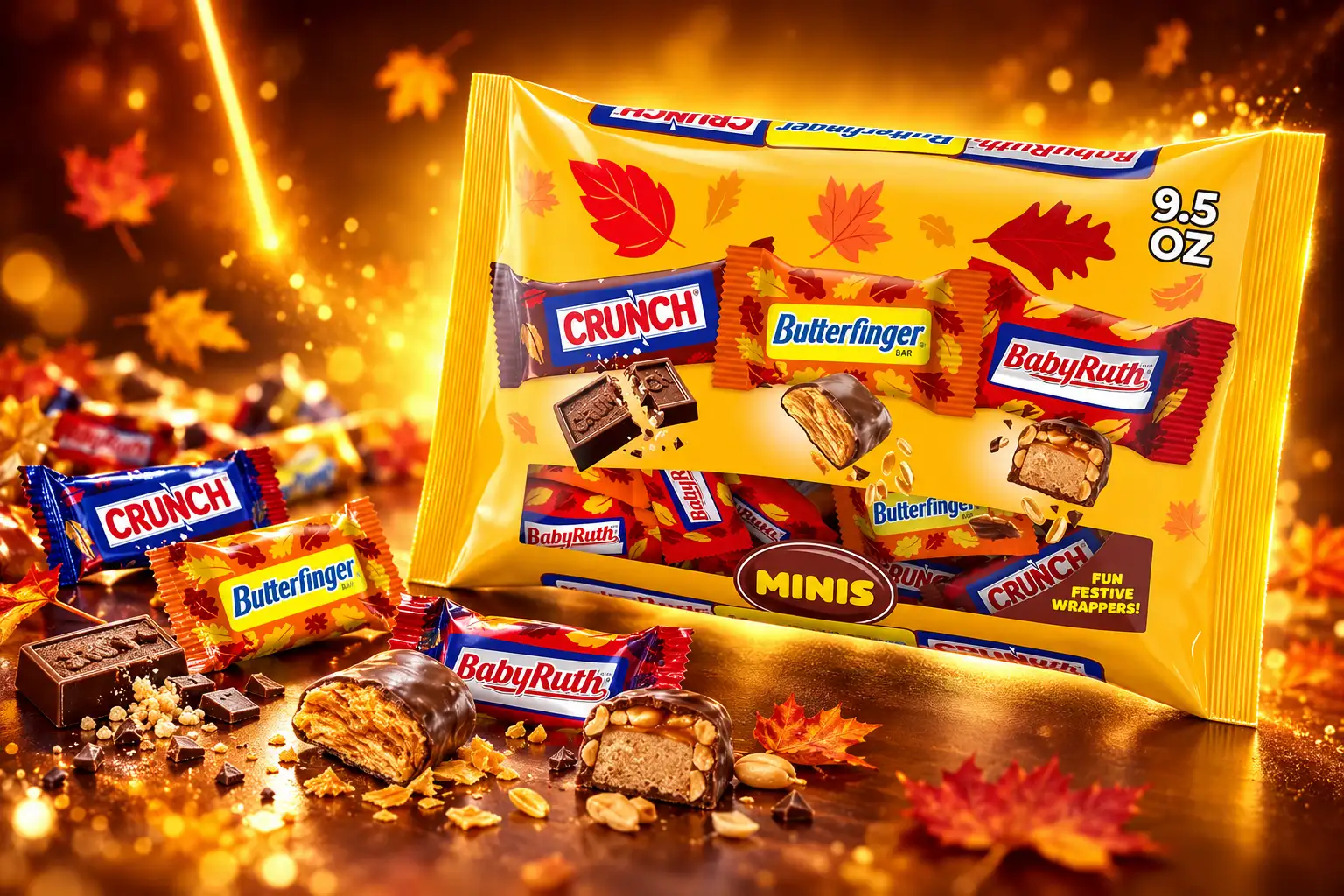
The average 100-piece bag of Halloween candy costs $16.96 in 2026, up 71 percent from 2021, even after cocoa prices fell by about half. Households are still buying sweets. They are paying 2024’s chocolate bill to do it.
Near Salt Lake City, Tami Adolphson, 63, closed a trucking company with her husband, Lee, 68, and retired in 2025. She still could not leave the porch dark. She spent $21.39 at Costco on 90 mixed chocolate bars and cut one restaurant meal to cover it.
She Spent $21.39 and Skipped Dinner Out
Adolphson said the household budget is tight enough that dipping into savings for candy was off the table. She also said she could not turn the lights off on the children who still walk her block. The Costco bag works out to about 24 cents a bar, against about 17 cents a piece in the standardized 100-piece mix tracked at four grocery chains.
We’re finding it harder to justify big prices even for the extremely satisfying ritual of handing out candy to kids. We are not going to dip into savings for Halloween candy.
Tami Adolphson, retired trucking-company owner, near Salt Lake City
She called the skipped dinner worth it to keep the tradition. That is the trade the aisle is forcing in the last days before Saturday, October 31: not whether Halloween happens, but which other line item dies so the bowl can be filled with chocolate instead of cheaper gummies.
Megan Stoner, a FinanceBuzz spokeswoman, said Google searches for “cheap Halloween candy bulk” and “where to buy cheap Halloween candy” were up more than 5,000 percent from a year earlier. The hunt is not for a new holiday. It is for the old one at a price that still fits.
Halloween 2026 Is Priced Off 2024 Beans
The ingredient story that launched the scare has already changed. New York cocoa, as recorded by the International Cocoa Organization, finished 2024 with the nearby contract at $11,545 a tonne. By October 19, 2026, the ICE December 2026 contract was around $5,645 a tonne, about 51 percent below that year-end close. Futures had also traded above $12,000 a tonne during December 2024, at the top of a squeeze driven by weak West African crops.
David Branch of Wells Fargo’s Agri-Food Institute said manufacturers bought the cocoa for this Halloween’s chocolate during 2025, when prices were still elevated, and shoppers should expect a 7 to 10 percent rise in chocolate prices for the season. Sugar and corn syrup costs add another layer. That lag is real. It does not explain why the bag stayed high after the companies that buy the beans started booking cheaper inputs.
THE COCOA CLOCK
- December 31, 2024: New York nearby cocoa closes at $11,545 a tonne, after a year of crop damage in Côte d’Ivoire and Ghana.
- 2025: Candy makers buy beans for the 2026 Halloween run at still-elevated prices, then push list prices and smaller packs through grocery.
- June 28, 2026: Hershey’s second quarter shows lower commodity costs already feeding confectionery profit, not a cheaper fun-size bag.
- October 19, 2026: December 2026 cocoa futures trade around $5,645 a tonne, roughly half the late-2024 close, with Halloween 12 days away.
The U.S. Department of Agriculture’s Economic Research Service, in its October 23 outlook, said prices for sugar and sweets prices for 2026 are forecast to rise 6.5 percent, after a 5.5 percent increase in the year to September. The agency said candy and chewing gum, including most chocolate candy, did the lifting. That sits well above food-at-home prices, up 1.8 percent over the same 12 months, and above the 3.7 percent rise in the all-items consumer price index.
Hershey Kept the Price and the Margin
The Hershey Company is the cleanest public window on what happened after the bean spike broke. In the quarter ended June 28, 2026, North America Confectionery net sales rose 4.2 percent to $2,173.6 million. Pricing from the 2025 list-price action contributed about 14 percent. Volume declined about 10 percent, which Hershey tied mainly to price elasticity.
Profit did not follow volume down. Segment income rose 40.1 percent to $705.8 million, and segment margin widened 830 basis points to 32.5 percent. Hershey said the gain came from net price realization, supply-chain productivity, savings from its AAA Initiative, lower commodity costs, and tariff refunds, partly offset by higher logistics costs. Adjusted gross margin for the company expanded 350 basis points to 41.6 percent.
Across the whole company, net sales rose 6.6 percent to $2,787.3 million, with about 12 points of pricing against an 8-point volume decline. Hershey did not need a fresh 2026 price hike to print those confectionery margins. It needed the 2025 prices to stay on the shelf. Chief executive Kirk Tanner told analysts that as commodity inflation eases and elasticities normalize, volume trends should improve over time. The Halloween bag on sale in late October is still living in the earlier chapter.
Gummies Are Taking Share From Chocolate
Kids will still get a haul. More of it will be sugar paste. The National Confectioners Association, drawing on Circana data in its Getting to Know Seasonal Chocolate & Candy Consumers 2026 report, said the non-chocolate share of Halloween volume has risen 6.2 percentage points since 2022. Last fall, NCA said, non-chocolate packaged Halloween items took a 52 percent share and passed packaged Halloween chocolate.
John Downs, NCA president and chief executive, said the four big candy seasons remain essential and that people are also carrying treats into newer occasions. The same report found 89 percent of consumers still call seasonal chocolate and candy an affordable part of holiday celebrations, which is a softer claim than the receipt at Costco. Seasonal non-chocolate is growing in both dollars and units. Seasonally coded chocolate has been declining in dollars, units, and volume over the latest 52 weeks.
THE HALLOWEEN MIX
- Chocolate’s tax: Wells Fargo’s Branch said makers are putting less cocoa in bars, adding fillers such as nuts, and pushing gummies, lollipops, and other non-cocoa candy.
- Share shift: Non-chocolate’s Halloween volume share is up 6.2 points since 2022, and packaged non-chocolate passed packaged chocolate last fall at 52 percent.
- What kids still rank first: An NCA survey still lists chocolate as the favorite Halloween treat, then gummies, hard candy, and candy corn, so the bowl is changing faster than the preference list.
- The leftover flex: Full-size bars have become a small status display at the door, the opposite of the fun-size math that used to stretch a $10 bag across a whole block.
CandyUSA’s seasonal report was built by 210 Analytics for NCA, with a survey of 1,550 candy consumers in August 2026 and Circana sales and panel data. E-commerce sales of seasonally coded chocolate and candy rose 21 percent, but supercenters and supermarkets remain the main seasonal channel. The mix change is happening in the same stores where the 100-piece bag now costs $16.96.
Why a 100-Piece Bag Costs $16.96
FinanceBuzz has priced bulk mixed Halloween bags at Walmart, Target, Kroger, and Albertsons every year since 2021, using full (non-sale) prices and converting every bag to a cost per 100 pieces. The 100-piece bag now averages $16.96, up 3.5 percent from $16.39 in 2025 and up $7.05 from $9.91 in 2021. That 71 percent rise is more than triple the 22 percent increase in overall consumer prices over the same span.
Almost all of the damage landed after 2023. The 100-piece cost rose $1.70 from 2021 to 2023, then $2.45 from 2023 to 2024 and $2.34 from 2024 to 2025, before slowing to a $0.57 increase in 2026. Researchers logged at least 25 bags a year, sizes from 28 to 500 pieces, an average bag of 129 pieces, and at least 3,500 pieces of candy per year. Older prices came from archived weekly ads. 2026 prices came from retailer websites in September.
100-PIECE BAG PRICES, 2021 TO 2026
| Year | Average cost per 100 pieces | Change from prior listed year |
|---|---|---|
| 2021 | $9.91 | – |
| 2025 | $16.39 | +$6.48 from 2021 |
| 2026 | $16.96 | +$0.57, or 3.5%, from 2025; +71% from 2021 |
That grocery-circular average is a different series from the government’s candy and chewing gum index, which was 7.7 percent higher in September 2026 than in September 2025. It is also a different basket from chocolate-only Halloween packs, which Branch put in a 7 to 10 percent range. The standardized mix looks calmer year over year because 2024 and 2025 already did the violent work. The five-year bill is what people feel in the cart.
Shoppers Plan Record Spending as Units Slip
The National Retail Federation’s survey, conducted by Prosper Insights & Analytics among 7,889 consumers from September 1 to 9, found Americans are expected to spend $13.5 billion on Halloween, up from $13.1 billion in 2025. Candy remains the most common purchase: 96 percent of Halloween shoppers plan to buy sweets, for $4.1 billion. Average planned spending is $115.14 a person, up 69 cents from $114.45 in 2025. Seventy-four percent plan to celebrate, compared with 73 percent in 2025 and 68 percent in 2019. Sixty-one percent plan to hand out candy.
Allison Zeller, NRF vice president of industry and consumer insights, said consumers are still making Halloween a spending priority and are shopping with affordability in mind. If prices run hotter than expected, 31 percent said they will comparison shop and 26 percent will look for coupons or sales. Another 34 percent plan to buy items they can reuse. Forty-nine percent said they would start shopping in September or earlier, up from 34 percent in 2016.
PLANNED SPEND VERSUS EARLY SALES
- The survey: NRF’s September poll still points to a record $13.5 billion holiday and $4.1 billion of candy, with 96 percent of shoppers buying sweets.
- The scanners: NielsenIQ found Halloween candy sales down 6.7 percent in the month ending October 17 versus a year earlier, after an 11.7 percent drop in mid-September.
- Chocolate through October 15: Consumer Edge recorded chocolate dollars down 2.3 percent, volume down 7.1 percent, and pricing up 5.2 percent.
- Non-chocolate through October 15: Dollars down 9.2 percent, volume down 10.6 percent, pricing up 1.6 percent, so the cheaper aisle is not picking up all the lost chocolate units.
Those scanner reads stop well before the last weekend, and Halloween has historically done 1.5 to 2 times a typical October day’s candy business on October 30 and 31. NCA said on October 24 that the peak period was just starting and that enthusiasm remained strong. The early tape still matches the Hershey math: more dollars per remaining bag, fewer bags, and no clean swap into gummies at the same unit count.
Who Still Fills the Bowl on Saturday
The people who still want name-brand chocolate are moving the purchase to warehouse clubs and sale racks, where a king-size bar can still land near a dollar, rather than paying grocery’s full-price mix. Some households are skipping the doorbell trade altogether and buying one bag their own child actually likes, which is cheaper than stocking a bowl for the block. Others will darken the porch. Adolphson would not.
Candy and chewing gum prices in the federal index have been running more than twice overall inflation. USDA still has sugar and sweets among the grocery categories rising faster than their 20-year average, even as egg and dairy prices fall. Hershey’s confectionery margin at 32.5 percent shows where the 2024 cocoa spike went once the futures market cracked. It did not go back to the 90 mixed bars that cost Adolphson $21.39.
On Saturday the light on her block will be on. The bowl will be chocolate. The missing restaurant meal is the new price of keeping the ritual, and the fun-size bag at the grocery store is still ringing up like the beans never came down.

Josh Sinn Draws the Heaviest AFL Betting Ban Since 2019

Rolapp Shuts the PGA Door as DeChambeau Heads to Europe

Apple TV Renews Slow Horses Past the Last Novel

Oasis Lifts UK Music to £8.4 Billion as Venues Shrink

Beyoncé Hits 100 Grammy Nominations on a Vault Track

Thameslink Will Pad 60,000 Ironing-Board Seats From 2027

How Tall Was Adolf Hitler?

U.S. Forces Clear Hormuz Mines, Then Hit Minelayers Again

Micron Sells the Memory Shortage as Five-Year Contracts

Royal Caribbean Sends Los Angeles Ships to Singapore and Brisbane
-
 NEWS3 months ago
Thameslink Will Pad 60,000 Ironing-Board Seats From 2027
-
 HISTORY3 years ago
How Tall Was Adolf Hitler?
-
 BUSINESS3 months ago
U.S. Forces Clear Hormuz Mines, Then Hit Minelayers Again
-
 NEWS3 months ago
Micron Sells the Memory Shortage as Five-Year Contracts
-
 NEWS3 months ago
Royal Caribbean Sends Los Angeles Ships to Singapore and Brisbane
-

 BUSINESS3 months ago
Sweetmore Bakeries Buys Fantasy Baking for Bar Work
-
 NEWS3 months ago
Twenty Controllers Closed Norwich Airport for a Bank Holiday
-

 BUSINESS3 months ago
L Catterton Installs a Kraft Heinz Operator at Kettle Cuisine