
BUSINESS
The 25 Dead in Hormuz Are Civilian Ship Crews
UN figures show 25 seafarers killed around Hormuz since February, mostly civilian crews, even as energy exports recover on other routes.

The United Nations says 25 seafarers have been killed in and around the Strait of Hormuz since the US-Israeli war on Iran began on February 28. Khaled Khiari, assistant secretary-general for the Middle East, Europe, the Americas, Asia and the Pacific, gave the toll in remarks delivered to the Security Council on November 13, drawing on International Maritime Organization figures through November 11. The dead were not marines. They were civilian crews on tankers, cargo ships and dhows, many of them from India and the Philippines, working under flags that put them in the waterway long after governments started arguing over who controls it.
The Dead Are Crews From Far Outside This War
The IMO’s own count of those 25 deaths sits on commercial ships, not warships. India, one of the world’s largest suppliers of merchant sailors, has taken a heavy share. A tally current on November 9 put at least 16 Indian seafarers among the dead. The Philippines has buried crew from the same corridor. Iran’s merchant marine union, in a separate May count of Iranian civilian maritime workers, said at least 44 of its members had been killed and 29 injured, a figure that is not part of the IMO’s 25 and is not added to it.
Gandhar Nahim Ajij, from Gujarat, died after the Indian cargo vessel MSV Al Jusufi was struck by an unidentified aerial object near Oman on November 2. Thirteen other Indian crew members got off and were picked up by the Omani Coast Guard. Sarbananda Sonowal, India’s minister of ports, shipping and waterways, named him the next morning.
⚠️ IMPORTANT UPDATE ⚠️
On Nov 2, the Indian MSV AL JUSUFI, carrying 14 Indian seafarers, was struck by an unidentified aerial object while navigating near the coast of Oman.
While 13 crew members safely evacuated and were rescued by the Omani Coast Guard, I am deeply saddened…
— Sarbananda Sonowal (@sarbanandsonwal) November 3, 2026
Two Filipino seafarers were killed on August 31 when projectiles hit the Saudi tanker Sidr as it moved through the strait. Bahri, the operator, confirmed the deaths. Sixteen Filipinos had been aboard; the other 14 were unharmed. Another Filipino died after an explosion on the Marshall Islands-flagged products tanker Velos Sapphire on November 4, north of Qatar, while the ship sailed toward Bahrain. Velos Tankers, the Greek manager, first reported a missing crewman, then found him fatally injured on board. Twenty-two Filipinos had been on the ship. Hans Leo Cacdac, the Philippine migrant workers secretary, said the other 21 were safe.
In June, three Indian sailors were killed in US strikes on commercial vessels near Oman, and New Delhi summoned a senior American diplomat. The International Chamber of Shipping told interviewers it was unacceptable that seafarers had been placed in harm’s way, and that every party should safeguard people “who are simply going about their job and have found themselves, through no fault of their own, in a highly volatile situation.”
THE HUMAN COST SINCE FEBRUARY
- February 28, 2026: The US-Israeli war on Iran begins, and Iran restricts passage through the strait.
- March 2026: Maritime unions and companies agree, through the International Bargaining Forum, that seafarers may refuse designated danger zones and receive company-funded repatriation plus two months of basic wages.
- June 2026: Three Indian sailors are killed in US strikes on commercial ships near Oman.
- August 31, 2026: Two Filipino crew die on the Saudi tanker Sidr.
- October 5, 2026: Twelve seafarers are injured on the Panama-flagged tanker On Peace, 11 of them Indian; Oman medevacs the wounded.
- October 30, 2026: Limpet mines hit Louise 1, a Panama-flagged tanker with 27 Indian crew, 25 nautical miles (46 km) northeast of Khasab, Oman; all 29 Indians on Louise 1 and the Liberia-flagged Arzanah, hit the day before, are reported safe.
- November 2, 2026: Gandhar Nahim Ajij dies on MSV Al Jusufi.
- November 4, 2026: One Filipino seafarer is killed on Velos Sapphire.
- November 13, 2026: Khiari briefs the Security Council on 25 dead.
The pattern is the same ship after ship. The hull is flagged in Panama, Liberia, the Marshall Islands or Saudi Arabia. The people on deck are not.
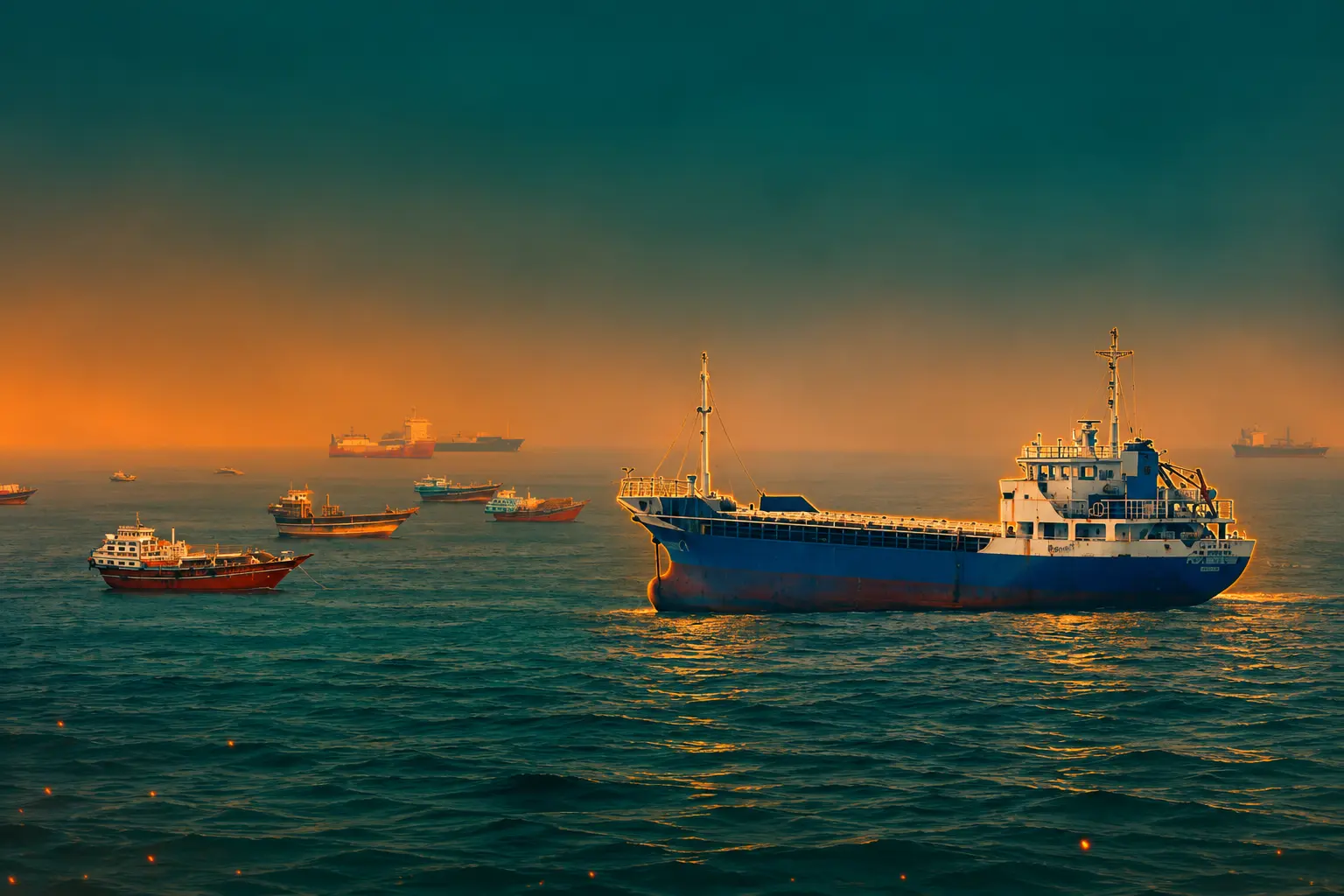
October Set the Record for Attacks on Merchant Ships
Khiari told the council that October had the highest monthly number of incidents against commercial shipping since February. The IMO’s confirmed incident register through November 11 lists 136 security incidents in the Strait of Hormuz and the wider Middle East, with 25 seafarers dead and others injured or missing. Thirty-five of those incidents fell in October. Ten more were logged from November 1 through November 11.
IMO CONFIRMED INCIDENTS TO NOVEMBER 11
| Period | Confirmed incidents | What the register shows |
|---|---|---|
| October 2026 | 35 | Highest month since February; includes On Peace (12 injured) and Louise 1 |
| November 1 to 11 | 10 | Includes Velos Sapphire (1 dead) and Dominica Prosperity |
| March 1 to November 11 | 136 | 25 seafarer deaths; others injured or missing |
The named ships in that slice are a catalogue of damage. GFS Pride is listed as sunk on October 13. Cape Dao is listed as sunk on September 23, with one seafarer dead. Hercules Star is listed on September 9 with two seafarer deaths. Petro Dolphin, at Sohar anchorage on October 11, is listed with two seafarers missing. El Gaia, on September 12, is listed with two missing as well. United Kingdom Maritime Trade Operations, which runs a separate log, has counted 163 conflict-related maritime incidents since February 28, 141 of them with damage to vessels. That UKMTO tally is not the IMO’s 136 and is not treated here as the same list.
INTERTANKO, the independent tanker owners’ group, said in advice for tanker owners on Gulf attacks dated November 13 that it had counted 14 confirmed attacks in November, most of them with drones and missiles. It said at least one seafarer had been killed that month and several hurt. It also said one ship appeared to have been hit by a floating object and that this did not, on its own, prove the Gulf was mined.
Who Is Still Stuck Inside the Gulf?
Death is the figure that travelled. The larger human fact is the people who cannot leave. Khiari said many commercial vessels and their crews have been stranded inside the Persian Gulf for months. Bahrain, speaking for the Gulf Cooperation Council at the same council meeting, said about 1,600 ships had been disrupted in the strait and that more than 23,000 seafarers were stuck on board.
The survivors keep cycling through the same corridor. India’s shipping ministry has spent October and November posting that its nationals walked off burning ships.
INDIAN CREWS HIT IN OCTOBER AND NOVEMBER
- Louise 1, October 30: Panama-flagged crude tanker, 27 Indian seafarers, two limpet mines on the hull, engine-room fire, all safe.
- Arzanah, October 29: Liberia-flagged VLCC, two Indian nationals, projectile attack, both safe.
- On Peace, October 5: Panama-flagged LR2, 12 injured including 11 Indians, Omani air force medevac to Khasab.
- Dominica Prosperity, November 11: Liberia-flagged crude tanker, 22 crew including 19 Indians, projectile into the engine room off Mina Saqr, UAE Coast Guard evacuation, all unhurt.
- NCC Fajr, November 11: Saudi-flagged oil tanker, three Indian seafarers, possible attack in the strait, whole crew reported safe.
Sonowal’s updates read like a roll call of near misses. The 27 men on Louise 1 were still in the waterway the morning a small boat put explosives on the hull. UKMTO said the crew put the fire out and the ship sailed on. That is the job. It is also the exposure.
Energy Exports Recovered on Other Routes
Khiari was careful on the oil. He said the volume of energy exports out of the Gulf had largely been restored, including on alternative routes, and that this should not be mistaken for a return to normality because maritime shipments remained below pre-conflict levels. Before the war, roughly one-fifth of global oil consumption moved through Hormuz. UKMTO’s latest weekly snapshot, covering the seven days through November 11, counted 139 outbound transits and 169 inbound. The week before, it had counted 170 outbound and 155 inbound. Combined traffic is still about 65 percent below pre-war levels. Most ships that keep their transponders on have been using the northern, Iranian route, though UKMTO has also noted more traffic on the southern passage.
In that same week UKMTO logged eight maritime security incidents: five in the Strait of Hormuz, two in the Persian Gulf and one in the Gulf of Oman. The arithmetic is ugly in a quiet way. Barrels can leave the Gulf by ship-to-ship transfer off Oman and the UAE, by overland workarounds, and by the northern lane when Tehran permits it. A crew on a Panama-flagged hull cannot be rerouted as easily as a cargo. War-risk insurance and extra freight get billed to the importer before a single barrel disappears from a weekly export table.
The present maritime arrangements in the Middle East remain costly, unpredictable, and unsafe. Disruptions to maritime navigation continue to have significant global economic consequences, driving up energy, transport and insurance costs, fueling inflation and threatening food security amid severely constrained fertilizer shipments.
Khaled Khiari, Assistant Secretary-General, UN Security Council briefing, November 13, 2026
He added that chokepoints must never become instruments of coercion, and that the movement of food, energy, fertilizer and other essential goods must not be impeded. Fertilizer is the cargo that rarely makes a war map and still feeds harvests far from Bandar Abbas. When those ships are late, the bill shows up in food prices, not in a naval communique.
Mines in a Waterway Washington Calls Open
The council briefing was Friday. By Saturday, November 14, Iranian authorities said three more oil tankers had hit mines. The Islamic Revolutionary Guard Corps navy said two tankers that had switched off radar and positioning systems, and were trying to cross on an unauthorised southern route, exploded and caught fire after striking a naval mine. It said one of them was a supertanker. Iran’s conventional navy said a third tanker, also with tracking off, caught fire east of the strait and was forced to stop. The statements did not name the ships, their flags, or the crews.
Iranian Navy: Hours ago, two oil tankers attempting to secretly transit through the unauthorized route of the Strait of Hormuz with radar and positioning systems turned off exploded and caught fire after hitting sea mines.
— IRIB (Islamic Republic of Iran Broadcasting) (@iribnews_irib) November 13, 2026
Iran has told operators that vessels need its approval to cross during the war, and its navy has warned that an offending tanker in the restricted area east of the strait “will be set on fire by hitting naval mines.” Tehran has said the waterway will not reopen until the United States meets a list of demands that includes ending the naval blockade of Iranian ports, lifting sanctions, releasing frozen funds, stopping fighting on all fronts, and stating that the war is over. The US military says it has cleared the strait’s main routes of mines and that the waterway is open for commercial shipping.
WHAT WE KNOW
- The claims: Iran’s IRGC navy and conventional navy described three tanker fires from mines on November 14, one of them a supertanker, with transponders off.
- The prior pattern: Iranian forces have issued similar mine-and-fire statements for weeks, often without vessel names that UKMTO then matches.
- The US line: American commanders say primary transit routes are clear of mines and open to commerce.
WHAT IS UNCONFIRMED
- The ships: No names, flags, managers or cargoes were published with the November 14 statements.
- The crews: No independent account of injuries, deaths or evacuations has been attached to those three hulls.
- The weapons: INTERTANKO has already cautioned that damage from a floating object is not, by itself, evidence of a mined Gulf.
The public argument on the strait is a loop of burning-tanker video and statements that the lane is open. The names of the dead almost never appear in that loop. Khiari said there had been no major military exchanges since early September, that an Islamabad memorandum of understanding in June had shown diplomacy could produce results, and that talks had resumed in Doha even after fighting restarted. INTERTANKO, on November 13, said Washington and Tehran planned peace talks in Doha and that it did not expect a quick result. It said more attacks were almost certain.
Transit Passage Has Not Kept the Crews Alive
The law on the books is not obscure. Under the United Nations Convention on the Law of the Sea, ships in international straits enjoy the Article 38 right of transit passage, which shall not be impeded, for continuous and expeditious transit. Abdul Khalique, head of the Liverpool John Moores University Maritime Centre, put the gap in one line: the law is clear on the obligations, and the weak point is political will and practical enforcement. For seafarers, he said, legal protections matter most when paired with operational avoidance.
Avoidance is what the March bargaining-forum deal tried to buy. A seafarer who refuses a designated danger zone is supposed to get a ticket home and two months of basic wages. The International Transport Workers’ Federation said the same package raises pay for those who still sail and doubles standard compensation for death or disability. Those terms do not cover every contract on every flag. Charities warned in May that crews already in the Gulf were dealing with loneliness, anxiety and distress. Shipowners, the ICS said, have been trying to get mental-health support and more family calls onto ships that cannot berth.
Khiari’s instruction to the council was the full restoration of maritime navigation and safe, unimpeded passage under international law. He said the situation cannot be allowed to become the new normal. On November 14 the IMO’s death list still ended at 25, the three tankers Iran described that morning still had no published crew lists, and more than 23,000 seafarers were still sitting inside the Gulf on ships that had nowhere safe to go.

Josh Sinn Draws the Heaviest AFL Betting Ban Since 2019

Rolapp Shuts the PGA Door as DeChambeau Heads to Europe

Apple TV Renews Slow Horses Past the Last Novel

Oasis Lifts UK Music to £8.4 Billion as Venues Shrink

Beyoncé Hits 100 Grammy Nominations on a Vault Track

Thameslink Will Pad 60,000 Ironing-Board Seats From 2027

How Tall Was Adolf Hitler?

U.S. Forces Clear Hormuz Mines, Then Hit Minelayers Again

Micron Sells the Memory Shortage as Five-Year Contracts

Royal Caribbean Sends Los Angeles Ships to Singapore and Brisbane
-
 NEWS3 months ago
Thameslink Will Pad 60,000 Ironing-Board Seats From 2027
-
 HISTORY3 years ago
How Tall Was Adolf Hitler?
-
 BUSINESS3 months ago
U.S. Forces Clear Hormuz Mines, Then Hit Minelayers Again
-
 NEWS3 months ago
Micron Sells the Memory Shortage as Five-Year Contracts
-
 NEWS3 months ago
Royal Caribbean Sends Los Angeles Ships to Singapore and Brisbane
-

 BUSINESS3 months ago
Sweetmore Bakeries Buys Fantasy Baking for Bar Work
-
 NEWS3 months ago
Twenty Controllers Closed Norwich Airport for a Bank Holiday
-

 BUSINESS3 months ago
L Catterton Installs a Kraft Heinz Operator at Kettle Cuisine