
BUSINESS
PBOC Names Weak Demand Then Credits the Supply Side
China’s central bank kept policy loose on Nov. 11 while sending fresh credit to grids and factories as household loans fell.

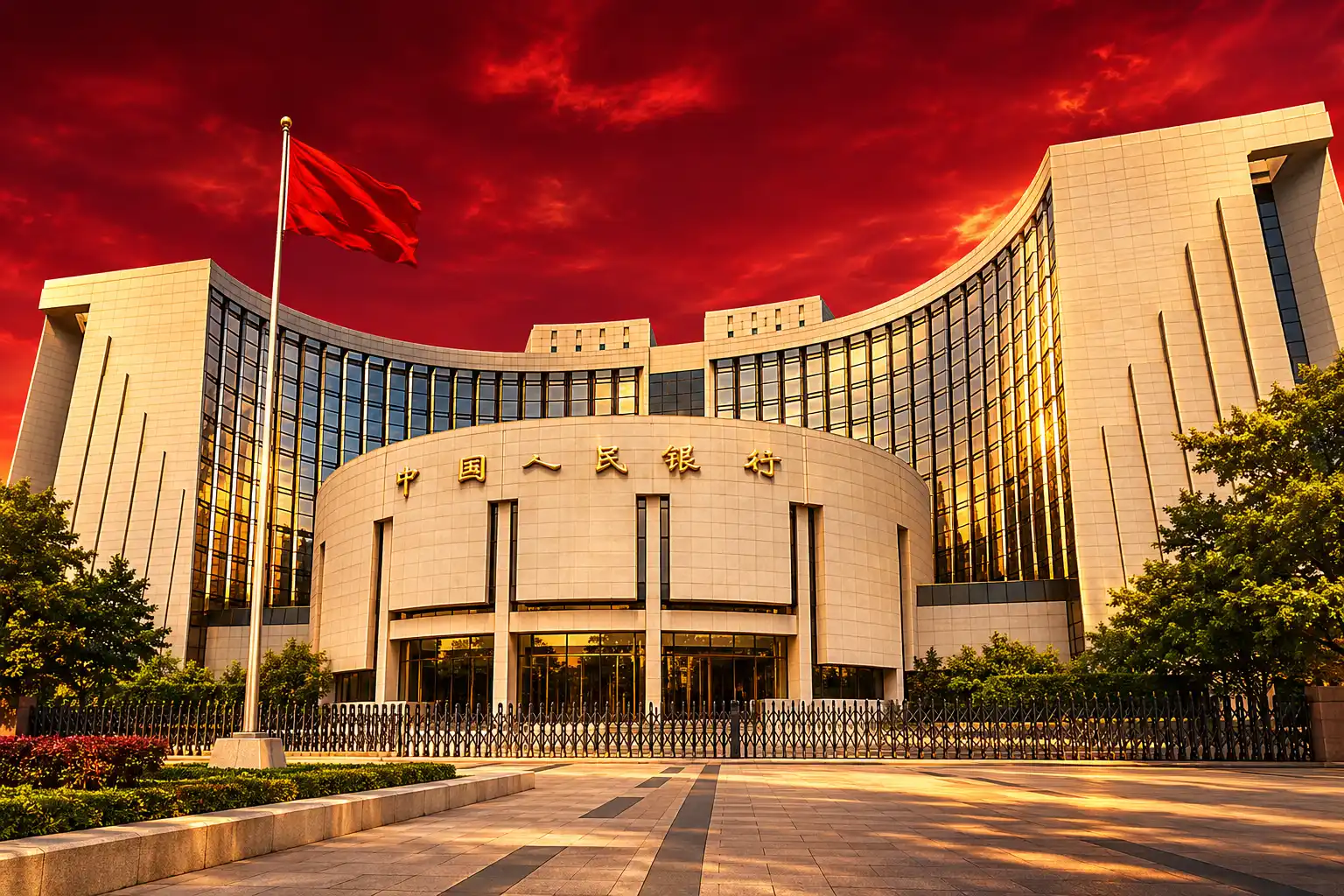
China’s central bank named strong supply and weak demand as the economy’s core problem in its third-quarter policy report on Nov. 11. It still promised an appropriately loose stance, cheap long-term credit for six national networks, and a stable yuan, as it tries to finish the year inside a 4.5 to 5 percent growth band.
Growth through September was 4.6 percent. Consumer prices rose 0.9 percent against a goal of about 2 percent, and household loan books were already shrinking.
Strong Supply Meets a Familiar Credit Menu
The People’s Bank of China said in its third-quarter monetary policy implementation report that the economy still faces strong supply and weak demand, structural splits, and external shocks. It said it would step up counter-cyclical adjustment, work harder to expand domestic demand and improve supply, and work to complete the year’s economic and social development goals.
The next-steps section keeps the stance that has been in place for a year: an appropriately loose policy, ample liquidity, and tools adjusted as needed. It does not name a reserve-ratio cut or a benchmark rate cut. It does name more credit for domestic demand, scientific and technological innovation, smaller firms, and construction of the “six networks.”
That mix is the report in one page. The bank is honest about a demand shortfall. The fresh money still runs toward projects that add capacity, grids, and equipment.
Loans to the Real Economy Trailed by 3 Trillion Yuan
The National Bureau of Statistics put first-three-quarter output at 107,107.1 billion yuan, with the third quarter up 4.5 percent from a year earlier and 1.2 percent from the second quarter. High-tech manufacturing rose 14.3 percent and equipment manufacturing 10.2 percent. Goods exports rose 16.4 percent. Retail sales of consumer goods rose 1.1 percent.
THE SUPPLY-DEMAND SPLIT
| Gauge | Reading |
|---|---|
| Industrial value-added, first three quarters | +5.3% |
| High-tech manufacturing, first three quarters | +14.3% |
| Retail sales of consumer goods, first three quarters | +1.1% |
| Property development investment, first three quarters | -20.6% |
| CPI, first three quarters | +0.9% |
| PPI, September | +5.0% |
| Goods exports, first three quarters | +16.4% |
Factory prices jumped in September even as store prices stayed muted, so costs are landing on margins rather than on checkout receipts. Overnight money-market rates averaged 1.34 percent in the first three quarters, and outstanding social financing grew 7.1 percent to 468.17 trillion yuan. Broad money grew 7.2 percent.
RMB loans to the real economy still rose 11.5 trillion yuan through September, but that was 3.04 trillion yuan less than a year earlier, and the loan stock grew 4.8 percent. New corporate loans in September priced slightly below 3.0 percent, about 0.2 percentage points cheaper than a year earlier. New home loans were about 3.1 percent, roughly unchanged. Borrowing is cheap. The volume is not catching up with last year’s pace.
The Cheap Long Money Goes to Six Networks
On Sept. 29 the PBOC cut the one-year pledged supplemental lending rate by 0.25 percentage points to 1.5 percent and opened that window to a bundle of network projects. PSL is long money for policy banks, then for projects whose lives run far past a corporate working-capital loan. Large banks have already been lining up next year’s loan books around those projects, so the quarterly report is ratifying a scramble that started in September.
THE SIX NETWORKS IN THE PSL WINDOW
- Water networks: Long-dated pipes and basins that commercial banks rarely fund on their own books.
- New power grids: Transmission and distribution build-out tied to the energy transition.
- Computing-power networks: Data-center and compute links the state has folded into national infrastructure.
- Next-generation communications: Telecom plant treated as a public network, not a consumer gadget cycle.
- Urban underground pipes: City utility corridors with slow payback and public-good cash flows.
- Logistics networks: Freight corridors meant to cut circulation costs across provinces.
The same September package added 200 billion yuan (about $30 billion) to the relending facility for sci-tech innovation and technical upgrading, lifting that quota from 1.2 trillion yuan to 1.4 trillion yuan and raising the central-bank support ratio from 60 percent to 100 percent. Relending for agriculture and small firms rose by 500 billion yuan to 4.85 trillion yuan, including 300 billion yuan more for private firms, taking that slice to 1.3 trillion yuan.
End-September growth in the directed books stayed faster than overall lending: tech loans 12.0 percent, green loans 13.0 percent, inclusive loans 6.5 percent, elderly-care loans 16.2 percent, digital-economy loans 15.7 percent. Medium-term lending facility operations in the first three quarters totaled 5.3 trillion yuan, and the MLF stock was 7.6 trillion yuan at end-September, 1.35 trillion yuan above the start of the year. Three-month and six-month reverse repos plus MLF injected a net 1.1 trillion yuan in the third quarter. The pipes are open. They open toward networks, gadgets, and factories.
Why a Stronger Yuan Caps Further Easing
The report said the yuan closed at 6.7053 per dollar at the end of September, 4.1 percent stronger than at the end of last year, with the CFETS index at 103.20, up 5.3 percent. It repeated that the exchange rate should stay basically stable at a reasonable and balanced level, and that the bank will guard against overshooting.
The rally did not stop with the quarter. Officials said the onshore yuan strengthened for 14 straight sessions from Oct. 14. On Nov. 3 the PBOC said it would raise the forex reserve requirement ratio for financial institutions from 4 percent to 6 percent, effective Nov. 15, the first increase in nearly five years. The onshore yuan closed that day at 6.6765 per dollar, 307 pips weaker. Ming Ming, chief economist at CITIC Securities, said the move would freeze about $20 billion to $25 billion of forex liquidity at banks.
Wen Bin, chief economist at China Minsheng Bank, said the increase should help balance supply and demand in the forex market and break a loop in which bets on a stronger yuan produce a stronger yuan. The PBOC has said it does not preset a level, and that it will act if short-term swings turn into herd behavior.
THE STEPS AROUND THE REPORT
- September 29, 2026: Cuts the PSL rate to 1.5 percent and brings the six networks into that window, while topping up sci-tech and small-firm relending.
- November 2, 2026: Begins daily overnight reverse-repo operations at a fixed rate, after an Oct. 30 notice, to pin the short end.
- November 3, 2026: Raises the forex reserve requirement to 6 percent from 4 percent, effective Nov. 15, and publishes results of a securities, funds and insurers swap-facility operation.
- November 4, 2026: Steps up the central-bank lending facility for share buybacks and shareholding increases.
- November 11, 2026: Releases the quarterly report, repeating an appropriately loose stance and a pledge to keep stocks, bonds and foreign exchange orderly.
The stock and forex tools moved first. The report’s promise to enrich the toolkit and keep those markets stable is already in motion. A broader rate cut would sit poorly next to a campaign to stop the yuan from running.
Households Cut Borrowing as Deposits Keep Rising
Fixed-asset investment fell 7.2 percent in the first three quarters. Private investment fell 10.4 percent. Property development investment fell 20.6 percent, and sales of newly built commercial buildings fell 13.9 percent by value, even as online second-hand housing transactions rose 10.7 percent by floor space. The hole in demand is in housing and in private capex, not in the export dock.
WHERE HOUSEHOLD BALANCE SHEETS MOVED
- Household loans: The stock was down 2.0 percent year on year at end-September, a net paydown of 1,034.5 billion yuan in the first nine months.
- Enterprise loans: Up 8.0 percent, the other side of the same ledger.
- Household deposits: Up 9.39 trillion yuan in the first three quarters, as families kept parking cash.
- New-home sales: Down 13.9 percent by value, while second-hand online floor space rose 10.7 percent.
New home-loan rates, about 3.1 percent in September, are low by past Chinese standards and went nowhere over the year. Cheap mortgages did not restart household borrowing. The report still lists domestic demand as a support sector, but the September add-ons that carry a number are PSL for networks and relending for tech, farms, and private firms.
Loan Prices Will Lean on More Than the LPR
The forward-looking chapter says the bank will push loan pricing away from a relatively single link to the loan prime rate and toward more diversified benchmarks. It also wants banks to show the full cost of corporate loans and to cut middle fees, so the headline rate is not the whole bill.
That is a plumbing change, not a cut. It asks banks to price off more market rates, including the short end the PBOC now tends every business night. Transmission may get cleaner. It does not, by itself, put cheaper money into a household that is still paying down debt.
The stance is also familiar. The bank’s English edition of its late-2025 report already promised appropriately accommodative monetary policy and said the reserve requirement and interest-rate cuts could be used flexibly. A year on, the Chinese text is still “appropriately loose,” and this quarter’s next-steps page does not call those two cuts by name.
China Is Still Inside Its 4.5 to 5 Percent Band
Premier Li Qiang’s government work report, adopted in March, set GDP growth of 4.5-5 percent for 2026, with consumer prices rising around 2 percent. Nine-month growth at 4.6 percent sits inside that band. Nine-month CPI at 0.9 percent does not sit next to the price goal.
The quarterly report can argue that the year is still salvageable on output, and that directed credit plus a stable yuan is the available mix while factory prices run hot and the currency is bid. The same pages show where demand is thin: goods retail, housing investment, and household loans.
The FX reserve increase takes effect on Nov. 15. New household loans were still shrinking as of September.

Josh Sinn Draws the Heaviest AFL Betting Ban Since 2019

Rolapp Shuts the PGA Door as DeChambeau Heads to Europe

Apple TV Renews Slow Horses Past the Last Novel

Oasis Lifts UK Music to £8.4 Billion as Venues Shrink

Beyoncé Hits 100 Grammy Nominations on a Vault Track

Thameslink Will Pad 60,000 Ironing-Board Seats From 2027

How Tall Was Adolf Hitler?

U.S. Forces Clear Hormuz Mines, Then Hit Minelayers Again

Micron Sells the Memory Shortage as Five-Year Contracts

Royal Caribbean Sends Los Angeles Ships to Singapore and Brisbane
-
 NEWS3 months ago
Thameslink Will Pad 60,000 Ironing-Board Seats From 2027
-
 HISTORY3 years ago
How Tall Was Adolf Hitler?
-
 BUSINESS3 months ago
U.S. Forces Clear Hormuz Mines, Then Hit Minelayers Again
-
 NEWS3 months ago
Micron Sells the Memory Shortage as Five-Year Contracts
-
 NEWS3 months ago
Royal Caribbean Sends Los Angeles Ships to Singapore and Brisbane
-

 BUSINESS3 months ago
Sweetmore Bakeries Buys Fantasy Baking for Bar Work
-

 NEWS3 months ago
Twenty Controllers Closed Norwich Airport for a Bank Holiday
-

 BUSINESS3 months ago
L Catterton Installs a Kraft Heinz Operator at Kettle Cuisine