
LIFESTYLE
Chinese Designers Open Shops as Luxury Demand Shrinks
Local labels are opening Shanghai shops and hiring European directors just as China luxury spending falls for a second year and LVMH fashion slips 5%.

Chinese designers opened first Shanghai shops in 2026 as LVMH’s fashion arm posted a 5% third-quarter sales drop on weaker China demand. The local boom is real. It is walking into a smaller pie.
Mainland personal luxury already fell in 2024 and again in 2025. Western creative directors are still taking jobs at Asian companies, and the new Chinese labels are still short of wholesale doors.
LVMH Blames China for a 5% Fashion Drop
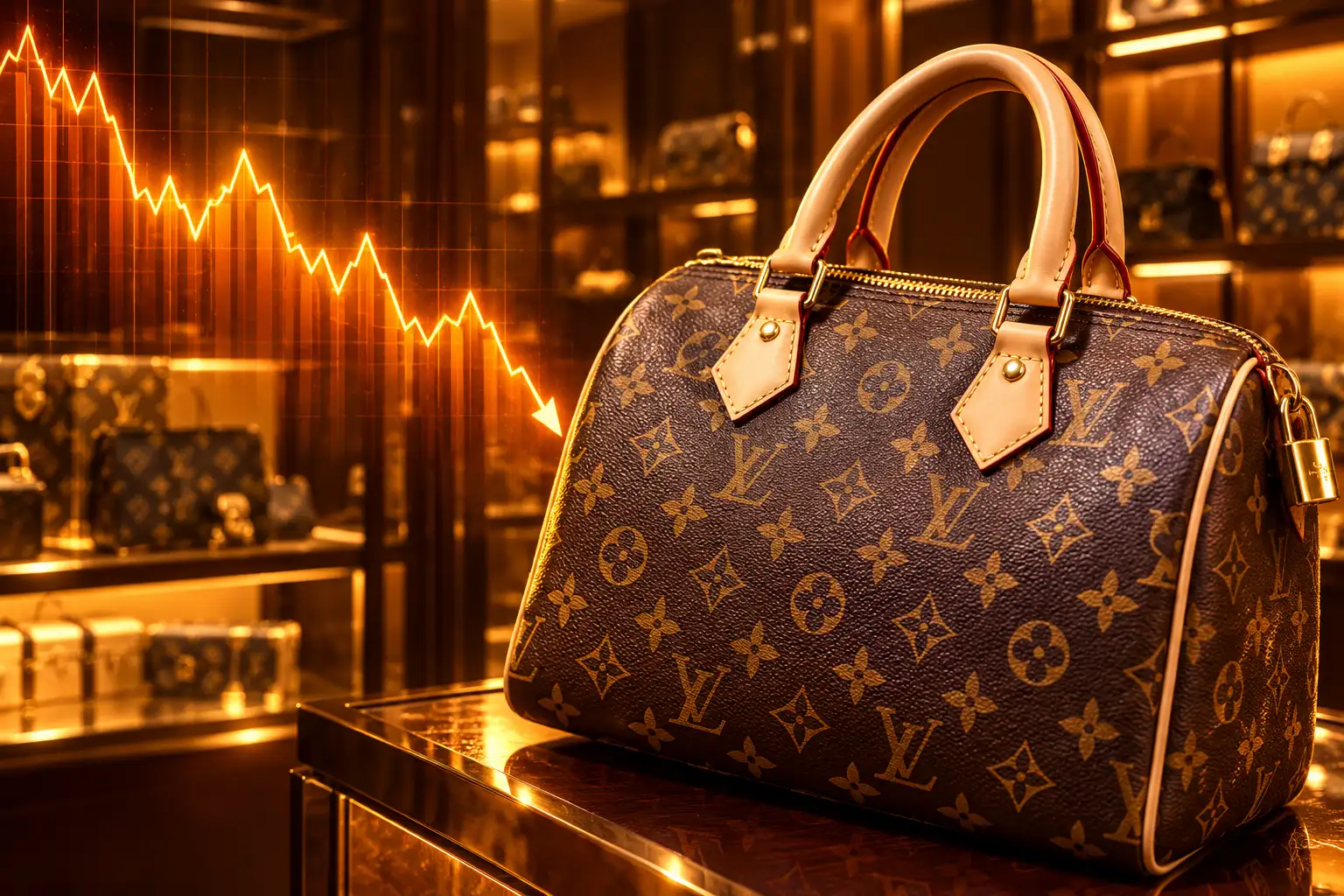
LVMH reported third-quarter revenue of €18.504 billion ($20.7 billion) on October 12, up 1% organically. The core fashion and leather goods division, home to Louis Vuitton, Dior, Celine and Loro Piana, did not share that gain.
The group said fashion and leather goods fell 5% organically, to €8,245 million, after a 1% rise in the second quarter that had looked like a turn. For the first nine months, the division took in €26,391 million, down 2% organically and 4% as reported. Group nine-month revenue was €57.148 billion, up 2% organically and down 2% as reported.
The geographic split is blunt. Asia excluding Japan, where the group earns a large share of sales, swung from 4% growth in the second quarter to a 5% fall in the third. The United States grew 5%, Japan 6%, and Europe 4%.
LVMH’S THIRD QUARTER BY REGION
| Region | Q3 2026 organic change |
|---|---|
| United States | +5% |
| Japan | +6% |
| Europe | +4% |
| Asia excluding Japan | -5% |
Cécile Cabanis, LVMH’s chief financial officer, told analysts that demand from Chinese customers was down in the midteens. Mainland purchases fell by double digits, she said, and buying by Chinese travellers abroad fell by a mid-single-digit rate. “The news flow has not been particularly good in China in the summer, so this has really weighed on the feelgood factor,” Cabanis said on the revenue call.
Louis Vuitton’s quarter sat just below the division’s 5% decline, she said. Dior was flat. Loro Piana and Rimowa still grew. The release pointed to a buoyant United States, Jonathan Anderson’s work at Dior, and Louis Vuitton’s 130th anniversary for the Monogram. None of that offset China in the third quarter.
A Second Year of Smaller Luxury Spending
The LVMH print sits on a market that has already been shrinking. Bain & Company said mainland China’s personal luxury market contracted 3% to 5% in 2025, after a 17% to 19% drop in 2024. Bruno Lannes, a Bain senior partner in Shanghai, called 2025 a recalibration, not a broad rebound, when the firm published the figures in late January.
MarketLine, in a July industry profile, valued Chinese luxury goods at $67.7 billion in 2025. Apparel, footwear and accessories made up $48.1 billion of that, or 70.9%. Growth from 2020 through 2025 averaged 1.0% a year, a far cry from the decade when China pulled global luxury along.
Fflur Roberts, head of luxury goods at Euromonitor International, has been tracking the same squeeze. Weaker confidence, slower growth and sharper price sensitivity are, she said, weighing on optional spending after more than ten years in which China drove the category. Her firm’s luxury goods sales by category in China still show a market that is large, and no longer easy.
WHERE BAIN SAYS THE MONEY MOVED IN 2025
- Beauty: The only major gainer, up 4% to 7%, on ultra-premium skincare and fragrance.
- Fashion: Ready-to-wear down 5% to 8% as shoppers stalled on price and novelty.
- Leather goods: Down 8% to 11%, the worst of the clothing-adjacent lines.
- Watches: Down 14% to 17%; jewellery down 0% to 5%.
Secondhand luxury grew 15% to 20% in 2025 and still made up under 10% of the total, Bain said. Insight & Info Consulting put resale sales at 38.4 billion yuan in 2025 and has sketched a path toward 100 billion yuan by 2030. Bain also found that 65% of Chinese luxury spending happened on the mainland in 2025, with 35% overseas, a shift back home after two years of travel buying. The firm expects modest growth in 2026, with plenty of volatility left in it.
Roberts’s other warning is the competitive one. Domestic brands, she said, are giving shoppers more alternatives to the international houses, and those shoppers are asking what a premium is for. Louis Vuitton, Dior, Loro Piana and Tiffany & Co. have opened new flagships in Tier 1 cities and pulled back in some Tier 2 and Tier 3 locations. Our Legacy, a newer European name, went the other way and partnered with Dongliang on a local-feeling store in Shanghai.
Mark Gong’s Shop Sits Beside Prada
The designer answer to that pullback has been to rent space and sell direct. Mark Gong, 28, opened his first flagship in August at iapm mall in Shanghai, on a floor that already holds Prada, Miu Miu, Balenciaga and Burberry. Samuel Gui Yang opened a 1,300-square-foot shop on Julu Road, across from the Shanghai Writers’ Association, in a building with an Art Deco air. Both used Labelhood, the incubator and multi-brand retailer founded by Tasha Liu.
Gong started the label in New York in 2018 after Parsons and moved it home in 2020. Annual revenue sits around $1 million, he said, with direct-to-consumer sales at 60% to 70% and T-shirts about 35% of the mix. The iapm shop is about 600 square feet. Graphic tanks start near 300 yuan ($44) and denim trousers run to about 2,500 yuan ($370). He employs around 17 full-time staff and six freelancers.
The business still leans on a single viral hit. At 3 p.m. on February 24, 2025, Gong learned that Jennie of Blackpink had been photographed in his dog-print T-shirt, six dachshunds in pearl necklaces. The team ordered 500 extra pieces, then 2,000. The shirt has since sold about 30,000 units. Online, he notes, return rates in China can reach 70%, which makes those Tmall numbers harder to bank.
The strategy for the store is that I really want people to see all the higher-end items and the show pieces.
Mark Gong, designer, on the iapm flagship
Yang launched with partner Erik Litzen in 2015. The brand now has 34 stockists in China and four or five in the rest of the world. “We’ve built more sales and customer base here, and we’re growing gradually step by step in the market,” Yang said. The Julu Road shop sits next door to Pronounce, the label run by his Central Saint Martins classmate Yushan Li and by Jun Zhou, which marked ten years in 2026 with its first pre-collection after years of showing in Milan.
THE STORES THAT OPENED AROUND THE WEEK
- Mark Gong: First flagship at iapm, August 2026, merchandised with Labelhood.
- Samuel Gui Yang: First stand-alone on Julu Road, also run with Labelhood.
- Yangkehan: A city flagship timed to Labelhood’s 22nd season, October 9 to 15.
Labelhood’s week, themed LABELfitHOOD and staged with Nike, put independent Chinese names on runways that also included Oude Waag, Yirantian and Chen Sifan. Liu has spent a decade telling Chinese students who trained in Europe to come home and build. Pronounce, Shushu/Tong, Oude Waag and Yang are among the labels that did.
Guochao Gives Local Labels Their Own Story
The design pitch is no longer a copy of Paris. Guochao, the turn toward Chinese heritage that surfaced in the late 2010s, now shows up as qipao florals and pankou frog buttons on Shanghai runways. Hemu opened the week with a Silk Road idea, Chinese silks cut into clothes that still read Eastern in silhouette. Pronounce’s Li and Zhou talked about Eastern dress and gender without being trapped by costume.
Yang’s spring 2027 collection, The Green Snake, took the White Snake legend and ran it through early-1990s Hong Kong cinema color. He said foreign clients who once worried about borrowing the culture are now buying the clothes as clothes. “If you approach it with respect, it works,” Litzen said.
Maybe in the beginning there was a slight hesitation, but I think over time we have identified a certain type of client and some people really are drawn to it.
Samuel Gui Yang, designer, on selling Chinese myth abroad
Roberts argues that this is how local names compete: they combine new cuts with a story that already belongs to the customer, then try to take that base overseas. Blake Abbie, editor-in-chief of A Magazine Curated By, puts the industrial edge next to the cultural one. China can make fashion at every price, he said, because the factories sit next to the brands, a setup emerging labels in Europe and the United States do not have. Most of that growth, he added, has come only in the last 15 years.
The craft was never the missing piece. Chinese couture has been visible for years. What changed in 2026 is the boring layer around it: a shop on Julu Road, a mall unit at iapm, an incubator that will merchandise the dresses that do not sell themselves on Tmall.
Why Western Creative Directors Are Taking Asian Jobs
The move that registers outside China is not a 600-square-foot shop. It is a European creative director signing an Asian contract. Jonathan Lee, a Hong Kong fashion consultant, put it in one line: it is no longer a given that a Western designer will work in a European house. “Maybe someone from Asia will take you,” he said.
Icicle, the Shanghai brand Ye Shouzeng and Shawna Tao founded in 1997, named Sabato De Sarno creative director in September. De Sarno ran Gucci from 2023 until 2025. He will cover women’s and men’s ready-to-wear, accessories and eyewear, with a first collection for Fall Winter 2027, in the brand’s 30th year. Bénédicte Laloux, who has led the Paris women’s studio since 2013, stays as design director of the women’s show collection.
Icicle already operates more than 200 stores, with flags in Beijing, Shanghai and Paris. Yicai reported annual revenue above €300 million and a double-digit compound growth rate through the luxury slump. In 2018 the company bought Carven; in 2021 it set up ICCF Group in Paris; in April 2026 Kering took a minority stake to back overseas expansion, handbags and shoes.
We believe this vision can only be realized by bringing together creative talent from around the world with Icicle’s deep cultural roots and industrial strength in China.
Ye Shouzeng, chief executive and co-founder, Icicle
De Sarno said he was drawn by the same nature-and-craft brief the house has used for nearly 30 years. Kim Jones, who left Dior Men in early 2025, announced his own label on October 12, the same day as the LVMH print. The clothes are being developed in London, made mostly in Japan, with leather in Italy. The first collection is dated autumn winter 2027. A 4,000-square-foot flagship is due in October 2027 at Central Yards on Hong Kong’s new harbourfront, with e-commerce from mid-2027. Lucy Beeden, his long-time deputy, is design director. Jones had already been working with Bosideng’s luxury line Areal, and in October he launched an Aman Essentials collaboration at Dover Street Market Ginza in Tokyo.
WESTERN NAMES ON ASIAN PAYROLLS
| Designer | Asian role | First collection or store |
|---|---|---|
| Sabato De Sarno | Creative director, Icicle (Shanghai and Paris) | Fall Winter 2027 |
| Kim Jones | Own label, Hong Kong flagship; also Bosideng’s Areal | Autumn winter 2027; store October 2027 |
| Kris van Assche | Partnership with Anta | Ongoing |
| Clare Waight Keller | Uniqlo, Fast Retailing | Ongoing |
| Francesco Risso | GU, Fast Retailing | Ongoing |
| Daniel Fletcher | Mithridate | Ongoing |
David Siwicki, the Paris publicist, has added Oude Waag in Shanghai, Kartik Research in New Delhi and Amomento in Seoul to his list and now spends more of each season in the region. Style from Asia, he said, has already changed fashion at large. The payrolls are catching up.
Twenty-Five Shops Stand Between Talent and Scale
Giovanni Pungetti, former chief executive of OTB Group Greater China, has lived in Shanghai for nine years and talks about a “second step” the new labels still have not taken. Talent, he said, is not the constraint. “There is a huge talent underground here. It’s only waiting to explode.”
Distribution is. Pungetti counts no more than 25 high-level shops in the country that can carry this kind of designer clothing, including SKP in Beijing and B1ock, a 10-floor department store in Hangzhou. Malls are hard. Online, beyond Taobao and Tmall, the useful doors are few. That is why Gong and Yang opened their own shops, and why Labelhood has also backed stores for Shushu/Tong and Short Sentence.
Olivia Chen, co-founder of the brand consultancy 2034 with Julio Ng, said a store lets a label keep control of distribution and talk to customers without a buyer in the middle. Ng’s caution sits next to that optimism. Big sales, he said, are not the same as a healthy business. The cost of reaching shoppers, the terms of wholesale, the inventory left over, and the margin that remains all decide whether a brand can live without opening another door every season.
WHAT STILL BLOCKS THE SECOND STEP
- Wholesale: Pungetti’s ceiling of 25 serious doors means most labels must sell themselves.
- Online: Taobao and Tmall dominate, with return rates that can wipe out a season’s T-shirt win.
- Fashion week: Tokyo, Shanghai and Seoul still struggle to pull a dense crowd of Western buyers and editors.
- Calendars: Asia’s capitals overlap or sit weeks apart, and political friction makes a joint circuit unlikely.
Lee thinks closer dates would bring more buyers over. Abbie calls the misalignment a missed opportunity. Paris remains expensive to show in, and showing only at home is still not enough to be read as global. Yang’s 34-to-5 stockist split is the map of that problem in one brand.
Shanghai Does Not Need to Become Paris
The temptation, in a week when Icicle hires a Gucci alum and Jones plants a store on Victoria Harbour, is to talk about a new center. Pungetti refuses that frame.
Shanghai doesn’t need to become the new Paris. It needs to become the new Shanghai. For me, it’s already the center of something, but they need to find their own way to develop the local fashion culture.
Giovanni Pungetti, former CEO, OTB Group Greater China
Julio Ng makes the same point in business language. Asian firms can now hire global designers, run factories, and reach local customers, he said, which means influence is no longer confined to the old capitals. It does not mean a Comme des Garçons or a Wooyoungmi appears on a two-year clock. Building a house that other countries copy still takes time.
Roberts’s version is drier. Western brands will still sell here. The market gets pickier about what a premium is for, and more of the alternatives will have Chinese names on the label. Bain’s 2026 growth, if it arrives, will be modest and uneven. LVMH’s third quarter already showed how fast a 1% fashion rebound can reverse when Chinese clients step back.
De Sarno’s first Icicle collection is dated Fall Winter 2027. Jones’s Hong Kong store is dated October 2027. The shops on Julu Road and in iapm are already open, selling snake-myth tailoring and dachshund T-shirts into a market that spent two years getting smaller.

Kering’s Growing Houses Cannot Outrun a Shrinking Gucci

Studio Staff and Bitcoin Buyers Built the Eminem Leak Case

A Mutated H1N1 Strain Is Hitting Younger Immunity First

Albert Heijn Returns at One-Third as Rivals Take Share

Art Basel Paris Ends After One Public Day

Thameslink Will Pad 60,000 Ironing-Board Seats From 2027

How Tall Was Adolf Hitler Really? Debunking the Myth of his Height

Micron Sells the Memory Shortage as Five-Year Contracts

Royal Caribbean Sends Los Angeles Ships to Singapore and Brisbane

U.S. Forces Clear Hormuz Mines, Then Hit Minelayers Again
-
 NEWS2 months ago
Thameslink Will Pad 60,000 Ironing-Board Seats From 2027
-
 SCIENCE3 years ago
How Tall Was Adolf Hitler Really? Debunking the Myth of his Height
-
 NEWS2 months ago
Micron Sells the Memory Shortage as Five-Year Contracts
-
 NEWS2 months ago
Royal Caribbean Sends Los Angeles Ships to Singapore and Brisbane
-
 BUSINESS2 months ago
U.S. Forces Clear Hormuz Mines, Then Hit Minelayers Again
-

 BUSINESS2 months ago
Sweetmore Bakeries Buys Fantasy Baking for Bar Work
-

 BUSINESS2 months ago
L Catterton Installs a Kraft Heinz Operator at Kettle Cuisine
-

 NEWS2 months ago
CISA’s 100 Water System Hacks Hit One-Operator Plants