
BUSINESS
Capri Raises Its Outlook on a Luxury Trade-Down Bet
Capri lifted fiscal 2027 guidance after a 5.5% sales drop, betting shoppers leaving expensive European houses will refill Michael Kors.

Capri Holdings raised its full-year profit plan after second-quarter sales fell 5.5% to $809 million, and the stock jumped 16%. Michael Kors, still more than 80% of the group, dropped 8.6%. Jimmy Choo rose 11.5%.
Chairman and chief executive John D. Idol told investors on Oct. 30 that shoppers walking away from expensive European houses now have a reason to look at his brands. The Americas, where Michael Kors makes most of its money, still fell 11%.
A $20 Million Timing Shift Inside the Beat
Capri, which reports in London and trades as CPRI, posted second quarter fiscal 2027 results for the period ended Sept. 26, 2026. Revenue was down 5.5% as reported and 4.9% in constant currency, ahead of estimates clustered in the mid-$780 million range. Shares closed at $18.68 on Oct. 30, up $2.62, on 9.81 million shares, more than twice a typical session, after a 52-week low of $12.40 in September.
About $20 million of that revenue was wholesale merchandise shipped earlier than planned, $15 million at Michael Kors and $5 million at Jimmy Choo. Those orders came out of the third quarter, so the beat is smaller once you put them back. Inventory delays also held back about $50 million of Michael Kors product, Idol said, because freight out of Asia was slow.
Profit still improved. Gross profit was $512 million, with gross margin at 63.3% against 61.0% a year earlier, a 230 basis-point gain Idol’s team tied to more full-price selling, brand mix, and lower tariff rates than in last year’s second quarter. Adjusted operating income was $31 million, or 3.8% of sales, up 55% from $20 million. Adjusted earnings were $0.42 a share, versus a $0.03 loss a year earlier. On a GAAP basis, Capri earned $0.25 a share on $27 million of net income after a $0.28 loss.
Idol said trends improved each month of the quarter at both houses, and that Capri still expects company revenue to grow in the second half of fiscal 2027. The company now looks for about $3.42 billion of sales this year and about $2.20 of adjusted earnings per share, up from a prior plan of $3.4 billion and $2.15. That EPS figure, management said, would be 45% above fiscal 2026, with operating income up about 50%.
Michael Kors Still Shrinks in the Americas
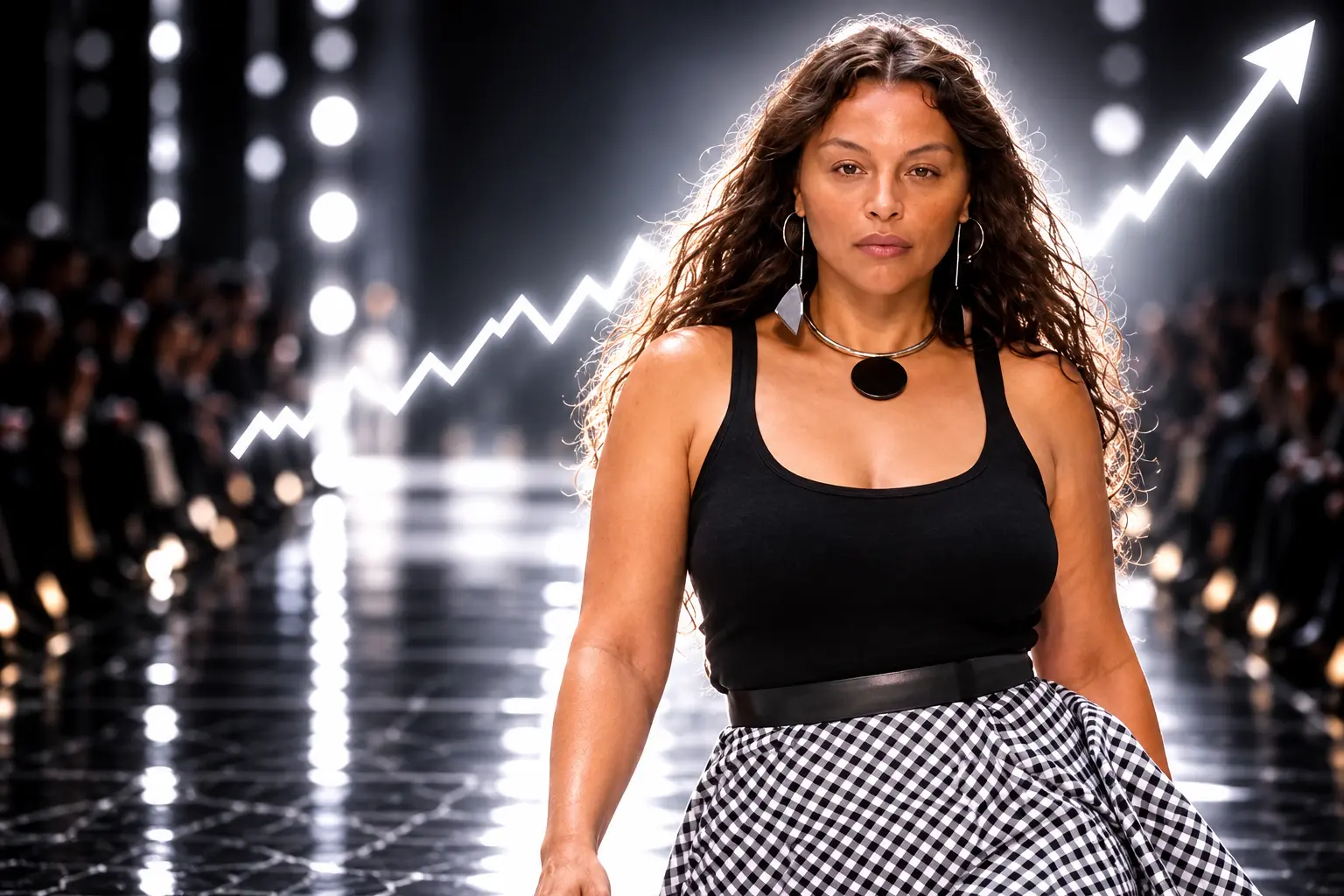
Michael Kors sales were $663 million, down 8.6% as reported and 8.0% in constant currency. Own retail fell by a low-double-digit rate. Wholesale fell by a mid-single-digit rate even with the $15 million pulled forward. Chief financial officer Tyler Reddien said the Americas declined 11%, EMEA 5%, and Asia 1%, with the Middle East conflict and late inventory both weighing on Europe.
MICHAEL KORS AND JIMMY CHOO BY REGION
| Brand and region | Q2 sales | Year earlier | Change (as stated) |
|---|---|---|---|
| Michael Kors, Americas | $405 million | $457 million | -11% |
| Michael Kors, EMEA | $185 million | $194 million | -5% |
| Michael Kors, Asia | $73 million | $74 million | -1% |
| Jimmy Choo, Americas | $42 million | $34 million | +24% |
| Jimmy Choo, EMEA | $76 million | $67 million | +13% |
| Jimmy Choo, Asia | $28 million | $30 million | -7% |
Those dollars add to $663 million at Kors and $146 million at Jimmy Choo. Group sales were $447 million in the Americas, $261 million in EMEA, and $101 million in Asia. For the first six months, Michael Kors is at $1.253 billion, down 7.9% from $1.360 billion, while Jimmy Choo is at $325 million, up 10.9% from $293 million.
The Kors drop is partly a choice. The brand had about 40% less markdown inventory and cut promotional days by about 50%, which Reddien said was planned. Full-price sell-throughs and average unit retails rose, and Kors gross margin widened 220 basis points to 61.5%. Operating income still slipped to $68 million from $73 million, because lower sales leveraged store costs the wrong way. Operating margin ticked up 20 basis points to 10.3%.
New product did some work once it arrived. The Hamilton Soft, a slouchier take on a house icon, became a bestseller, and teams were chasing inventory to keep it in stock. Fall campaign bags also included fresh Laila and Nolita shapes. Footwear names such as the Jennings loafer and Piper Flex ballet flat were called out as early winners. Idol said the design studios, led by Michael Kors, are “starting to very significantly hit trends” in accessories and now in shoes.
Why Capri Thinks European Luxury Is Its Opening
The second-order bet is not that Michael Kors suddenly looks like a European house. It is that those houses priced a lot of shoppers out, and that a $300-odd bag can look like value next to a four-figure tote. European groups have lost hundreds of billions of euros of market value in 2026. LVMH’s fashion and leather goods sales have been shrinking, and Kering has been closing stores while Gucci stays in a slump. China demand is still weak, and several houses spent years lifting prices faster than incomes.
As you know, the industry, in particular some of the European luxury brands, are having a bit of a struggle right now. We actually think this is a super time for us to be able to resonate with consumers who are being a bit more choiceful.
John D. Idol, chairman and CEO, Capri Holdings fiscal 2027 second-quarter call
That pitch only pays if Kors can grow units after it stops starving the calendar of discounts. The Americas number says it has not, not yet. A Michael Kors shop on TikTok, launched in the quarter, is the clearest try at a younger shopper. Idol said early sales and engagement ran at four times the internal plan, and that the brand’s global customer file grew 8%. Influencer work and a spring 2027 runway at the Museum of Modern Art’s Sculpture Garden are meant to do the same job. None of that reversed an 11% sales drop in the region that still pays the bills.
The Hamilton bag collection is the product test of the same idea: a known lock-and-satchel shape, softened, priced in accessible-luxury territory, pushed as a hero. U.S. department-store listings have put the Hamilton Soft large satchel near $359.50. If that bag, and the next few like it, only replace discounted volume, the trade-down thesis stays a speech.
Jimmy Choo Turns a Profit in Its Quiet Quarter
Jimmy Choo is the part of Capri that already looks like a growth brand. Sales of $146 million rose 11.5% as reported and 12.2% in constant currency, including $5 million of early wholesale. Gross margin rose 100 basis points to 71.2%. The house made $2 million of operating income, a 1.4% margin, after a $9 million loss a year earlier, an 830 basis-point swing Reddien tied to expense leverage on higher sales.
Retail rose by a mid-single-digit rate, with the Americas up double digits, EMEA up high single digits, and Asia down mid-single digits. Wholesale rose by a strong double-digit rate, helped by the earlier shipments, and North American department stores were up double digits at the cash register. Accessories rose double digits, led by the Cinch and Bon Bon (also called Bon) bag lines, with Bar and Curve gaining. Footwear got help from the Margot Flat and Scarlett kitten heel on the casual side and from Azia, Sacora, and Faiz in dress.
Idol said Jimmy Choo is not for sale. Over the long term, he said, the brand can reach $800 million of revenue with operating margins in the low double digits. Full-year guidance now calls for about $650 million of Jimmy Choo sales and a low-single-digit operating margin, a $15 million raise versus the prior brand plan. Asia, down 7% in the quarter to $28 million, is the open sore. The 30th-anniversary campaigns, including a Devon Lee Carlson film, are aimed at a younger file that grew 7%.
That is a different company than the one that tried to be a three-house luxury group. Jimmy Choo at $146 million is still a fifth of quarterly sales. It is also the only brand that grew, and the one management just made more central to the year.
230 Basis Points From Fewer Markdowns
Capri is trying to make less look like more. Operating expenses fell $21 million to $502 million, but they rose as a share of sales, to 59.5% from 58.6%, because revenue fell faster than costs. Reddien still expects about $2 billion of operating expense for the year and flagged inflation in the cost base. The margin story, then, is mix and price, not a cheaper company.
HOW MICHAEL KORS CUT PROMOTIONS
- Markdown stock: About 40% less markdown inventory was offered in Kors stores, which cut volume and lifted the share of bags sold at full price.
- Promo calendar: Promotional days were cut by about 50%, a headwind management says is mostly done.
- Wholesale timing: Off-price shipments have been reduced for several quarters, and $15 million of Kors wholesale simply moved from the third quarter into the second.
- Stores: 50 shops have been renovated toward a 300-store plan, with 7 Jet Set lounges in flagships; early sites are seeing more traffic and sales, and fiscal 2028 plans call for 50 to 75 new freestanding Kors stores.
Inventory ended at $712 million, down 7%, and is supposed to build in the second half so holiday shelves are full. Free cash flow was $36 million after $51 million of operating cash and $15 million of capital spending. Guidance still assumes an extra 10% U.S. import tariff through July 24, 2026, and 10% to 12.5% after that. Air freight used to chase the late Kors goods ate some of the gross-margin gain at that brand.
Idol’s longer target for Michael Kors is $4 billion of sales and operating margins in the low 20% range. Current full-year Kors guidance is about $2.77 billion with a low-double-digit operating margin. The gap is the point of the reset. It is also a reminder that the brand has given up a lot of volume to get here.
After Versace, a Smaller and Cleaner Balance Sheet
The 16% bounce is easier to understand against the last two years than against one quarter of handbags. Capri is no longer the company that tried to merge with Tapestry, and it is no longer the company that owned Versace.
FROM THE TAPESTRY BLOCK TO THE BUYBACKS
- November 2024: Capri and Tapestry end their planned $8.5 billion combination after a U.S. court backs the Federal Trade Commission’s bid to stop a deal that would have put Coach, Michael Kors, Kate Spade, Jimmy Choo, and Versace under one roof.
- April 10, 2025: Capri agrees to sell Versace to Prada, taking a house it bought for $2.1 billion in 2018 off the books so it can cut debt and fund Kors and Jimmy Choo.
- December 2, 2025: Capri completed the sale of Versace for $1.375 billion in cash, then used the proceeds to pay down term-loan and revolver balances.
- March 20, 2026: Fitch keeps a BB rating with a negative outlook, saying leverage should ease after the sale but that Kors still has to stop shrinking before the outlook can stabilize.
- Quarter ended Sept. 26, 2026: Capri spends $150 million to buy 10.3 million shares at about $14.56, cutting the count by about 9%, and ends with $125 million of cash, $461 million of borrowings, and $336 million of net debt, versus $1.6 billion a year earlier. $721 million remains on the repurchase authorization. Full-year diluted shares are now seen at about 108 million, down from a prior 110 million, which does some of the work on the $2.20 EPS guide.
Net interest and other income is planned at about $100 million for the year, against about $175 million of operating income, so a large slice of the profit plan still sits outside the stores. Idol thanked about 11,000 employees on the call. The group that remains is two brands, a lighter balance sheet, and a stock that still trades at a $1.93 billion market value, well below the $28.27 52-week high.
Capri Guides to $1.005 Billion for the Holiday Quarter
Third-quarter guidance is where the substitution story has to show up in dollars. Capri sees about $1.005 billion of sales, about $90 million of operating income, and about $0.95 of adjusted earnings, on about 103 million shares. That sales number already includes the $20 million hole left by the early wholesale. Michael Kors is pegged at about $830 million, including a $15 million shift, with a mid-teens operating margin. Jimmy Choo is pegged at about $175 million, including a $5 million shift, with a low-to-mid-single-digit margin.
Idol said Kors revenue should improve in the third quarter and return to growth in the fourth, helped by holiday gifts, more marketing, renovated stores, and a smaller drag from the quality-of-sale cuts. He also said the fashion cycle is moving toward more formal, styled product. Reddien said inventory will be rebuilt for that period. Full-year Kors sales are still seen down, at about $2.77 billion, so the fourth quarter has to carry a lot of the turn.
The stock priced a lot of that turn on Oct. 30. What the quarter actually delivered was a fatter margin, a profitable Jimmy Choo, a much smaller debt load, and a Michael Kors business that is still smaller in the United States. Holiday receipts against the $830 million Kors plan will decide whether shoppers who became “choiceful” chose him, or just paid full price on fewer bags.
Disclaimer: This article is news reporting and analysis of Capri Holdings’ public earnings, guidance, and related company history. It is informational only and is not investment advice, a solicitation, or a recommendation to buy, sell, or hold CPRI or any other security. Nothing here is a forecast of future prices, earnings, or dividends, and readers should consult a licensed financial adviser or other qualified investment professional before acting on any figure in this piece. Sales, margins, ratings, and share prices reflect the company’s Oct. 30, 2026, materials, its filings, and market data as of those sources, and they can change with later results, guidance revisions, or trading.

Josh Sinn Draws the Heaviest AFL Betting Ban Since 2019

Rolapp Shuts the PGA Door as DeChambeau Heads to Europe

Apple TV Renews Slow Horses Past the Last Novel

Oasis Lifts UK Music to £8.4 Billion as Venues Shrink

Beyoncé Hits 100 Grammy Nominations on a Vault Track

Thameslink Will Pad 60,000 Ironing-Board Seats From 2027

How Tall Was Adolf Hitler?

U.S. Forces Clear Hormuz Mines, Then Hit Minelayers Again

Micron Sells the Memory Shortage as Five-Year Contracts

Royal Caribbean Sends Los Angeles Ships to Singapore and Brisbane
-
 NEWS3 months ago
Thameslink Will Pad 60,000 Ironing-Board Seats From 2027
-
 HISTORY3 years ago
How Tall Was Adolf Hitler?
-
 BUSINESS3 months ago
U.S. Forces Clear Hormuz Mines, Then Hit Minelayers Again
-
 NEWS3 months ago
Micron Sells the Memory Shortage as Five-Year Contracts
-
 NEWS3 months ago
Royal Caribbean Sends Los Angeles Ships to Singapore and Brisbane
-

 BUSINESS3 months ago
Sweetmore Bakeries Buys Fantasy Baking for Bar Work
-

 NEWS3 months ago
Twenty Controllers Closed Norwich Airport for a Bank Holiday
-
 BUSINESS3 months ago
L Catterton Installs a Kraft Heinz Operator at Kettle Cuisine