
NEWS
ICE’s Old Undercover Ledger Is Paying for Minnesota Spy Cases
ICE is funding the Minnesota 15 spy case through Keyhole, a 2008 undercover certificate built for criminal stings, now licensed by NSPM-7.

Homeland Security Investigations is paying for the Minnesota 15 spy case through Operation Keyhole, a certified undercover fund first approved in 2008. The FBI is not the agency in the Minnesota file. ICE’s investigative branch is, using a ledger built for drug, fraud, and trafficking stings.
Fifteen Twin Cities defendants still face a federal conspiracy case that grew out of last winter’s immigration surge. The public can see the spy work only because those charges forced Homeland Security Investigations (HSI) paper into open court.
Operation Keyhole Was Certified in 2008 for Criminal Stings
Prosecutors in United States v. Sant told Judge Katherine M. Menendez’s court that Keyhole is not itself a hunt for the defendants. It is a certified undercover operation, or CUC, run by the HSI special agent in charge in St. Paul. The certificate was certified on December 22, 2008 by the director of ICE’s Office of Investigations, after a review by the Undercover Review Committee of senior HSI and Justice Department officials.
The legal hook is older than ICE. Customs drew certified-undercover power from the Anti-Drug Abuse Act of 1986. Immigration officers got a matching grant in 1996. The Homeland Security Act of 2002 moved both into the new department. HSI now cites 8 U.S.C. § 1363a and 19 U.S.C. § 2081 when it wants to share undercover cars, identities, and cash across cases.
Section 1363a lets the service spend appropriated money to acquire proprietary corporations or business entities and run them as ordinary firms. Proceeds can pay the operation. A cover company worth more than $50,000 cannot be wound down quietly; the statute requires notice to the attorney general, the budget office, and the comptroller general. That is the plumbing of a long-running undercover shop, not a pop-up task force.
THE KEYHOLE FILE
| Program | When it joined the ledger | What prosecutors say it does |
|---|---|---|
| CUC Keyhole | Certified December 22, 2008; last renewed June 29, 2026 | Pays undercover gear and people across HSI St. Paul’s territory |
| Operation Puppet Master | Case opened January 28, 2026; folded into Keyhole in January 2026 | The undercover case behind the indictment; its Keyhole undercover work had stopped by June 2026 |
| Project Whipple Shield | Opened February 2026; folded into Keyhole in March 2026 | Assault, stalking, and doxing of federal employees; still on the June 2026 active list |
St. Paul’s patch is Minnesota, North Dakota, and South Dakota, and it once included Iowa and Nebraska. Since 2008 the SAC has approved 77 investigations for Keyhole help, including narcotics, child sexual abuse, financial cases, and counter-proliferation. The committee reviewed the CUC in June 2026. The executive associate director recertified it on June 29, 2026. The next review is due by December 31, 2026.
As of that June renewal, six criminal cases were using Keyhole for undercover work. One was Project Whipple Shield. Puppet Master had already stopped using the fund. Prosecutors say the other five cases are ordinary crimes with no tie to these defendants. Defense lawyers still want the whole Keyhole drawer. The government says that would burn unrelated informants.
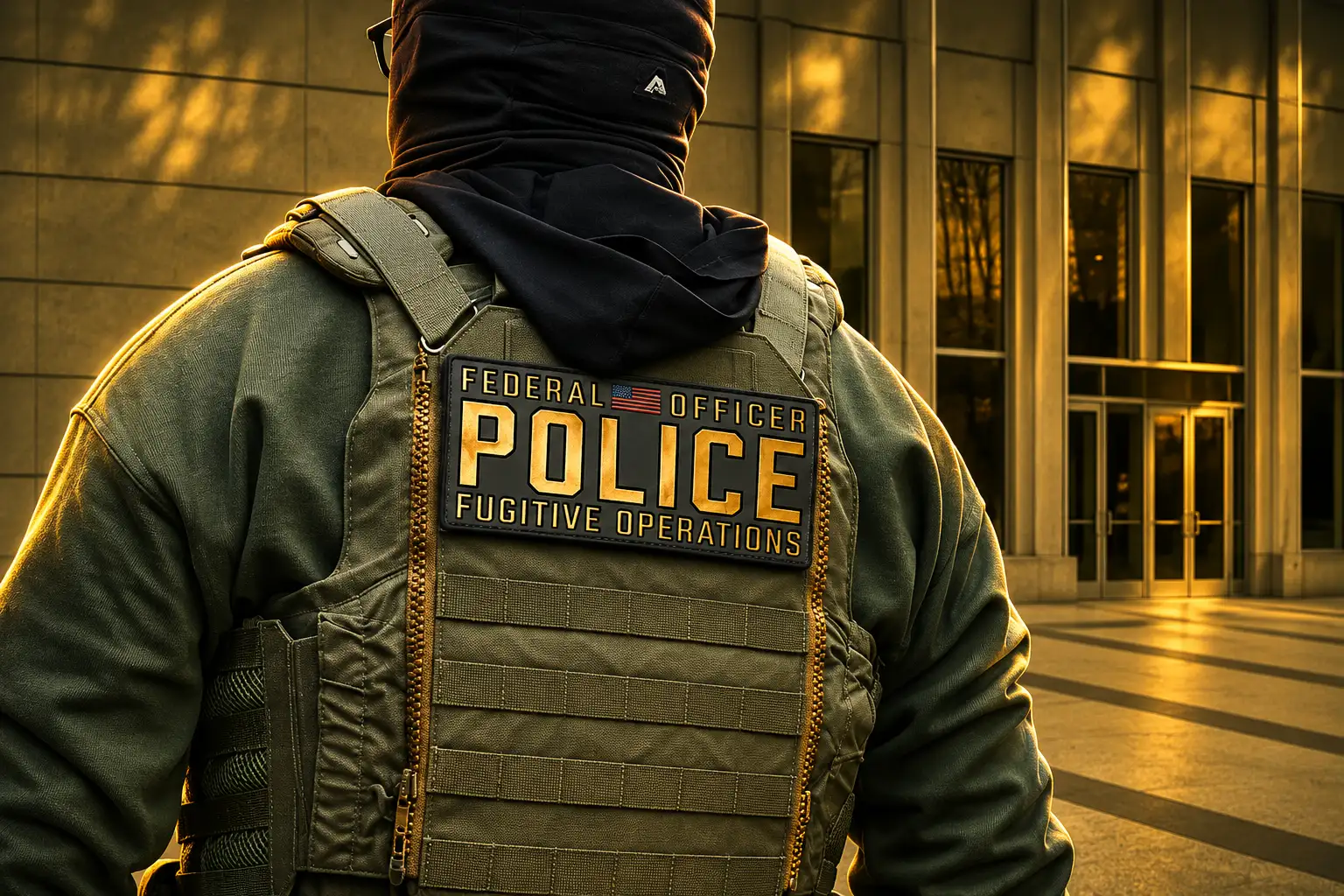
How NSPM-7 Licensed That Toolbox Against Dissent
National Security Presidential Memorandum 7, signed September 25, 2025, did not create Keyhole. It told the National Joint Terrorism Task Force to run a national strategy against “organized political violence,” and it told every federal investigative agency to treat funders, officers, and employees of targeted groups as part of the case. President Donald Trump issued it two weeks after Charlie Kirk was killed in September 2025, and three days after an order designating Antifa a domestic terrorist organization.
Common threads animating this violent conduct include anti-Americanism, anti-capitalism, and anti-Christianity; support for the overthrow of the United States Government; extremism on migration, race, and gender; and hostility towards those who hold traditional American views on family, religion, and morality.
National Security Presidential Memorandum 7, September 25, 2025
The memo’s own list of anti-Americanism, anti-capitalism, and anti-Christianity is the license defense lawyers keep quoting. It also names organized doxing, swatting, riot, trespass, assault, and civil disorder as domestic-terrorism priorities, and it points Treasury, the IRS, and every agency with investigative power at money trails. JTTFs sit at the top of the org chart on paper. The Minnesota discovery file is an HSI product.
That gap is the stake. A presidential memo aimed the post-9/11 task-force system at left-wing networks. The agency that actually put 11 people into Twin Cities meetings, Signal groups, and church halls was ICE’s criminal-investigations shop, spending through a 2008 certificate.
The Minnesota 15 Case Put the Files in Open Court
Grand jurors returned the first indictment on June 11, 2026. It was unsealed June 16. U.S. Attorney Daniel N. Rosen told reporters the 15 were charged for conduct, not speech, and promised video and eyewitnesses. Count One names all 15 on a conspiracy to impede or injure a federal officer. Other counts hit named defendants with solicitation, interstate threats, interstate stalking, and assault on an officer. The government also moved to call the case complex under the Speedy Trial Act, citing more than 200 overt acts.
Lead defendant Isaac Auman Sant, also known as Ike, is a healthcare worker. Kevin Riach, his lawyer, told a reporter, “This is the first time I’ve had a client who’s accused of a conspiracy and went on a speaking tour.” None of the 15 has been convicted. A superseding indictment filed October 22, 2026, kept the group in the case.
THE CASE CALENDAR
- December 2025: Federal officers open Operation Metro Surge in the Twin Cities, the winter immigration push that produced mass arrests and street clashes.
- January 28, 2026: HSI St. Paul opens Operation Puppet Master and, the same month, parks it under Keyhole.
- February 2026: Project Whipple Shield opens against alleged assaults, stalking, and doxing of federal employees; it joins Keyhole in March.
- June 11, 2026: Prosecutors file the 15-defendant indictment; it is unsealed June 16.
- July 31, 2026: The government turns over 6,440 documents, 7,558 video and audio files, and more than 20 terabytes of Signal chat files.
- August 13, 2026: Defense lawyers file the discovery motion that drags Puppet Master, Whipple Shield, and Keyhole into public view.
- October 20, 2026: Magistrate Judge David T. Schultz holds an evidentiary hearing on Keyhole. HSI supervisor Joshua Brenner testifies.
- October 22, 2026: A superseding indictment is filed. The next Keyhole review is due by December 31, 2026.
By the time the first dump landed, the defense already had a map of a campaign that reached past the 15 named people. Riach wrote that prosecutors had told the grand jury the alleged conspiracy ran to the AFL-CIO, the Minneapolis Federation of Educators, the Minnesota Association of Professional Employees, Monarca, Veterans for Peace, and a bicycle shop called the Grease Pit, among others. An HSI slide titled “The Conspiracy” listed 18 organizations.
What the Undercover Teams Did in the Twin Cities
At least 11 undercover agents working under Keyhole joined martial-arts and know-your-rights trainings, marches, general strikes, and community meetings. They also entered the activists’ own system for spotting suspected ICE vehicles and sending people to follow them, then piped Signal traffic back to HSI for the indictment. One recorder fell onto a gym floor during a martial-arts session at University Baptist Church in Minneapolis, and the agent had to circle back for it.
Court records put 119 HSI agents on the Minnesota 15 file. The undercovers sat inside a wider surveillance group of more than 50 HSI personnel, including at least two dozen from the Special Operations Group. Mike German, a former FBI undercover agent, compared the roster with the CIA’s old MH/Chaos hunt for foreign hands in the New Left, which a 2011 history put at 42 officers at its peak.
WHAT THE TEAMS USED
- People: Eleven undercovers in churches, libraries, parks, schools, and trainings, plus out-of-state specialists pulled onto the file.
- Phones: Infiltrated Signal groups, later produced as more than 20 terabytes of chat files, with contents written into the charging documents.
- Air: Unarmed Customs and Border Protection Reaper drones filming activists moving through the Twin Cities.
- Cars: Photographs and plate runs on vehicles at meeting lots and on cars that carried activists, plus a homemade plate-search tool an activist posted to Fly.io.
- Money: FinCEN 314(a) Patriot Act queries on March 31, 2026, against records of 29 subjects, plus FedWire pulls from January 1, 2023, through March 29, 2026.
- Data brokers: Thomson Reuters CLEAR fused with Minnesota driver records after HSI pulled Fly.io DNS logs, SSH sessions, a signup IP, and a Stripe card fingerprint on an account that never completed a payment, yielding a license number, a Social Security summary, address history, phones, property records, and jointly registered vehicles.
HSI photographed meetings as far as Seattle, Michigan, Chicago, and New York. Filings say undercover officers also went into churches, a step lawyers say collided with a court order. The Fly.io episode is the cleanest specimen of the method: a public cloud account, a card that never paid, and a commercial dossier that turned a license-plate helper into a full identity file.
Out-of-State Specialists and a Bloomington Front Company
Several case agents are based outside Minnesota and show up in anti-ICE prosecutions in other cities. Los Angeles HSI agent Robert Kurtz III works financial fraud. Ryan Ribner, also from Los Angeles, arrested SEIU California president David Huerta at a June 2025 protest and claimed the then 58-year-old union leader attacked federal officers. Prosecutors dropped Huerta’s charge in July 2025 after video contradicted Ribner’s account. HSI records put Ribner on at least two other Southern California cases against people who physically confronted ICE and Border Patrol in 2025.
Investigative reporter Ali Winston, who reviewed the Minnesota filings, wrote that the HSI teams included agents with more than two decades inside the department. The point is institutional. These are not only political aides. They are career criminal investigators whose tools, once reserved for cartels and fraud, are now on protest networks.
Joshua Brenner, an HSI assistant special agent in charge, testified on October 20, 2026, that Midwest Transfer Companies LLC, a Bloomington firm registered in 2010, helps fund some Keyhole work. He also said the company does not fund Puppet Master or Whipple Shield. Defense lawyers asked why a federal agency would route money through a private LLC. A 2008 ICE undercover handbook, still the decoder ring for CUC paperwork, spells out the exemptions that let ICE run cover companies, lease space off the federal acquisition rules, and recycle proceeds. Brenner’s LLC is what that statute looks like on a Minnesota street.
Unions, Churches, and a Patriot Act Money Search
Administrative summonses, issued by the agency rather than a judge, pulled years of financial records from the Service Employees International Union, the Communications Workers of America, Voices for Racial Justice, and the Sunrise Movement. HSI agents in Los Angeles and Arizona handled batches of those records, including SEIU files a senior Minnesota agent sent west “wherever these records are stored.”
Kieran F. Knutson, president of CWA Local 7250, said the money hunt was a map of who resisted ICE, not a narrow assault case.
In my opinion the federal investigations should be seen as both an attack on and an effort to map out the resistance to ICE in Minnesota including the trade unions. The Feds have a broad understanding of the different facets of the resistance and they have used these investigations as a means to map out the specific organizations, influential organizers, and networks of solidarity and collaborative activity.
Kieran F. Knutson, President, CWA Local 7250
Minnesota Lt. Gov. Peggy Flanagan, after the first discovery dump in August 2026, called Puppet Master a violation of Minnesotans’ rights and tied it to community efforts during Metro Surge.
During Operation Metro Surge, Minnesotans — including our siblings in labor and community organizations— worked together to keep our neighbors safe from the terror and intimidation of ICE.
Operation Puppet Master reveals yet another disgusting violation of Minnesotans’ rights.…
— Peggy Flanagan (@peggyflanagan) August 14, 2026
Her critics answer that encrypted tracker chats, not the undercovers, put agents and bystanders in danger. That fight is about who owns the street conflict. It does not undo the HSI paperwork. Spencer Reynolds, a former DHS counterterrorism lawyer now at the NAACP Legal Defense Fund, said the work does not look limited to Minnesota, and that it runs in parallel with the visible raids.
The Conspiracy Counts Are Still Unproven
Rosen has said DAMN members shut down federal operations at the Whipple building, the hub just north of the Minneapolis-St. Paul airport that gave Project Whipple Shield its name. Prosecutors describe two groups they call antifa and say the 15 used Signal, vehicle lists, and dispatch to block officers, identify them, and in some cases assault them. Defense filings call Puppet Master and Whipple Shield a political investigation with no criminal predicate for the union subpoenas.
Sant, speaking after the June charges, called the case “a naked attempt to silence our voices, to squash dissent and to have a chilling effect on organizing here in the Twin Cities.” German, the former FBI undercover, said broad monitoring of social media, communications, and money is how J. Edgar Hoover once tied ever more people to a file. The difference he flags is the pool of data, not the impulse.
Freedom of the Press Foundation has asked DHS and Justice for the twice-yearly Undercover Review Committee files on Keyhole, including budgets and renewal memos. Those papers are not in the criminal docket. Until they are, the only detailed view of this CUC is the view a conspiracy indictment accidentally created. The 15 still have not been tried. Keyhole comes up for review again by December 31, 2026, the same certificate that has been paying undercover work out of St. Paul since December 22, 2008.
Disclaimer: This article is news reporting on a pending federal criminal case and on government records produced in that case. It is for information only and is not legal advice, is not a finding of guilt or innocence, and is not a ruling on whether any investigative method was lawful. Readers who face charges, subpoenas, or questions about protest, union, or immigration law should consult a licensed criminal-defense or civil-rights attorney about their own facts. Counts, discovery orders, and program statuses are those in the cited filings and public statements as of the dates given and can change as the court rules and as agencies recertify undercover operations.

Josh Sinn Draws the Heaviest AFL Betting Ban Since 2019

Rolapp Shuts the PGA Door as DeChambeau Heads to Europe

Apple TV Renews Slow Horses Past the Last Novel

Oasis Lifts UK Music to £8.4 Billion as Venues Shrink

Beyoncé Hits 100 Grammy Nominations on a Vault Track

Thameslink Will Pad 60,000 Ironing-Board Seats From 2027

How Tall Was Adolf Hitler?

U.S. Forces Clear Hormuz Mines, Then Hit Minelayers Again

Micron Sells the Memory Shortage as Five-Year Contracts

Royal Caribbean Sends Los Angeles Ships to Singapore and Brisbane
-
 NEWS3 months ago
Thameslink Will Pad 60,000 Ironing-Board Seats From 2027
-
 HISTORY3 years ago
How Tall Was Adolf Hitler?
-
 BUSINESS3 months ago
U.S. Forces Clear Hormuz Mines, Then Hit Minelayers Again
-
 NEWS3 months ago
Micron Sells the Memory Shortage as Five-Year Contracts
-
 NEWS3 months ago
Royal Caribbean Sends Los Angeles Ships to Singapore and Brisbane
-

 BUSINESS3 months ago
Sweetmore Bakeries Buys Fantasy Baking for Bar Work
-

 NEWS3 months ago
Twenty Controllers Closed Norwich Airport for a Bank Holiday
-

 BUSINESS3 months ago
L Catterton Installs a Kraft Heinz Operator at Kettle Cuisine