
NEWS
UNMISS Guarded Its Abiemnom Base as 213 People Died
Amnesty says UN peacekeepers knew an Abiemnom raid was coming, protected people at the base, and sent extra police only after 213 were killed.

Amnesty International said on 12 November 2026 that UN peacekeepers in South Sudan failed to reinforce Abiemnom before a 1 March raid that killed 213 people. The mission knew an attack was likely, then held the people who reached its fence.
UNMISS says those choices were the only ones a thinned-out force could sustain. The rights group’s report, and the mission’s own statements, describe the same operating rule: protect the compound, ask the army for help, and send extra police once the shooting stops.
Armed Men Overran Abiemnom in Four Hours
A group of between 1,000 and 1,500 armed Nuer men from Mayom County in Unity State hit Abiemnom town, in the Ruweng Administrative Area near the Sudan border, in the early morning of 1 March 2026. Local authorities told Amnesty the assault lasted about four hours. Attackers shot residents in homes and courtyards, looted part of the hospital, and burned sections of the market.
Tigere Chagutah, Amnesty’s regional director for East and Southern Africa, called the killings one of South Sudan’s largest documented massacres since 2020. Researchers interviewed 82 people, including 76 survivors and witnesses in Abiemnom, Abyei and Juba between March and April, then checked satellite images and verified photographs and video. Fifty-five of the in-person survivors were women.
The end-of-March count from local officials is the working death toll. It splits cleanly across three groups and leaves no remainder.
ABIEMNOM DEATH TOLL, MARCH 2026
| Group | Number counted |
|---|---|
| Town residents, including women and children | 130 |
| Security personnel (police, army, wildlife service) | 76 |
| Foreign nationals | 7 |
| Total | 213 |
Authorities also reported at least 109 people injured. Satellite imagery reviewed by Amnesty showed more than 230 structures razed by fire. Most of the dead were buried in two mass graves on the edge of town. By 21 March, 43 people were still listed as missing.
A 47-year-old mother of seven, identified under the pseudonym Nyandeng, told researchers she was holding one grandson when gunmen killed her daughter-in-law.
They shot my daughter-in-law, in the back of the head, killing her. She was holding her youngest child and I was holding the other boy. They saw their mother being killed.
Nyandeng, survivor, interview with Amnesty International
Adut, 20, said attackers pulled her cousin Kuol from under a bed and shot him in the head. Akuol, 28, said her 10-year-old daughter Ayen was shot and killed as the family tried to run. Government security forces and armed residents tried to fight the raid and were overwhelmed. When Amnesty visited on 28 March, the town was almost empty. Survivors said they would not go home without a promise of protection.
Warnings Reached Juba and the UN Two Weeks Early
Amnesty found that South Sudanese authorities and UNMISS both had about two weeks of notice. Unity State officials acknowledged intelligence of a threat. Community leaders said relatives in Mayom had warned that young men were gathering weapons and fighters. Survivors had already started sleeping near the UNMISS Temporary Operating Base, a Mongolian-run field camp on the eastern edge of town, one to two weeks before 1 March.
UNMISS later confirmed that tensions had been high since mid-February. Violence rose over the 48 hours before the raid. On 28 February, about 1,000 civilians sought protection outside the base. Amnesty said the trigger may have been unresolved killings of several young men from Mayom in Abiemnom, plus the lack of punishment for a similar raid the year before.
THE TWO WEEKS BEFORE 1 MARCH
- Mid-February 2026: UNMISS says tensions in Abiemnom are already high.
- One to two weeks before the raid: Survivors camp near the Temporary Operating Base; local leaders say they warned the mission.
- 27 February 2026: UNMISS later dates a 48-hour spike in violence from this point.
- 28 February 2026: About 1,000 civilians seek protection outside the UNMISS base.
- 1 March 2026, early morning: Attackers overrun the county headquarters and the town.
On 2 March the government said security agencies had been told to restore order and investigate. Amnesty found no public sign of arrests or a working inquiry. Letters sent on 17 June and 28 September to the inspector general of police, the justice minister and other offices received no reply by publication.
Seven People Died at the Rear Gate
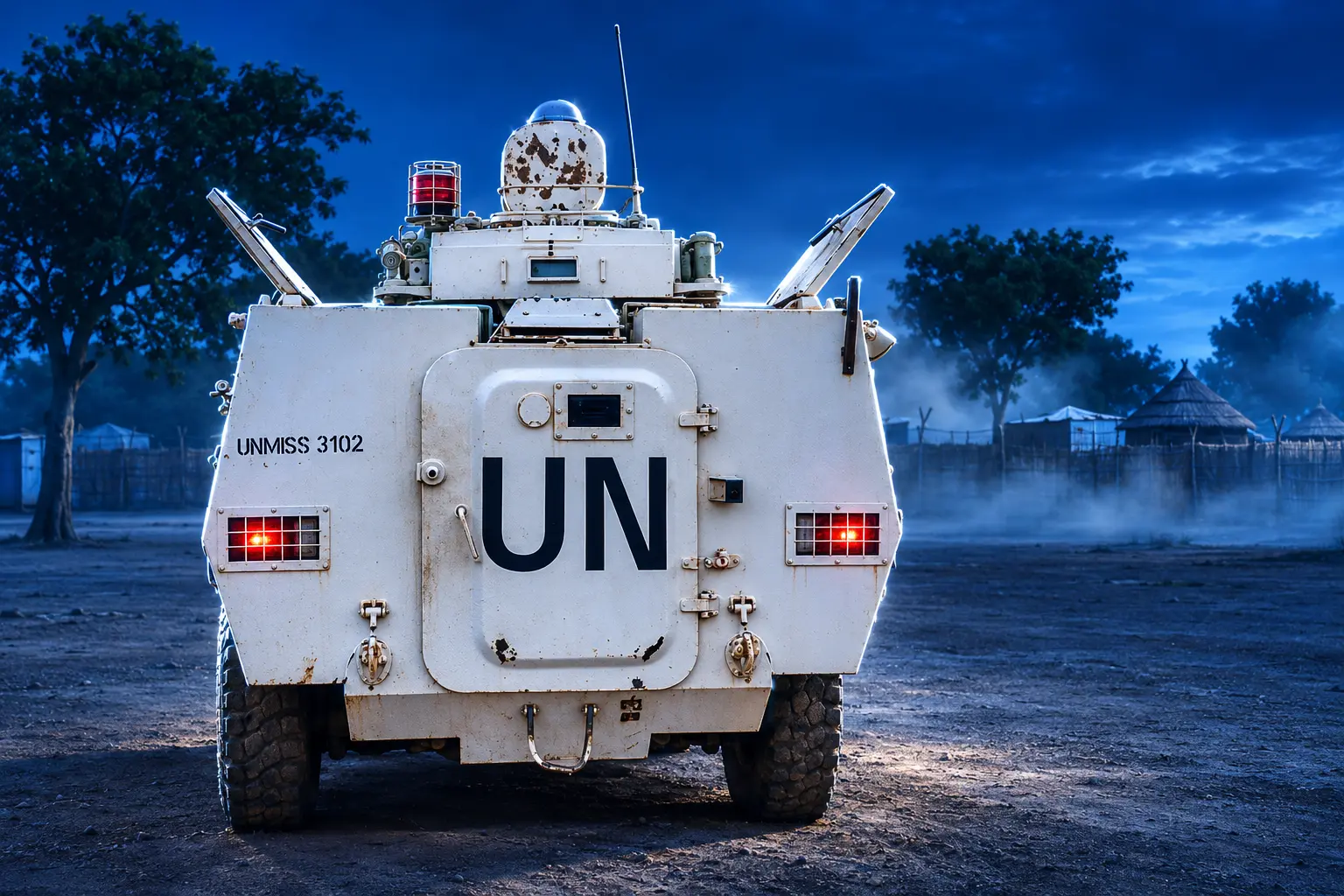
UNMISS did prepare a place for people who could reach it. Mongolian peacekeepers used dykes to build a Temporary Protective Area beside the base. The mission says it asked the national army, more than once, to send extra South Sudanese forces after the early warnings. It also says it briefly opened the gates of the Temporary Operating Base when the shooting started and sheltered more than 1,000 civilians inside while the raid was still going on.
That is the protection UNMISS announced on the day. Anita Kiki Gbeho, then officer in charge of the mission, put the limit in one sentence.
In the meantime, our peacekeepers will continue to do everything within their capabilities to protect civilians seeking refuge at our base.
Anita Kiki Gbeho, Officer in Charge, UNMISS, 1 March 2026 statement
The same-day protect civilians seeking refuge at our base line is the mission’s civilian-protection doctrine in working form. People who made it onto UNMISS ground lived. People who did not were on their own in a four-hour assault.
Amnesty documented seven killings outside the rear gates of the Temporary Operating Base, near the airstrip. Some of the dead were shot at the gate. Others were shot a few metres away. A local town leader told researchers that residents running for UNMISS found gunmen already standing there and firing. Survivors also described people hunted and killed in the grasslands after they fled town.
Priyanka Chowdhury, the UNMISS spokesperson, said in a later statement that the mission did its best with limited resources to protect and treat about 2,500 people at a protected area set up in anticipation of the attack, a wider count than the more than 1,000 UNMISS said were inside the base on 1 March. Facing budget cuts and fewer staff, she said the mission “concentrated its available capacity on immediate protection of civilians seeking refuge within our base rather than dispersing limited forces across tasks they could not safely sustain simultaneously.”
Zolbileg Ch, a Mongolian peacekeeper, later described the same choice from the ground: most of the people who reached them were women and children, and some of the unit stayed on alert for an attack on the base itself. In April, UNMISS posted its own version of that morning, a video of gates opening for 1,000 women, children and elderly people.
📹When gunfire rang out across Abiemnhom 🇸🇸, #SouthSudan, #UNMISS peacekeepers from #Mongolia 🇲🇳 raced to open their base gates to protect 1000 women, children and elderly fleeing for their lives. They treated 60 wounded and delivered a baby amidst the chaos. This is why… pic.twitter.com/kZqQD9yqwc
— UNMISS (@unmissmedia) April 15, 2026
That is the Abiemnom story the mission has chosen to tell. It is a true account of the people who got inside. It is silent on the seven bodies at the rear fence and on the town that burned beyond it.
Why the Extra Police Came After the Raid
After the killings, UNMISS temporarily sent 40 personnel from the Formed Police Unit to Abiemnom, a move the mission said would strengthen protection and restore community confidence. An eyewitness told Amnesty that from 1 to 2 March the mission also brought a large truck, likely an armoured personnel carrier, outside the base, expanded barbed wire, and put up a poster that read “protection of civilians.”
Amnesty’s point is narrow and hard to wave away. Those 40 police existed. They were available to move. They arrived after the dead had already been laid out for counting. Chagutah said both the government and UNMISS “had sufficient information and time to take more effective preventive action” and that “their failure to take stronger action cost lives.”
UNMISS answered Amnesty in writing on 8 October. The mission listed dialogue with officials, requests for army reinforcements, the protective area beside the base, and the civilians sheltered inside the Temporary Operating Base. It did not, in the public record Amnesty published, explain why the Formed Police Unit waited. Two earlier information requests to UNMISS and other UN offices had gone unanswered except for an acknowledgement from the peace operations office.
Stephano Wieu de Mialek, chief administrator of the Ruweng Administrative Area, told a UNMISS visiting team in the week after the raid that children, women and the elderly had been deliberately targeted, and he called the violence the worst crisis in the area since South Sudan’s civil wars. Residents had already fled toward Wau, Twic East and Abyei. The extra police walked into a town that was, by then, a set of graves and burned plots.
April 2025 Already Showed the Pattern
This was not a first look at Abiemnom. Armed youth from Mayom overran the same county headquarters in early April 2025. A UN peacekeeping account published on 3 June 2025 said that attack left 52 people dead and that Mongolian peacekeepers gave sanctuary to at least 800 people outside their base. Mawut Lueth, a resident quoted in that account, said people ran and swam a river, and that women and children drowned.
The Temporary Operating Base itself was the product of that earlier violence. Mongolian units had been rotating through the isolated camp in three-month stints, supplied by a weekly helicopter from Bentiu because flooding cut the road. After April 2025 they intensified day-and-night patrols. More than 130 families came back to wrecked homes. Amnesty found no evidence that anyone was held to account for that raid, and it argues that the lack of punishment helped make 1 March possible.
TWO RAIDS ON THE SAME TOWN
| April 2025 | 1 March 2026 | |
|---|---|---|
| Attackers | Armed youth from Mayom County | 1,000 to 1,500 armed Nuer men from Mayom |
| Deaths (UN or local count used here) | 52 (UN peacekeeping, June 2025) | 213 (local authorities, via Amnesty) |
| Civilians at the UNMISS base | At least 800 | More than 1,000 inside the base |
| UNMISS extra police | Not sent as a pre-raid reinforcement | 40 Formed Police after the killings |
The 2026 raid was larger, longer, and deadlier. The protection method did not change. People ran for the UN fence. The mission opened it. The town beyond the wire was left to whoever arrived with guns. Amnesty says that, after April 2025, both UNMISS and the state could reasonably have expected hundreds, if not thousands, of people to do the same thing again.
New York Cut the Authorized Force in April
Chowdhury’s budget-cut defence sits on a paper trail in New York. On 30 April 2026, 60 days after the massacre, the Security Council adopted Resolution 2820, extending UNMISS until 30 April 2027 and setting a troop ceiling of 12,500 personnel, down from 17,000, with the police ceiling left at 2,101. The vote was 13 in favour, none against, with China and Russia abstaining.
The cut did not create the thinness at Abiemnom. It certified it. The Secretary-General’s 13 April report, used in the Council negotiations, put actual troop strength at 8,989 military personnel against the old authorized 17,000. The United States, which drafted the text, had first proposed dropping the ceiling to 7,000. Other members blocked that floor, arguing it would gut patrols in a country whose core mandated task is still protection of civilians. The compromise was 12,500, a number still far above the troops UNMISS actually had, and far below what the old ceiling implied on paper.
UNMISS FORCE ON PAPER
- Old troop ceiling: 17,000 military personnel, the authorized cap before 30 April 2026.
- Troops actually in theatre: 8,989 military personnel in the Secretary-General’s 13 April report.
- New troop ceiling: 12,500 under Resolution 2820, with police still capped at 2,101.
- US opening bid: 7,000, rejected in negotiations as too low for a protection mandate.
UNMISS was built in 2011, under Resolution 1996, after South Sudan’s independence, and protection of civilians is still listed first among its tasks. The 2018 revitalized peace agreement that ended five years of civil war is the political file the mission is still told to watch. In Abiemnom those mandates met a weekly helicopter, a small Mongolian camp, and a standing decision not to spread that camp across a town it could not hold.
By September, Anita Kiki Gbeho, by then the Secretary-General’s special representative and head of UNMISS, visited the area and said communities feared the base would close. She told them the mission had a mandate to protect civilians and would stay. UNMISS said it had deferred plans to shut the camp despite money pressure. Keeping a Temporary Operating Base open is not the same as putting 40 police on the road before a raid the mission already expected.
Amnesty has asked UNMISS for an independent review of its response before, during and after 1 March, with findings made public and given to survivors. It has asked South Sudan for a prompt investigation, fair trials, and repair for families, including those, mostly women, who lost the person who earned the household’s living. Eight months after the killings, the government had not answered Amnesty’s letters, and UNMISS had not issued a public report dedicated to the massacre. The people who reached the gate have a place in the mission’s own video. The 213 counted in March have two graves and a file that still is not open.

Josh Sinn Draws the Heaviest AFL Betting Ban Since 2019

Rolapp Shuts the PGA Door as DeChambeau Heads to Europe

Apple TV Renews Slow Horses Past the Last Novel

Oasis Lifts UK Music to £8.4 Billion as Venues Shrink

Beyoncé Hits 100 Grammy Nominations on a Vault Track

Thameslink Will Pad 60,000 Ironing-Board Seats From 2027

How Tall Was Adolf Hitler?

U.S. Forces Clear Hormuz Mines, Then Hit Minelayers Again

Micron Sells the Memory Shortage as Five-Year Contracts

Royal Caribbean Sends Los Angeles Ships to Singapore and Brisbane
-
 NEWS3 months ago
Thameslink Will Pad 60,000 Ironing-Board Seats From 2027
-
 HISTORY3 years ago
How Tall Was Adolf Hitler?
-
 BUSINESS3 months ago
U.S. Forces Clear Hormuz Mines, Then Hit Minelayers Again
-
 NEWS3 months ago
Micron Sells the Memory Shortage as Five-Year Contracts
-
 NEWS3 months ago
Royal Caribbean Sends Los Angeles Ships to Singapore and Brisbane
-

 BUSINESS3 months ago
Sweetmore Bakeries Buys Fantasy Baking for Bar Work
-

 NEWS3 months ago
Twenty Controllers Closed Norwich Airport for a Bank Holiday
-

 BUSINESS3 months ago
L Catterton Installs a Kraft Heinz Operator at Kettle Cuisine