
BUSINESS
Iran Crude Exports Hit Zero as Russia Fills China’s Gap
A US naval blockade has cut Iranian seaborne crude to zero, while Russia now supplies 80% of remaining high-risk oil and China buys elsewhere.

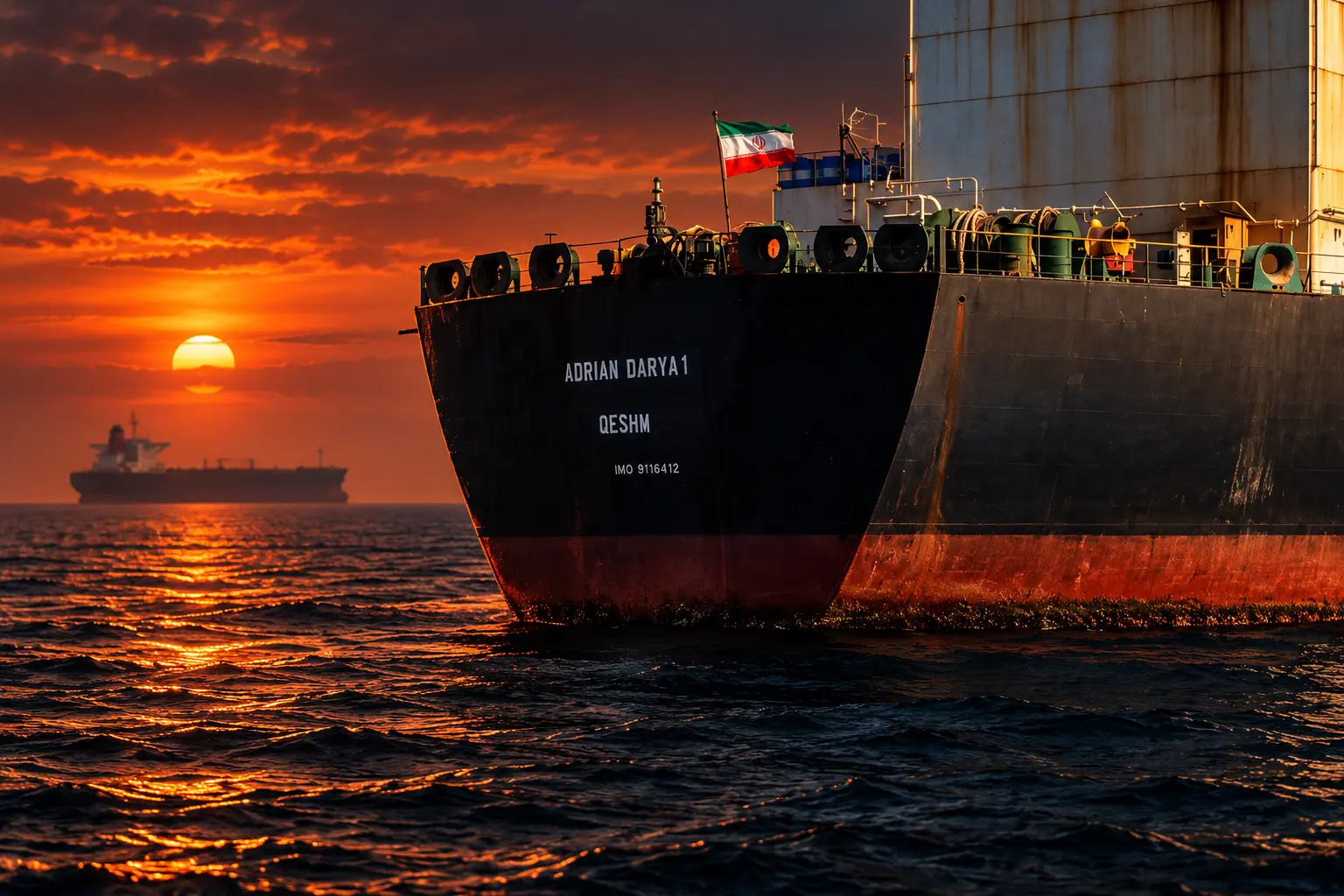
A US naval blockade has held Iranian seaborne crude exports at zero through October 5, energy analytics firm Vortexa said. The 14-day average was already down to 230,000 barrels per day at the start of September, then the flow stopped in the second week of that month.
The barrels China used to take from Iran are arriving from Russia instead. Gulf producers, led by Saudi Arabia, have already pushed non-Iranian shipments back above 81% of pre-war levels, so the cutoff is a loss for Tehran and a transfer of the remaining high-risk trade to Moscow.
Zero Barrels Have Left the Gulf Since Mid-September
Vortexa published the finding on October 13. Iranian crude sitting in tankers on the water has fallen to 83 million barrels, and 43 million barrels of that total are trapped west of the Strait of Hormuz because of the blockade, leaving 40 million barrels on the water elsewhere.
The blockade is doing what years of sanctions never managed: it has physically stopped Iranian crude from leaving the Gulf.
Claire Jungman, Director of Maritime Risk and Intelligence, Vortexa
Jungman, who runs maritime risk and intelligence at the firm, said China no longer needs Iranian barrels as urgently because Russian crude has filled the gap. Vortexa’s own note put the same split in one line: Iranian seaborne crude has effectively halted, and Russia now dominates high-risk crude supply, leaning harder on China.
Iranian seaborne crude exports have effectively halted. Russia now dominates high-risk crude supply, leaning ever harder on China.
Download the report: https://t.co/16qhdrcuzr#Vortexa #Sanctions pic.twitter.com/kUGGr6turP
— Vortexa (@Vortexa) October 13, 2026
Ship-tracking can miss a dark transfer, so a handful of concealed barrels cannot be ruled out. What the trackers do show is a clean halt in the visible Gulf-to-Asia chain, which is a different problem from the old sanctions era, when cargoes still cleared Hormuz every month.
Russia Now Supplies 80% of Remaining High-Risk Oil
With Iranian seaborne crude gone, Vortexa now books Russian crude as 80% of what it calls high-risk exports from Iran, Russia and Venezuela. Combined shipments from the three countries were 4.73 million barrels per day in September, down 1.66 million from 6.39 million in the same month last year.
SEPTEMBER’S HIGH-RISK CRUDE SPLIT
| Stream | September 2026 | Change |
|---|---|---|
| Iranian seaborne crude | 0 bpd as of Oct. 5 | From a 230,000 bpd 14-day average in early September |
| Russian seaborne crude | 3.79 million bpd | Up 6% from August; Vortexa excludes CPC and KEBCO grades |
| Iran, Russia and Venezuela combined | 4.73 million bpd | Down from 6.39 million bpd a year earlier |
| Russia’s share of that pool | 80% | Up as Iranian barrels dropped out |
Russian exports, on Vortexa’s seaborne measure that excludes Caspian Pipeline Consortium Blend and KEBCO crude, rose 6% month on month to 3.79 million barrels per day. That 3.79 million barrels is the 80% slice of the 4.73 million-barrel pool. Iran’s loss did not empty the high-risk channel. It concentrated it.
The replacement is already showing up in Chinese buying. Independent refiners there have been paying up to $18 a barrel over Brent for Basrah crude, a premium Kpler reads as a sign that Iranian barrels are missing. Russia can put those substitute grades on the water. Iran, under the blockade, cannot.
Why China No Longer Needs Fresh Iranian Barrels
China can still drain Iranian crude that was already parked near Asia before the blockade line slammed shut. United Against Nuclear Iran, the advocacy tracker that watches the so-called ghost fleet, says no new Iranian crude has crossed the US blockade line since July 14. What still moves is inventory, not a live export stream from Kharg.
WHAT THE EOPL DRAWDOWN SHOWS
- Old barrels only: Six ship-to-ship transfers of Iranian crude off Malaysia’s Eastern Outside Port Limits in September moved an estimated 9 million barrels, bound for Chinese independent refiners known as teapots.
- Thin remainder: UANI says it is not exactly known how much Iranian crude is left in that anchorage, but it is likely no more than 10 million barrels.
- No crude loadings: Satellite monitoring found no crude oil loadings at Iranian export hubs in September, only small volumes of LPG, naphtha and fuel oil.
- LPG and methanol only: Three handymax tankers crossed the blockade line in September with 1.52 million barrels of Iranian LPG and methanol, a 50,789 barrel-a-day average that is not crude.
That 10 million-barrel cushion is a few weeks of Chinese teapot demand, not a second export system. Once those tanks and hulls empty, there is no replenishment from the Gulf behind them. The shadow fleet still exists. Its feedstock does not.
Kpler’s October 13 briefing said Iran has not loaded a crude cargo since late August. That matches the UANI loading blank for September and Vortexa’s seaborne zero into October. Deliveries from floating storage can continue for a while after exports stop. They cannot continue forever.
Gulf Producers Rebuilt Flows Without Tehran
Oil from the Gulf excluding Iran rose to over 81% of pre-war levels in September, Vortexa said, led by a recovery in Saudi exports. The war that began on February 28 had crushed non-Iranian Gulf flows in the spring. By late summer, shuttle tankers, ship-to-ship handoffs in the Gulf of Oman, and Saudi and Emirati pipelines were moving crude even while attacks on shipping continued.
THE SAUDI REBOUND IN SEPTEMBER
- Output: Saudi crude output rose to about 8.55 million barrels per day in September from 6.3 million in August, per Kpler.
- Ex-Iran flows: Non-Iranian Gulf oil reached over 81% of pre-war levels in September, per Vortexa.
- Attacks: Kpler counted 10 tankers struck in the strait between September 28 and October 4, the highest weekly total this year, and transits still ran.
- Enforcement: As of September 30, US Central Command had redirected 125 commercial vessels, disabled three that did not comply, and boarded two.
Saudi Arabia is selling more crude, and it is selling it at war-time prices, while Iranian barrels sit in hulls that cannot clear the line. The 81% recovery is not a full reopening of Hormuz. It is enough, with Russian grades, to leave China less dependent on whatever Iran can still float off Malaysia.
Freight is the tax on that workaround. Kpler said Middle East-to-China VLCC rates had already printed a record, and more than 70 very large crude carriers were working shuttle trades, including ship-to-ship activity off India’s west coast. Gulf states are paying to split the dangerous Hormuz leg from the rest of the voyage. Iran cannot buy that service for its own flag.
August Loadings of 210,000 Barrels Never Cleared the Gulf
Sanctions used to change who could buy Iranian oil. They did not close the water. Vortexa’s 2025 work on the network found loadings still running between 1.3 and 1.6 million barrels a day, with 85 to 90 percent of those volumes headed to China, even after UN snapback. A later Vortexa note put August 2026 crude loadings at about 210,000 barrels per day, down from about 2 million barrels per day earlier in the year, and said those barrels were not becoming fresh supply east of Hormuz.
HOW THE ROUTE CLOSED
- February 28, 2026: Fighting begins, and tanker traffic through the Strait of Hormuz collapses in the days that follow.
- April 13, 2026: The United States starts a naval blockade of Iranian ports, aimed at Iranian vessels and cargoes while leaving other traffic free to move.
- June 17, 2026: A memorandum of understanding opens a brief window; some Iranian-origin volumes rebound, then the window closes.
- July 14, 2026: Washington reinstates the blockade. UANI and Vortexa both date the halt in fresh crude past the line to this restoration.
- Second week of September 2026: Vortexa’s seaborne crude series hits zero and, as of October 5, has not left that floor.
In 2019, after US oil sanctions came back and import waivers ended, Iranian loadings briefly fell toward 170,000 barrels a day and then found a floor above zero. The strait was still a road. By 2024 and 2025 the trade had rebuilt to roughly 1.5 to 2 million barrels a day through opaque tankers, AIS games and ship-to-ship hubs. The 2026 blockade broke the road, which is why 210,000 barrels loaded in August did not show up as exports in September.
LPG Exports Hit Their Lowest Point Since Early 2023
Crude is not the only stream that stopped. Vortexa said Iran’s liquefied petroleum gas exports fell 48% month on month, to their lowest level since at least January 2023. That rate drop sits beside UANI’s separate blockade-line count of 1.52 million barrels of LPG and methanol on three small tankers in September. One is a collapse in the LPG export rate. The other is a trickle of non-crude products that still slipped the line.
Kpler’s March baseline, from before the first blockade, had Iranian oil shipments averaging 1.85 million barrels a day, above a 1.7 million trend. Those figures are gone. Empty Iran-flagged tankers that delivered earlier cargoes cannot sail home to reload, and UANI has been watching a group of 20 of them loiter off Sri Lanka. The circulation that made the old export machine work, load in Iran, discharge in Asia, ballast back, is broken on both legs.
The 43 million barrels trapped west of the Strait of Hormuz are still on the water. The empty hulls off Sri Lanka are still waiting for a way back to Kharg.

Kering’s Growing Houses Cannot Outrun a Shrinking Gucci

Studio Staff and Bitcoin Buyers Built the Eminem Leak Case

A Mutated H1N1 Strain Is Hitting Younger Immunity First

Albert Heijn Returns at One-Third as Rivals Take Share

Art Basel Paris Ends After One Public Day

Thameslink Will Pad 60,000 Ironing-Board Seats From 2027

How Tall Was Adolf Hitler Really? Debunking the Myth of his Height

Micron Sells the Memory Shortage as Five-Year Contracts

Royal Caribbean Sends Los Angeles Ships to Singapore and Brisbane

U.S. Forces Clear Hormuz Mines, Then Hit Minelayers Again
-
 NEWS2 months ago
Thameslink Will Pad 60,000 Ironing-Board Seats From 2027
-
 SCIENCE3 years ago
How Tall Was Adolf Hitler Really? Debunking the Myth of his Height
-
 NEWS2 months ago
Micron Sells the Memory Shortage as Five-Year Contracts
-
 NEWS2 months ago
Royal Caribbean Sends Los Angeles Ships to Singapore and Brisbane
-
 BUSINESS2 months ago
U.S. Forces Clear Hormuz Mines, Then Hit Minelayers Again
-

 BUSINESS2 months ago
Sweetmore Bakeries Buys Fantasy Baking for Bar Work
-

 BUSINESS2 months ago
L Catterton Installs a Kraft Heinz Operator at Kettle Cuisine
-

 NEWS2 months ago
CISA’s 100 Water System Hacks Hit One-Operator Plants