
LIFESTYLE
Side Dishes to Serve With Couscous: 20 Ideas for Any Dinner
Pick side dishes to serve with couscous by the grain in the box: stews for fine couscous, grills and salads for pearl, plus a sauce rule for all 20 plates.

You have a box of couscous and a vague plan for dinner, and the hard part is choosing what shares the plate. In a North African kitchen the grain is the base, and the vegetables, meat, and broth are the meal itself. The side dishes to serve with couscous that actually work are the ones that bring liquid, crunch, or a sharp fresh bite.
Fine couscous, the small kind in most boxes, drinks a stew. Pearl couscous, the larger toasted balls, stays chewy beside grilled meat, roasted vegetables, or a salad. Lebanese couscous is bigger still and belongs in a hearty braise where the pearls can stand up to the sauce.
The 20 plates below are sorted by that split. You also get a fast way to cook the box you bought, a weeknight plate you can copy, and the gluten and leftover limits a recipe card usually skips.
Fine, Pearl, and Lebanese Couscous
Couscous is rolled durum wheat semolina, closer to tiny pasta than to rice, even though it sits where rice would on an American plate. Hand-rolled semolina is steamed, which is the practice Algeria, Mauritania, Morocco, and Tunisia share in the UNESCO inscription of couscous know-how, placed on the Representative List in 2020. The file describes a dish that changes with the region, the season, and the occasion, and it notes the special role women play in carrying the skill.
What you buy in a supermarket is usually one of three sizes, and the size decides the side more than the spice on the label. Fine Moroccan couscous is the sponge. Pearl couscous, also called Israeli couscous or ptitim, is a toasted pasta that food histories place in Israel in the 1950s, when rice was scarce. Lebanese couscous, sometimes labeled moghrabieh, is the pea-sized one, often toasted, with a bouncy bite.
| Type | Texture when cooked | Plate that fits |
|---|---|---|
| Moroccan, or fine | Light and fluffy, like tiny pasta | Tagines, lentil or chickpea stews, seven-vegetable broth |
| Israeli, or pearl | Separate, chewy spheres | Grilled meat, shrimp, falafel, roasted vegetables, salads |
| Lebanese, or moghrabieh | Large and bouncy | A thick braise that can hold big pearls |
Tunisian broths lean hot, with harissa in the pot. Moroccan plates more often take the sweeter path, with onion, raisin, and cinnamon. Treating the grain as only one country’s side dish drops the cooks in the other three countries who steam the same semolina.
Plain refined couscous is a mild starch, not a high-fiber food, and the cup below is the USDA FoodData Central serving for couscous cooked in water with no salt. Whole wheat couscous lists more fiber on the package than the refined kind, so compare labels if fiber is why you switched boxes.
ONE COOKED CUP, 157 GRAMS
- Calories: One cup has 176 calories before oil, butter, or stew.
- Protein: That cup supplies 6 grams of protein.
- Carbohydrate: The same cup has 36.5 grams of carbohydrate.
- Fiber: Refined couscous in that record has 2.2 grams of fiber.
- Fat: Fat stays at 0.25 grams until you add oil or a fatty stew.
- Selenium: The cup provides 43.2 micrograms of selenium, the mineral this mild starch is actually rich in.
Those numbers describe the naked grain. A buttered pilaf, a handful of almonds, or a lamb stew changes the plate, which is the point of choosing a side instead of eating the cup alone.
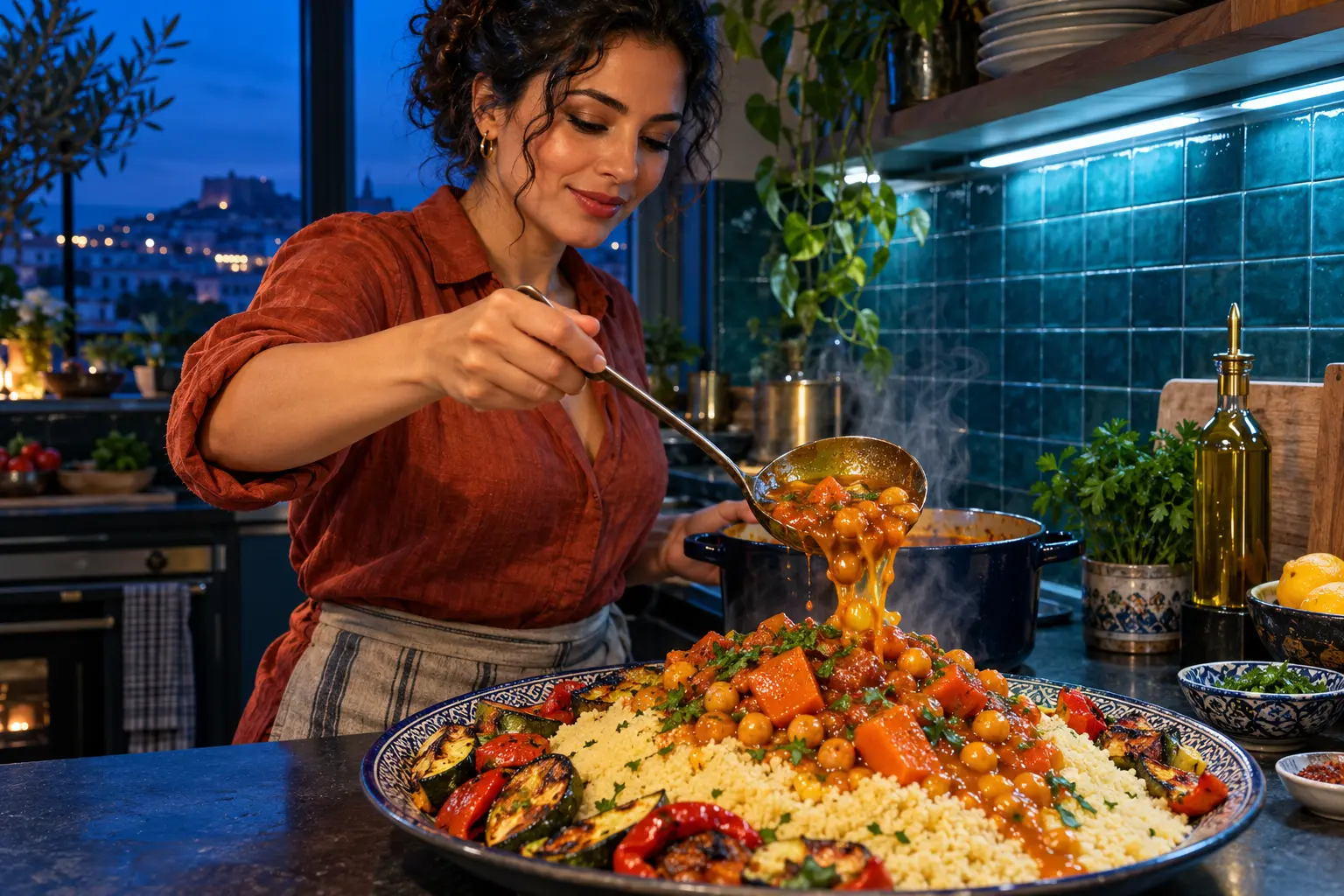
How to Cook Couscous Before the Side Goes On
Fine couscous turns to paste if you boil it hard. The fast method is the one on most boxes and in a simple USDA meal-planning recipe: hot liquid, a cover, and time off the heat. Pearl and Lebanese couscous are different, because they are large enough to simmer like pasta.
- For fine couscous, bring an equal amount of water or stock to a boil. One cup of dry couscous takes one cup of liquid.
- Stir in the couscous, cover the pot, and take it off the heat. Wait 5 minutes.
- Fluff with a fork so the grains separate. A spoon mashes them. A little olive oil on the fork helps if the batch clumps.
- Salt the liquid, and add a pinch of cumin or turmeric if the stew on top is mild. Plain couscous tastes flat when the cooking water was only water.
- For pearl or Lebanese couscous, simmer the pearls in a generous pot of salted water until they are tender, then drain. They do not need the off-heat soak that fine couscous uses.
Taste the grain before it hits the plate. If it is still hard, sprinkle on a spoon of hot stock, cover, and give it another minute. If it is soggy, you used too much liquid or you kept the heat on, and the next pot should stay covered and quiet.
WHERE THE SAUCE GOES
- Fine grain: Ladle broth over the mound so the couscous can drink it.
- Pearl grain: Keep the pearls separate and put a thicker sauce or a dressing on them, or they sit in a puddle they cannot absorb.
- Anything crisp: Leave salad, yogurt, and pita beside the mound unless you are building a salad on purpose.
A boxed couscous tossed with raisins and nothing else is the plate that gets left. Sweetness without salt, fat, or a savory sauce never becomes dinner. The side dish has to finish the job the grain cannot do alone.
Stews and Tagines for Fine Couscous
A tagine is both a conical pot and the slow stew cooked in it. You do not need the pot. You need a sauce thin enough to run into fine couscous, with enough body that the meat or chickpeas feel like a meal. Grilled chicken with no juices, set beside a dry mound, wastes this grain.
Chicken and Chickpea Tagine
Chicken thighs and chickpeas are the weeknight version of the classic plate. Thighs stay moist in a short braise, and the chickpeas make the sauce thick enough to count as dinner without a long list of meats.
- Brown the thighs in a little oil, then set them aside.
- Soften a chopped onion in the same pan with salt, cumin, and paprika. Add a pinch of cinnamon for a sweeter Moroccan direction, or a spoon of harissa, the chile paste, for a hotter Tunisian one.
- Stir in a drained can of chickpeas and enough stock to come halfway up the chicken. Return the thighs, cover, and simmer until the meat is tender.
- Spoon fine couscous onto the plate first. Ladle chicken, chickpeas, and broth over it.
Preserved lemon is the traditional bright note if you have a jar. A strip of fresh lemon peel and a squeeze of juice at the end is the honest stand-in on a Tuesday. Eggs poached in a pepper and tomato sauce, the idea behind shakshuka, can use this same pan when you want a brunch plate beside pearl couscous instead.
Seven-Vegetable Couscous
The celebratory plate in Moroccan cooking is called seven-vegetable couscous, and it is a Friday family lunch in food writing about the country. Cooks keep the name even when the market changes the mix. A common set, repeated across Moroccan kitchen guides, is the one below.
- Carrots
- Turnips
- Zucchini
- Pumpkin or other winter squash
- Cabbage
- Chickpeas
- Onions
The vegetables simmer in a fragrant broth, sometimes with lamb or chicken, sometimes without. You pile the couscous high and pour broth over the top so every grain is wet. A ratatouille-style pepper stew works the same way if those seven are not in the house: soft vegetables, a light sauce, fine couscous underneath.
Lamb, Lentils, and Chickpeas
Once the chicken pot makes sense, the other stews are the same shape with a different protein. Each one belongs on fine couscous. Pearl can take them only if you keep the sauce thicker and treat the pearls like pasta in a braise.
FOUR STEWS BESIDE THE TAGINE
- Lamb with dried fruit: Braise lamb shoulder or chops with onion and cumin, then add apricots or prunes so the juices turn sweet and savory.
- Harissa lamb meatballs: Season ground lamb with cumin, garlic, and salt, brown the balls, and simmer them in a tomato sauce spiked with harissa.
- Spiced chickpea stew: Drop the meat, keep the onion, cumin, and chickpeas, and loosen the pot with vegetable stock.
- Harissa lentils: Simmer brown or red lentils with cumin and a spoon of harissa until they are saucy, then spoon them over the mound.
A thick soy-garlic stir-fry or a cream soup sits on the couscous instead of soaking in. Those plates can be good food, and they are a poor match for fine grain, because nothing is left for the couscous to drink. Save them for rice or a noodle that was built for a sticky sauce.
Grilled Meat and Fish Next to Couscous
Grilled food is the better partner for pearl couscous, which already has a chewy bite and does not need to sponge up a bowl of broth. Fine couscous can still take a grill if you send the resting juices or a spoon of yogurt sauce onto the grain. Dry meat plus dry couscous is the miss.
Lemon Herb Chicken and Kebabs
Lemon-herb chicken is the fast non-stew option. Rub thighs or breasts with lemon, garlic, olive oil, and oregano, then grill or roast them. Pour whatever collects in the pan over fine couscous, or serve the chicken in slices on pearl couscous with a salad.
Lamb or beef kebabs use the same spices as the tagine, only with char instead of broth. Cube the meat, toss it with cumin, salt, and oil, and grill it hot. Roasted leg of lamb is the large version of that plate: rest the joint, then tip the juices over fine couscous and slice the meat across the top. Kebabs are happier on pearl, because the charred edges stay distinct against separate grains.
Fish, Shrimp, and Falafel
Fish and fritters keep the meal lighter than lamb, and they still need a finish with acid or a cool sauce. The table is the match, not a second full recipe for each one.
| Dish | Grain that fits | Finish |
|---|---|---|
| Glazed salmon | Pearl | A little honey and garlic, plus lemon so the oil does not sit heavy |
| Grilled cod or haddock | Fine or pearl | Olive oil, parsley, and lemon, or the fish tastes as mild as the grain |
| Za’atar shrimp skewers | Pearl | Lemon and herbs; the pearls hold the seasoning |
| Falafel | Pearl | Yogurt or tahini, with cucumber so the plate is not all soft |
Shrimp and falafel cook faster than the couscous, so start the grain first. Salmon wants pearl rather than fine couscous, because the rich fish oils coat separate pearls instead of weighting a fluffy mound into a paste.
Vegetables, Salad, and Sauces on the Plate
Vegetables do two jobs here. Roasted ones bring sweetness and a browned edge that plain couscous lacks. Raw ones bring crunch and water, which a long-cooked stew does not. You want one of each when the main pot is soft.
How to Roast Vegetables for Couscous
One sheet pan covers four of the vegetable sides: a Mediterranean mix, spiced carrots, cumin cauliflower, and eggplant you finish with tahini. The heat is the same. The cut and the spice change.
- Heat the oven to 400°F (200°C).
- Cut zucchini, bell pepper, red onion, and eggplant into pieces of a similar size. Carrots and cauliflower can take the same pan if you give the carrots a few minutes’ head start.
- Toss with olive oil, salt, and cumin, paprika, or oregano. Cinnamon on the carrots pushes them toward the Moroccan stew. Turmeric on the cauliflower turns it golden.
- Roast until the edges color, about 20 to 25 minutes, turning once. Char the eggplant longer if you want it soft enough to collapse.
- Spoon tahini thinned with lemon over the eggplant after it comes out. Leave the other vegetables bare so they stay a little crisp.
The same pan also takes green beans, spinach wilted with garlic and pine nuts, sweet potato, or butternut squash with kale. Those are swaps, not extra courses. Pearl couscous can be tossed with the roast. Fine couscous is better with the vegetables set beside a stew, unless the pan released enough juice to moisten the grain.
Tomato Salad, Yogurt, and Pita
The fresh trio is what keeps a heavy stew from feeling like one soft texture. It is also the part you can make while the couscous rests.
THE COLD SIDE OF THE PLATE
- Tomato and cucumber: Chop them, salt them, and dress with lemon and olive oil. Herbs such as parsley, cilantro, or mint belong here.
- Cilantro-mint yogurt: Stir chopped herbs, a crushed garlic clove, salt, and lemon into plain yogurt. It cools harissa, lamb, and grilled chicken.
- Toasted pita: Warm wedges in a dry pan. They scoop stew when you do not want another starch in the bowl.
Put the salad and the yogurt in their own bowls. Stirring them into hot fine couscous makes the cucumbers wilt and the yogurt split. Pearl couscous can take a spoon of the yogurt in a salad, because you are dressing separate grains, not soaking a mound.
Side Dishes to Serve With Couscous for a Weeknight
Here is the plate the lists above are aiming at. Use 1 cup of dry fine couscous and the same amount of stock, fluff it after the rest, and put it down first. Ladle the chicken and chickpea skillet over the mound. Set the tomato-cucumber salad and the herb yogurt on the side, with pita if you have it.
That single dinner uses five of the 20: the tagine-style chicken, the chickpeas in the same pot, the salad, the yogurt, and the bread. Swap the chicken for harissa lentils when you want it meatless, or swap the fine couscous for pearl and put lemon chicken and roasted carrots on top instead of a broth. The rule does not change. Wet food goes where the grain can take it, and crisp food stays crisp.
If the box says Lebanese, treat the big pearls as part of the braise rather than as a fluffy bed. Simmer them until tender, then fold them into a thick chickpea or lamb sauce so they do not roll around a dry plate. A chopped salad still belongs next to that bowl.
Gluten, Leftovers, and a Bland Pot of Couscous
Couscous is wheat. It is off the table for celiac disease and for anyone who avoids gluten. The Celiac Disease Foundation lists durum, semolina, and couscous among grains and foods that contain gluten.
Katarina Mollo, a registered dietitian, explains why couscous is not gluten-free and points to quinoa labeled gluten-free when a salad needs a stand-in. Broth, harissa, and spice blends can hide wheat too, so the sauce needs the same label check as the box. A wheat allergy is a reason to skip the grain entirely, not a reason to pick whole wheat couscous, which is still wheat.
A couscous plate that includes meat, poultry, or a vegetable stew should follow the leftover clock for those foods, which is 3 to 4 days on the cold food storage chart. The chart groups cooked meat and poultry, soups and stews, and macaroni salads on that same span, and a mixed plate is only as long-lived as its shortest item.
Keep the refrigerator at 40°F (4°C) or below, which is the line that chart uses. Cool the pot in a shallow container so the center does not stay warm for hours, and throw the batch out if it smells sour or feels slick, even if the calendar says it is still inside the window.
In the freezer, hold the food at 0°F (-18°C). The chart treats freezer times as quality guidance, and food kept continuously that cold stays safe after the grains have dried out or picked up freezer smell. Thaw in the refrigerator, not on the counter.
A bland pot is a cooking problem, not a safety one. The fix is salt and stock in the next batch, plus a side that has its own seasoning. Adding a random sweet glaze on top of unsalted couscous does not repair it.
Frequently Asked Questions
What Is Couscous Tfaya?
Couscous tfaya is a Fes-style topping of onions cooked soft with raisins, cinnamon, and saffron, piled on couscous with chicken or lamb. It is the sweet side of the Maghreb split, closer to a Moroccan Friday plate than to a harissa-heavy broth, and a smaller batch of those onions can go over a weeknight chicken skillet when you want that flavor without a second stew.
How Do You Reheat Couscous so It Stays Soft?
Sprinkle a spoonful of water or stock over the cold couscous, cover it, and warm it on low heat or in short bursts in a microwave until it is hot, then fluff with a fork. Oil or butter from the first cooking helps the grains separate again, and a sour smell or a slick surface means the batch should be thrown out rather than reheated.
Is Couscous the Same Thing as Quinoa or Bulgur?
Couscous is rolled wheat semolina, bulgur is wheat that has been parched and cracked, and quinoa is a seed. Bulgur is the usual base for tabbouleh and stays chewier than fine couscous, so a tabbouleh recipe will not turn out the same if you swap the boxes and skip the extra dressing.
What Sides Work If Couscous Is Already a Salad?
Add something crisp, something with protein, and a cool sauce, and skip a second stew. Grilled chicken, shrimp, or falafel plus sliced cucumber and a spoon of yogurt keep the textures apart, which is what a couscous salad loses when another soft braise lands on top.
Which Broth Belongs in a Meatless Couscous Pot?
Use vegetable stock, or the liquid from a chickpea or lentil stew, so the grain still tastes like the plate. Water works when the stew on top is already well salted, and chicken or lamb stock is the wrong pot when someone at the table does not eat meat.
Put fine couscous down first, ladle the chickpea stew over it, and leave the tomato salad and yogurt in their own bowls so the last bite is still full of broth.
Disclaimer: This article is an educational guide to pairing and cooking couscous, and it is informational only. It is not medical, dietetic, or personal food-safety advice. Talk with a doctor or a registered dietitian before you change how you eat, especially if you have celiac disease, a wheat allergy, or another condition that limits gluten, and use the government storage chart rather than a guess when you keep leftovers. Nutrition figures and storage rules reflect the sources named here at the time of review and can change.

Kering’s Growing Houses Cannot Outrun a Shrinking Gucci

Studio Staff and Bitcoin Buyers Built the Eminem Leak Case

A Mutated H1N1 Strain Is Hitting Younger Immunity First

Albert Heijn Returns at One-Third as Rivals Take Share

Art Basel Paris Ends After One Public Day

Thameslink Will Pad 60,000 Ironing-Board Seats From 2027

How Tall Was Adolf Hitler?

U.S. Forces Clear Hormuz Mines, Then Hit Minelayers Again

Micron Sells the Memory Shortage as Five-Year Contracts

Royal Caribbean Sends Los Angeles Ships to Singapore and Brisbane
-
 NEWS2 months ago
Thameslink Will Pad 60,000 Ironing-Board Seats From 2027
-
 HISTORY3 years ago
How Tall Was Adolf Hitler?
-
 BUSINESS2 months ago
U.S. Forces Clear Hormuz Mines, Then Hit Minelayers Again
-
 NEWS2 months ago
Micron Sells the Memory Shortage as Five-Year Contracts
-
 NEWS2 months ago
Royal Caribbean Sends Los Angeles Ships to Singapore and Brisbane
-

 NEWS2 months ago
Twenty Controllers Closed Norwich Airport for a Bank Holiday
-

 BUSINESS2 months ago
L Catterton Installs a Kraft Heinz Operator at Kettle Cuisine
-

 BUSINESS2 months ago
Sweetmore Bakeries Buys Fantasy Baking for Bar Work