
BUSINESS
Qatar Warns the Last Energy Strait Is Now Exposed
Qatar warned that closing Bab el-Mandeb after Hormuz would be catastrophic, as the Red Sea now moves 8.1 million barrels a day of rerouted oil.

Qatar warned on Sept. 15 that closing Bab el-Mandeb after Hormuz would be catastrophic, with the Red Sea already moving 8.1 million barrels a day. Ibrahim bin Sultan Al-Hashmi, who directs media and communication at Qatar’s Foreign Ministry, tied that risk to a Hormuz shutdown that has lasted more than six months.
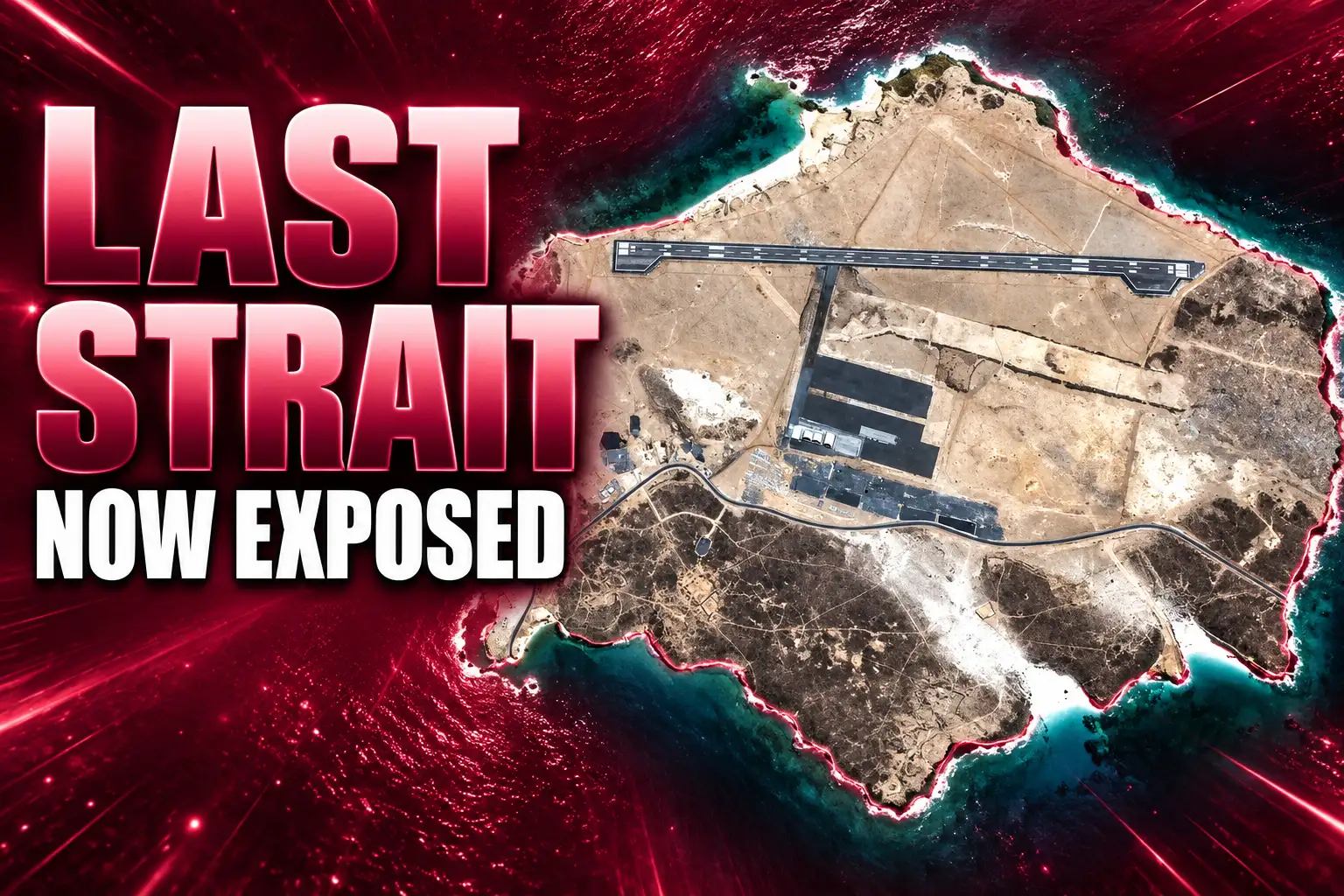
Houthi forces seized Mocha on Sept. 10 and Mayun Island, also called Perim, the next day. The barrels now in that strait are the workaround for a Gulf that can barely ship.
Qatar Puts a Second Strait on the Table
Al-Hashmi spoke at the ministry’s weekly briefing in Doha, after a planned Hormuz meeting in Oman had already been called off. He said blocking waterways cannot become ordinary practice, and that neither Qatar nor the wider world should accept it.
Blocking the waterway and international water corridors cannot be the new normal. And this cannot be acceptable either to Qatar or the international community.
Ibrahim bin Sultan Al-Hashmi, Director of the Media and Communication Department, Qatar Foreign Ministry weekly briefing
He then put the two gates in one line. “The world is suffering enough with the closure of the Strait of Hormuz, so we cannot also afford to add the Bab al-Mandeb into that equation,” he said. A shutdown at the southern end of the Red Sea, he added, would be “catastrophic for the entire world.”
Doha is still pushing talks, he said, and negotiations remain the only path that works. Asked about Gulf-Iran contacts after Oman postponed the Hormuz session, he answered that work on freedom of navigation has not paused. “Efforts are underway. They haven’t stopped and they will not,” Al-Hashmi said, adding that the regional crisis will sit high on Qatar’s agenda at the coming UN General Assembly.
That is a mediator’s script, and it is also a producer’s. Qatar’s oil and gas leave through Hormuz. Its warning about Bab el-Mandeb is about the lane that took the overflow once that first gate seized up.
Why Bab el-Mandeb Now Carries Hormuz’s Oil
U.S. Energy Information Administration tanker tracking puts oil through Bab el-Mandeb to 8.1 million barrels a day in the second quarter of 2026, up from 5.4 million in the fourth quarter of 2025, a 50 percent rise. In the same stretch, Hormuz oil fell from 21.6 million barrels a day to 4.9 million barrels a day.
The Red Sea did not pick up a little extra traffic. It took the job Hormuz used to do. Crude through Bab el-Mandeb went from 3.2 million barrels a day to 6.1 million, nearly double, as Saudi barrels moved west to Yanbu and then south toward Asia. Product volumes on that strait barely moved, from 2.2 million to 2.0 million, so the new load is crude.
OIL THROUGH THE CHOKEPOINTS
| Waterway | Q4 2025 | Q2 2026 |
|---|---|---|
| Strait of Hormuz | 21.6 million barrels a day | 4.9 million barrels a day |
| Bab el-Mandeb | 5.4 million barrels a day | 8.1 million barrels a day |
| Suez Canal and SUMED | 5.9 million barrels a day | 5.8 million barrels a day |
| Cape of Good Hope | 9.9 million barrels a day | 9.4 million barrels a day |
Suez and the SUMED pipeline held roughly steady, at 5.9 million barrels a day then 5.8 million. The Cape route did not absorb the missing Gulf oil either, slipping from 9.9 million to 9.4 million. The bypass lived in Bab el-Mandeb.
The International Energy Agency’s 2025 baseline still shows why the first closure hit so hard. Hormuz moved nearly 20 million barrels a day of oil that year, about 25 percent of seaborne oil trade, and 80 percent of it went to Asia. China and India together took 44 percent of the crude in that stream. Europe took about 600,000 barrels a day, only 4 percent. Pipeline ways around the strait, mainly Saudi Arabia’s east-west system to the Red Sea and the UAE line to Fujairah, have only 3.5 to 5.5 million barrels a day of spare capacity against that 20 million.
Those pipelines dump oil onto a coast that now ends at a Houthi-held gate. A second closure would not cut a backup. It would cut the backup that is already in use.
Mocha, Then the Island in the Lane
The military shift was fast. Until the morning of Sept. 10, Mocha sat with the National Resistance Forces, a Saudi-backed unit under Tareq Saleh, a vice president in Yemen’s internationally recognised government. Houthi fighters took the port that day. Government troops pulled south toward Dhubab, on the shore that faces the island in the strait.
On Sept. 11 they took Mayun Island. A local official with the Saudi-backed government said the group had completed its takeover of the Bab el-Mandeb area and the island, which is only a few kilometres across and splits the strait into two channels. Gunmen were seen driving along the shore. The Houthis also moved onto other Red Sea islands in the same push, including Zuqar and the Hanish group farther north.
FROM THE SAUDI BAN TO THE QATAR WARNING
- July 20, 2026: The Houthis impose a maritime ban on Saudi vessels in the southern Red Sea.
- Sept. 10, 2026: Houthi forces capture the port city of Mocha after government-aligned troops withdraw toward Dhubab.
- Sept. 11, 2026: Fighters seize Mayun Island in the middle of Bab el-Mandeb and press along the remaining coast.
- Sept. 13, 2026: Oman postpones a Hormuz meeting set for Salalah the next day.
- Sept. 15, 2026: Al-Hashmi warns that adding a Bab el-Mandeb shutdown to closed Hormuz would be catastrophic.
After the advance, the Houthis said international navigation through the strait remained “free, safe and smooth,” while Saudi ships stayed under the July 20 ban. That line is doing a lot of work. It lets the group say the waterway is open even as it holds the island that divides the shipping channels and the coast that watches them.
The argument on shipping desks is not that every hull has already stopped. It is that the same political model now sits on both gates: armed control, a selective ban, and the option to shut the rest. Saudi crude that was sent to Yanbu to escape Hormuz is the cargo most exposed to a ban that names Saudi ships. The workaround is already under the force it was meant to avoid.
Almost None of Qatar’s Gas Can Sail
Oil is only half of the stack. Except for short hops to Kuwait, Qatari and Emirati LNG has to pass Hormuz. The IEA says Qatar exported more than 112 billion cubic metres of LNG in 2025, second in the world, and that 93 percent of Qatar’s cargoes used the strait. Qatar and the UAE together supplied almost 20 percent of global LNG trade. About 90 percent of the LNG that used Hormuz went to Asia, and just over 10 percent went to Europe, covering about 27 percent of Asia’s LNG imports and about 7 percent of Europe’s.
EIA tracking shows how little of that stream is left. LNG through Hormuz fell from 10.5 billion cubic feet a day in late 2025 to 0.8 billion cubic feet a day in the second quarter of 2026. Flows around the Cape of Good Hope rose from 6.0 billion cubic feet a day to 9.7 billion, which is other countries’ gas taking the long way, not Qatari trains finding a back door. There is no LNG pipeline off the peninsula that can replace those ships. The Dolphin line moved almost 20.5 billion cubic metres to the UAE and Oman in 2025, and Oman’s own export plants were already running near full.
QATAR’S GAS, STUCK BEHIND HORMUZ
- 2025 exports: Qatar shipped more than 112 billion cubic metres of LNG, with 93 percent of its cargoes booked through Hormuz.
- Who bought it: Asia took about 90 percent of the LNG that used the strait; Bangladesh, India and Pakistan drew almost two-thirds of their LNG from that route.
- Q2 2026 flow: Hormuz LNG collapsed to 0.8 billion cubic feet a day from 10.5 billion in late 2025.
- Plant damage: Iranian strikes on March 18 hit two Ras Laffan trains and, in a CSIS account, knocked out 17 percent of Qatar’s export capacity for three to five years.
The IEA also counted 1.43 million barrels a day of Qatari oil and products in the 2025 Hormuz mix. So the same state that is calling for both straits to stay open has its main cash cargoes parked behind the first one. Al-Hashmi’s “new normal” line is about law of the sea. It is also about a gas exporter that cannot load.
Even a clean Hormuz reopening would not snap that back overnight. Gas executives gathering in Bangkok for Gastech said damaged plants and scarce hulls would keep Gulf LNG tight after any deal. Cederic Cremers, Shell’s president of integrated gas, told that audience on Sept. 14 that restoring marine flows would not happen in a day.
The Hormuz Meeting in Oman Did Not Happen
Oman had tried to put Iran and Gulf states in the same room in Salalah on Sept. 14. The session was meant to discuss a maritime arrangement for Hormuz, including a new route, after months in which Tehran has required permission to pass and floated service fees. Omani Foreign Minister Badr Albusaidi said on Sept. 13 that the meeting was postponed in the interests of consensus, and that Oman still wanted talks that support stability.
Iranian officials said some regional governments had asked for the delay, and that Tehran and Muscat agreed together. Iraq had said it would send a delegation. Saudi Arabia and Qatar had been expected at foreign-minister level. Bahrain had already ruled out attending. Iranian Foreign Minister Abbas Araghchi had said an understanding with Oman would not, by itself, reopen the strait.
The Houthi sweep along Yemen’s coast sat in the background of that cancellation. Gulf states were being asked to talk about one chokepoint while an Iranian-aligned force was taking the other. Al-Hashmi’s briefing two days later was Doha’s public answer: keep both lanes in the same diplomatic file, and take the file to the UN General Assembly.
Hormuz itself has been in trouble since Feb. 28, when U.S. and Israeli strikes on Iran opened a wider war and traffic in the strait collapsed. A June understanding between Washington and Tehran briefly raised ship counts, then frayed over mines, fees, and who controls the lanes. The IEA still describes the waterway as 21 nautical miles, or 39 km, at its narrowest, with two-mile inbound and outbound channels. That geometry has not changed. Who grants passage has.
What a Bab el-Mandeb Shutdown Would Freeze
A full close of Bab el-Mandeb would not trap Qatari LNG, which is already trapped. It would trap the oil that left the Gulf by pipe to the Red Sea, and it would threaten the Suez system that still depends on that southern door. Ships that cannot use the strait must sail around Africa, adding time, fuel, and war-risk cost to the same cargoes that already lost Hormuz.
WHAT THE SOUTHERN GATE STILL MOVES
- Rerouted crude: 6.1 million barrels a day of crude and condensate used Bab el-Mandeb in the second quarter, the load that replaced Hormuz for Asia-bound Gulf barrels.
- Suez’s southern door: The canal and SUMED still moved 5.8 million barrels a day of oil in that quarter, traffic that only works if Bab el-Mandeb stays passable.
- A ban already in force: Saudi ships have been under a Houthi maritime ban since July 20, so the selective rule already hits the country that built the Hormuz workaround.
- Asia’s remaining path: With Hormuz down to 4.9 million barrels a day, buyers in China, India, Japan and Korea have been drawing on Red Sea loadings that now sit beside Mayun Island.
Houthi officials still say the southern gate is open to ships that are not Saudi. Al-Hashmi told reporters that the diplomatic work has not stopped and will not.

Hurricane Nolo Hits a Big Island Still Digging Out

Gaza Families Remain in Buildings Already Cleared to Fall

Sony Polls Publishers Who Cannot Press PlayStation Discs Elsewhere

UN Settlement List Hits 214 as Investors Take Notice

Fuel Pushes UK Inflation to 3.1% With Core Unchanged

Thameslink Will Pad 60,000 Ironing-Board Seats From 2027

Micron Sells the Memory Shortage as Five-Year Contracts

Royal Caribbean Sends Los Angeles Ships to Singapore and Brisbane

Burger King Rebuilds Chicken Nuggets After Calling Them Rubbery

U.S. Forces Clear Hormuz Mines, Then Hit Minelayers Again
-
 NEWS1 month ago
Thameslink Will Pad 60,000 Ironing-Board Seats From 2027
-
 NEWS1 month ago
Micron Sells the Memory Shortage as Five-Year Contracts
-
 NEWS1 month ago
Royal Caribbean Sends Los Angeles Ships to Singapore and Brisbane
-
 BUSINESS1 month ago
Burger King Rebuilds Chicken Nuggets After Calling Them Rubbery
-
 BUSINESS1 month ago
U.S. Forces Clear Hormuz Mines, Then Hit Minelayers Again
-
 NEWS1 month ago
Twenty Controllers Closed Norwich Airport for a Bank Holiday
-

 BUSINESS1 month ago
Sweetmore Bakeries Buys Fantasy Baking for Bar Work
-

 NEWS1 month ago
Frontier Miles Cuts Basic Fares After the Barclays Pact