
LIFESTYLE
Cultural Diversity Through Festivals: How Americans Celebrate
Cultural diversity festivals work when tradition-bearers demonstrate the skill. This guide sorts four kinds, the Smithsonian model, and how to visit with care.

A Saturday festival can be a church food table, a powwow arena, or a tent on the National Mall. You still need to know what to do with your hands once you arrive. Americans celebrate cultural diversity at public festivals, and a parish feast, a powwow, a shared city ground, and the Smithsonian Folklife Festival each ask something different of a guest.
This page sorts those kinds, explains how the Mall festival was built, and shows how to visit. On the Festival’s own visitor page, the people at the center are exemplary practitioners of living traditions. You are there to watch a skill, try it when someone invites you, and ask a plain question.
Four Kinds of Cultural Festivals in the United States
Most festivals you can actually reach fit one of four patterns, and the pattern tells you who is in charge and what a guest is for. Folklife, the word the Smithsonian uses, means the food, music, work, stories, and crafts a community still practices.
FOUR FESTIVAL PATTERNS
| Kind of festival | Who leads it | What a guest is invited to do |
|---|---|---|
| One-community heritage day | That community’s cooks, musicians, and elders | Eat, watch a procession, and ask about one dish or dance |
| Powwow or other Indigenous gathering | The host nation, the drum, and the arena staff | Stand for grand entry and dance only when the emcee invites you |
| Shared multicultural festival | Several communities on one park, museum, or mall | Move between tents and try a hands-on craft |
| Occupational or youth folklife | Workers, apprentices, and young practitioners | Watch a skill and ask how someone learned it |
Once you know the pattern, the manners stop being a guess. A church lunch and a national tent city can both be folklife if the people who practice the tradition are the ones talking.
Heritage Days, Parish Feasts, and Neighborhood Altars
A heritage day belongs to one community, even when the whole town is invited. The hosts may be a parish, a cultural club, a tribal nation, or a small museum, and the program is their food, their music, and their calendar. New Orleans Mardi Gras, a neighborhood Lunar New Year fair, a German Oktoberfest weekend, and a Día de los Muertos afternoon built around a community altar are different traditions with the same guest job.
You can attend a public heritage festival without sharing the heritage, as long as you follow the host’s signs on sacred objects, photography, and the procession’s right of way. The people serving food and walking in the parade are often the same families who keep the tradition the rest of the year, so the useful conversation is about how they learned it.
A GUEST’S DEFAULT
- The role: You are a guest of the people who called the day, not a member of the procession unless they invite you.
- The clothes: Ordinary comfortable clothes are the right choice unless that event’s own page asks for something else.
- The question: Ask what a dish, a song, or a step is for at home, not only on the street.
A museum lawn or a church parking lot can hold this kind of day as fully as a famous downtown parade. The scale changes the crowd, not the fact that someone is hosting you.
Powwow Rules for a First-Time Guest
A powwow is a gathering for dance, drum, and regalia, held so communities can honor ancestors and pass traditions on. Public powwows take place on tribal lands and in cities. The emcee of that event outranks any general list, including the steps here.
- Stand and remove your hat for the whole grand entry if you are able, and stay up for veteran songs when the emcee asks everyone to rise.
- Stay out of the dance arena after it has been blessed, and step in only for an intertribal, round dance, blanket dance, or honoring dance when guests are invited.
- Bring a folding chair if you can, and do not place it under the dance arbor or on a seat that already has a shawl or blanket, because those seats are reserved.
- Call the dancers’ clothing regalia, not a costume, and do not touch feathers, beadwork, or fans.
- If an eagle feather falls, leave it where it is so the person appointed for that duty can pick it up.
- Leave alcohol and drugs off the grounds.
The chair rule, the arbor rule, and the ban on alcohol are part of the powwow etiquette the Mille Lacs Band posts. Before you lift a phone, read the photography rules for powwow guests from Nevada’s Indian Territory: ask before you photograph anyone in regalia, skip children unless a parent agrees, and stop shooting when an eagle feather drops or an eagle whistle sounds. Dress codes are not the same at every powwow, so a long skirt at one gathering and ordinary street clothes at another can both be what that host asked for.
A Festival Ground Shared by Several Cultures
Some festivals give several communities a tent, a stage, or a table on one park, one museum lawn, or one stretch of the National Mall. You can hear more than one language in an hour and eat from more than one kitchen. The person at the table is the reason for the stop, so leave time to talk instead of only collecting a photo between tents.
HOW TO SPEND THE FIRST HOUR
- The welcome: Stay for the introduction of the performers, not only the last song.
- The table: Ask what the dish is for at home and who cooks it the rest of the year.
- The hands-on tent: Try the craft when the sign or the maker says guests may.
- The rail: Leave the front edge clear for families who are watching a relative.
The Smithsonian Folklife Festival is this shared-ground pattern at national scale. Staff research the programs, and the practitioners come to demonstrate, talk, and teach rather than to stand as a silent display. That design is why the next section is about one festival instead of another city list.
Occupations and Youth Traditions on the Program
A festival program can feature the culture of a job, not only the culture of an ancestry. Bakers, truckers, stone carvers, and newspaper printers have all been treated as tradition-bearers on the Mall because someone still teaches the skill. If you only walk toward the loudest stage, you miss the bench where the real explanation is happening.
A SKILL WORTH STOPPING FOR
- Lowriders: The bold paint, special suspension, and chrome began in southern California in the 1940s, and a festival bench may show a car being restored rather than only parked.
- Building trades: Stone carvers, plasterers, preservation carpenters, and blacksmiths work with apprentices beside them.
- Language: A lodge for a Native language can sit next to social dance, lacrosse, or basket making, and the useful question is who teaches the children after the weekend.
Youth programs belong in the same family when young musicians, skaters, poets, and apprentices are the ones presenting, with mentors in the conversation. The skill is current even when the tools are old.
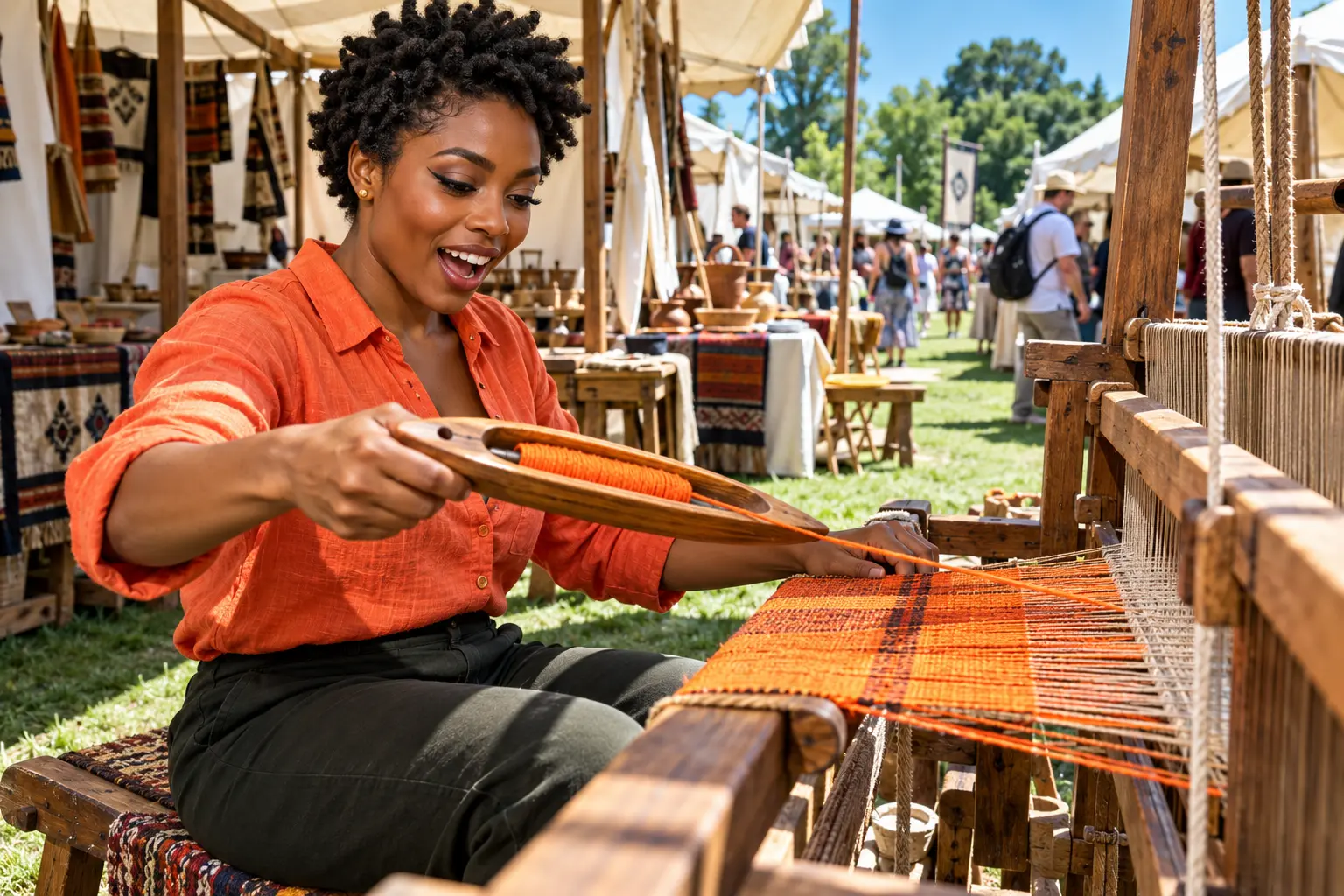
How Did the Smithsonian Folklife Festival Take Shape?
The Festival began as a way to put living practitioners on the National Mall, next to museum collections, so visitors could meet the people whose culture the objects came from. Smithsonian Secretary S. Dillon Ripley wanted the Mall to feel more open to the public. James Morris, then leading museum services and later the Division of Performing Arts, proposed a folk festival as the outdoor centerpiece. Ralph C. Rinzler, who had directed field programs for the Newport Folk Festival, helped plan the first year and then directed the Festival from 1968 to 1982.
HOW THE MALL FESTIVAL MOVED
- 1967: Two tents go up in front of the Museum of History and Technology, now the National Museum of American History.
- 1973: The National Park Service becomes cosponsor, the Old Ways in the New World program begins, and the grounds shift toward the Lincoln Memorial through 1976.
- 1976: The Bicentennial Festival runs for twelve weeks.
- 1977 to 1981: Outdoor activity moves to the ground where the National Museum of African American History and Culture now stands, with indoor programs in museum buildings and the Renwick Gallery. From 1977 to 1980 the Festival is held in October.
- 1982: The Festival returns to its first Mall site.
- 1998: The Festival of American Folklife is renamed the Smithsonian Folklife Festival.
- 2008: Texas is the last state presented as its own full state program.
- 2011: Free water stations and water-bottle collection start the waste program.
- 2015 to 2017: Turf work moves the Festival toward the Capitol, in front of the National Museum of the American Indian in 2015 and the National Air and Space Museum in 2016, then back between Seventh and 12th streets in 2017.
- July 2 to 7, 2025: The Youth and the Future of Culture program runs free from 11 a.m. to 5:30 p.m. on the Madison Avenue side between Seventh and 12th streets, plus the Arts and Industries Building, with evening concerts later Thursday through Sunday.
Staff later published the myths the Festival staff corrected, including the idea that the event always ends on the Fourth of July. Some years did close with the holiday and the Mall fireworks. Other years wrapped around that week, the late 1970s moved the whole event to October, and the Bicentennial year lasted twelve weeks. Counting the crowd is also loose, because there are many ways onto the grounds.
“We celebrate the return to a quieter, more easily accessible, and larger site, and also to one that makes more clearly visible the strong, complementary relationship between museum collections and the presenters of living traditions.”
S. Dillon Ripley, Smithsonian Secretary, 1982
The Center’s archive guide says the Festival’s distinctive feature is the attempt to put tradition-bearers’ voices in front while they demonstrate and discuss their folklife. A 2025 Smithsonian release says participants have come from all 50 states and more than 100 countries. The same archive record, using an older tally, also counts more than 100 American Indian groups and some 50 occupations among the people featured since the start. Programs are researched with community members, not cast like a stage show, and only about a decade of festivals followed a neat formula of one state, one country, and one theme.
How to Take Part Without Getting in the Way
The visit works when you treat the practitioner as a teacher with a limited amount of time. A crew of coordinators, builders, interns, and volunteers puts the grounds up and takes them down, and the public part of that work is your conduct at the bench, the arena, and the food line.
- Read the host’s page the night before, including whether the event is open to the public and what it says about photos.
- Arrive for the welcome, the blessing, or the grand entry, not halfway through a ceremony you do not understand yet.
- Ask one specific question, such as who taught the skill or when people do it at home.
- Try a hands-on station only when the sign or the maker invites guests.
- At a food demonstration, ask about allergens before you eat, because Festival stands post notices for common allergens.
- On an outdoor Festival ground, use the sorting stations instead of leaving a bottle on the grass.
QUESTIONS THAT GET A REAL ANSWER
- The teacher: Who taught you, and how long did the learning take?
- The home use: When do people do this away from a stage or a tent?
- The limit: What should a guest not touch, wear, or record?
Those three questions match the way the Festival describes a good visit: tradition-bearers and the public learning from one another. A vague compliment does less than a question the person can answer while their hands keep working.
The Festival’s short film Learning by Doing, from its 2025 series on the crew, shows that hands-on exchange from the build through the public hours.
By 2017 the Festival was keeping 97% of its waste out of landfills, and the American Alliance of Museums gave that sustainability work an excellence award. The habit for a guest is smaller than the percentage: put bottles in the collection the program started, and follow the volunteer who is standing at the bins.
Leave No Trace, another film in that same official series, shows the sorting and the teardown that follow a weekend on the grass.
Do not wear another community’s regalia or ceremonial clothing as a guest outfit. Powwow guidance from the Mille Lacs Band says those outfits take thought, time, and expense, and they are not costumes. If a specific event asks for covered shoulders, a head covering, or shoes left at the door, that page is the one to follow.
The Folklife Festival on the National Mall in 2026
In 2026 the Center did not build the usual outdoor tent city. From June 16 to July 12, 2026, it hosted the Folklife Marketplace, related events, and an exhibition inside the Smithsonian’s Arts and Industries Building on the National Mall, and it also co-presented programs in other parts of the country. The building is still on the Mall, which fits a long pattern: the Festival has used different stretches of that ground, and some years have moved indoors, but the public meeting with practitioners has stayed the point.
The visit page says Washington summers are hot and humid, and it tells you to bring lightweight clothes, a hat, sunscreen, and a refillable water bottle even when the listed events are indoors. Parking around the Mall is extremely limited, so the practical arrival is by Metro, and the closest station is Smithsonian. For general Smithsonian visitor help, call 202.633.1000. Restrooms and a changing station are in the North Hall of the Arts and Industries Building. The grounds are mask-friendly, and masks are invited but not required.
Outdoor years have published a fuller access setup than a single indoor hall. At the 2025 festival on the grass between Seventh and 12th streets, paths used concrete sidewalks or packed gravel, seating areas were set aside at presentation spots, a limited number of wheelchairs could be borrowed, stages had assistive listening, and American Sign Language and real-time captioning covered selected events. Large-print and Braille brochures, verbal description, sighted guides, and a sensory map were also part of that year’s plan. A later outdoor festival may repeat those tools or change them, so the access page for the dates you are visiting is the list to trust.
BEFORE YOU GO TO THE MALL
- The dates: Confirm the year you mean, because a summer lawn festival and an indoor marketplace are not the same trip.
- The walk: Use the Smithsonian Metro stop and expect heat on the paths even if your event is inside.
- The access need: Request extra American Sign Language or a quieter hour ahead of time if the current page offers that line.
- The body: Stay with the water bottle, and skip the day if you are unwell.
Admission was free at the 2025 festival on the Mall. The 2026 general information page describes the indoor marketplace and exhibition without posting a ticket price in that summary, so check the current visit page before you promise a group that the door is free. The form of the Festival has changed often enough that a saved weekend from an old article is not a plan.
Frequently Asked Questions
Can You Record Drum Songs at a Powwow?
Do not record drum songs unless the head singer of that drum says you may. Powwow etiquette from the Bellisario College of Communications at Penn State tells guests not to tape songs without that permission, and it says the emcee can still bar a specific song even after a yes. The same page forbids photographing or recording the grand entry and the ceremony that follows a fallen eagle feather. A wide photo of the grounds is a different act from a close recording of a singer, and the second one waits for a direct yes.
Does the Folklife Festival Always Pair One State With One Country?
No. Festival curator Betty Belanus wrote in 2017 that only about thirteen years followed a formula of one state or region, one country, and one themed program. Early festivals often featured a single state plus broad American themes such as baking, weaving, and brass bands, and later years sometimes featured two countries and a music program. The last state presented as its own program was Texas in 2008. The 1973 Old Ways in the New World program, which linked immigrant families in the United States with ancestral traditions, later gave way to country programs, starting with Mexican and Mexican-American traditions in 1978.
Where Do Folklife Festival Recordings Go After the Tents Come Down?
They go into the Smithsonian Folklife Festival Records at the Center for Folklife and Cultural Heritage. That collection holds photographs, audio, film and video, notes, production drawings, contracts, correspondence, publications, and Festival T-shirts. Volunteers trained by the Center’s archivists log audiotapes at every stage and discussion area while the event is underway, and the files also include field research from the communities that were featured. The producing office itself has changed names several times since 1967, and the Center for Folklife and Cultural Heritage has produced the Festival from 1999 onward.
What Should You Do If You Feel Sick on Festival Day?
Stay home. The Festival’s visit guidance asks anyone who is sick or feels unwell not to come, and it encourages frequent hand washing for people who do attend. Masks are welcome and not required. The 2025 outdoor festival also held a Sunday morning called Morning on the Mall for neurodivergent guests and their families, so if a quieter hour matters in your group, look for whether the year you are visiting offers that kind of session before you promise the day.
Dates, indoor or outdoor layout, and access services are posted on the Festival visit page, and a powwow’s own emcee outranks any general list the moment the grand entry starts.

Kering’s Growing Houses Cannot Outrun a Shrinking Gucci

Studio Staff and Bitcoin Buyers Built the Eminem Leak Case

A Mutated H1N1 Strain Is Hitting Younger Immunity First

Albert Heijn Returns at One-Third as Rivals Take Share

Art Basel Paris Ends After One Public Day

Thameslink Will Pad 60,000 Ironing-Board Seats From 2027

How Tall Was Adolf Hitler?

U.S. Forces Clear Hormuz Mines, Then Hit Minelayers Again

Micron Sells the Memory Shortage as Five-Year Contracts

Royal Caribbean Sends Los Angeles Ships to Singapore and Brisbane
-
 NEWS2 months ago
Thameslink Will Pad 60,000 Ironing-Board Seats From 2027
-
 HISTORY3 years ago
How Tall Was Adolf Hitler?
-
 BUSINESS2 months ago
U.S. Forces Clear Hormuz Mines, Then Hit Minelayers Again
-
 NEWS2 months ago
Micron Sells the Memory Shortage as Five-Year Contracts
-
 NEWS2 months ago
Royal Caribbean Sends Los Angeles Ships to Singapore and Brisbane
-

 BUSINESS2 months ago
L Catterton Installs a Kraft Heinz Operator at Kettle Cuisine
-
 NEWS2 months ago
Twenty Controllers Closed Norwich Airport for a Bank Holiday
-

 BUSINESS2 months ago
Sweetmore Bakeries Buys Fantasy Baking for Bar Work