
NEWS
Canada’s AI Host Pitch Meets a Public Limit Vote
Most Canadians want large data centres limited, even as Ottawa pitches a clean-grid AI host role and Meta adds a gas plant.

64 percent of Canadian adults say their provincial government should limit large data centres, the non-profit Angus Reid Institute found in an online survey of 4,417 people from September 8 to 16. Eighteen percent want those governments to encourage more of them.
That is the mood sitting under Prime Minister Mark Carney’s pitch that Canada should host the servers, on a clean grid and in a cold climate, just as the first gigawatt-scale campuses break ground.
Two-Thirds Want Provinces to Limit Large Data Centres
The institute released the figures on October 7. For comparison only, a probability sample of this size would carry a margin of error of plus or minus 1.5 percentage points, 19 times out of 20. The question was not about Ottawa. It asked whether 64 percent want provinces to limit large data centres, or to push for more.
Opposition reaches 72 percent in Manitoba and in Atlantic Canada, 70 percent in Saskatchewan, and 64 percent in Alberta, where the biggest shovel is already in the ground. Quebec is the floor, at 50 percent. The institute ties that gap to the province’s established artificial intelligence research and technology sector, including Mila in Montreal.
WHERE ADULTS WANT PROVINCIAL LIMITS
| Region | Share wanting limits | Projects named in the survey |
|---|---|---|
| Manitoba | 72% | – |
| Atlantic Canada | 72% | – |
| Saskatchewan | 70% | Bell hub to 1.2 gigawatts, $52.5 billion |
| Alberta | 64% | Meta $13 billion, 1 gigawatt campus |
| Canada | 64% | – |
| Quebec | 50% | Existing AI research cluster |
A June survey from the same institute, taken May 7 to 11 among 1,803 adults, had already found 68 percent would oppose a large AI data centre within a few blocks of home. The September question moved the fight up to the provincial cabinet table, and the share wanting limits barely budged.
South of the border, Gallup’s March 2 to 18 survey found 71 percent of Americans oppose local sites for AI data centres, including 48 percent who are strongly opposed. In the same poll, 53 percent opposed a nuclear plant in their area. Gallup called that local resistance a major hurdle for the expansion of AI computing. The Canadian numbers now sit in the same band, aimed at provinces rather than the neighbour’s lot line.
Meta’s Alberta Campus Brings Its Own Gas Plant
The federal sales story is a clean, predictable grid and a northern climate that cuts the cost of cooling. The project that makes the pitch real is being wired to new gas.
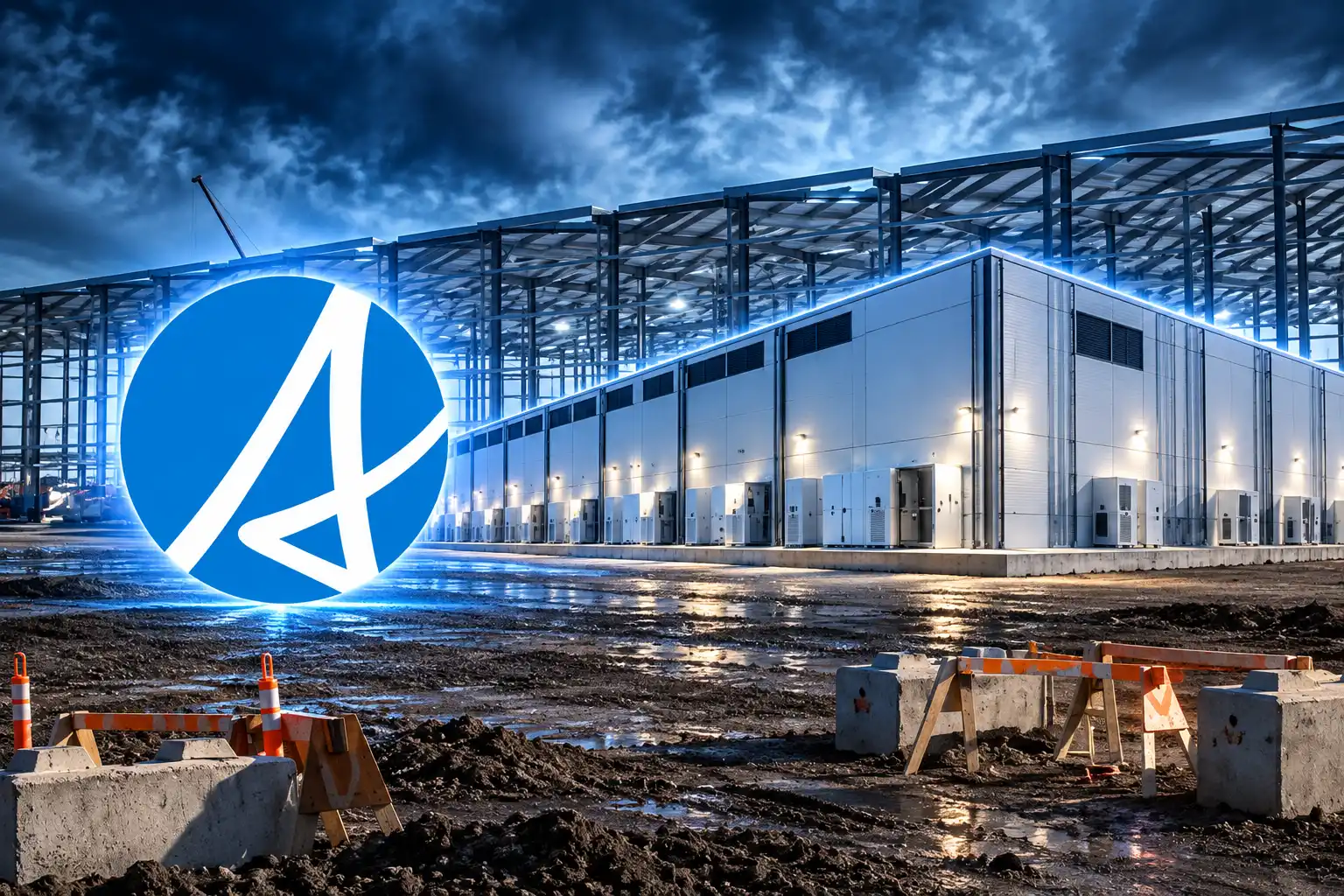
Meta Platforms is building its first Canadian data centre in Sturgeon County, in Alberta’s Industrial Heartland, about 35 kilometres north of Edmonton. Invest Alberta puts the campus above $13 billion, on about 1,750 acres, with about 2.9 million square feet of floor space. It is sized at 1 gigawatt, with room to scale to 1.8 gigawatts, and it is Meta’s 33rd data centre worldwide.
Power is the hinge. Alberta’s bring-your-own-power framework lets a hyperscaler lock in capacity without putting the whole load on households first. Invest Alberta says the campus will take about 970 megawatts of grid-connected power in two phases, then add on-site gas generation with Kineticor and Pembina Pipeline. Pembina, Morgan Stanley Infrastructure Partners, and Kineticor are building the Greenlight Electricity Centre next door, a $4.6 billion natural gas plant rated at 932 megawatts, with service aimed at late 2030. Capital Power has a separate supply deal with Meta for 250 megawatts.
STURGEON COUNTY CAMPUS, ON PAPER
- Private spend: More than $13 billion on the campus, plus $4.6 billion on the Greenlight gas plant.
- Jobs: More than 3,000 at peak construction and about 300 permanent roles once it runs.
- Local works: About $60 million in road and water upgrades, per Meta’s Alberta filing of the project.
- Cooling: Closed-loop liquid cooling with dry coolers; Invest Alberta says there is no operational water use for cooling, only domestic, maintenance, and fire needs.
The province’s public explainer puts a $0 line on what Albertans pay toward these projects: no subsidies, no discounted power, private dollars on the risk. It also claims a levy of up to 2 percent on the value of computing equipment, and about $250 million a year back to Albertans in royalties, taxes, levies, and transmission fees. Meta has said it will cover the full electricity costs of the campus, including new and upgraded kit.
Alberta NDP leader Naheed Nenshi does not buy the bill math. On September 4 he said electricity prices could rise by as much as $460 per household because of the Meta campus, and he called for a pause on new approvals until a fuller cost framework is in place.
Electricity prices could skyrocket by as much as $460 per household in Alberta because of Meta’s new AI data centre.
Danielle Smith’s solution? She told Albertans to lock in a power rate.
The cost of living is already out of control in this province. It is irresponsible for the…
— Naheed Nenshi (@nenshi) September 4, 2026
Those two numbers describe different claims, not a settled household rate. Alberta is selling a private-generation model. Nenshi is selling the fear that a 1 gigawatt load still moves the pool. The poll suggests a lot of adults are living in Nenshi’s sentence, even in the province that landed the trophy project.
Water Use Tops the Reasons People Say No
Among the 64 percent who would limit large data centres, the institute asked why. The answers line up with the two resources Canada is using as bait.
WHY THE 64 PERCENT WANT LIMITS
- High water use: 51 percent named it, the most common reason.
- Power bills: 38 percent worry that higher electricity costs will land on households and other businesses.
- Who pockets it: 34 percent say the benefits would flow mainly to large technology companies rather than local communities.
- Thin permanent work: 18 percent say there are too few lasting jobs compared with the resources used.
- New kit on the grid: 16 percent cite costly new electricity or other infrastructure.
- Climate targets: 14 percent say the build makes emissions goals harder to hit, a worry that is sharper among women under 55.
The 300 permanent jobs on the Meta campus sit beside 3,000 construction jobs. That ratio is exactly the “too few permanent jobs” complaint in the poll, written in headcount. Closed-loop cooling is Meta’s answer to the 51 percent. Paying its own power bill is the answer to the 38 percent. The survey was in the field after both promises were already on the record, and Alberta still printed 64 percent for limits, matching the national figure.
The 18 percent who would encourage more centres live on the other side of the ledger. Among them, 47 percent cite new investment and economic growth, 33 percent cite Canada’s competitiveness in AI and other new technology, and 30 percent cite jobs.
Only 28 percent of all adults in this survey agree that artificial intelligence is a force for good in society, compared with 29 percent last November. The hardware fight is running ahead of any warm feeling about the software.
Why Opposition Peaks in Manitoba and the Atlantic
The loudest “limit them” numbers are not in the province with the $13 billion shovel. Manitoba and Atlantic Canada both sit at 72 percent. Saskatchewan, where Bell wants a 1.2 gigawatt AI hub, is at 70 percent. Alberta, with Meta under construction, is at 64 percent. The trophy projects have not bought a majority.
Quebec is the exception, and it is not a small one. Fifty percent there want provincial limits, the lowest share in the country. Forty-six percent of Quebecers in the same survey describe AI as a force for good, the only region where agreement (46 percent) outweighs disagreement (42 percent). Montreal already has Mila, a national AI institute, and a long run of research labs and startups. Social license in this poll tracks a place that already lives with the industry, more than it tracks who just won a ribbon-cutting.
Saskatchewan’s file is now as large as Alberta’s, in dollar terms. Bell is proposing an expansion that could add 900 megawatts, creating a 1.2 gigawatt hub and as much as $52.5 billion in investment, the institute noted. That is the project that produced a 70 percent “limit” result in the same province. The dollars did not reverse the water and bill argument. They sat beside it.
A prospectus prepared for Carney’s Canada Investment Summit listed still more Prairie capacity, including BW Velora’s Redcliff campus near Medicine Hat, a $14.5 billion plan with an 884 megawatt behind-the-meter power plant. The Norwegian firm’s model is the same as Meta’s: do not wait for a clean surplus on the public grid. Bring the plant.
That is the twist inside the federal brochure. Canada is being sold on abundant, reliable, competitively priced electricity and cheaper cooling because of the cold. The projects that actually clear a finance committee are packing their own gas. The public, asked a straight limit-or-encourage question, is voting as if the brochure’s two scarce inputs, water and power, are the whole story.
Oakville and Mississauga Already Hit Pause
The poll is catching up with city clerks. While Ottawa writes national talking points, councils have been taking recorded votes on whether to freeze new halls of servers.
THE MUNICIPAL PAUSE CALENDAR
- July 2026: Hamilton is the first Canadian city to put a one-year data centre freeze to a council vote; it fails after a closed legal session, and staff keep studying rules.
- August 2026: Oakville becomes the first Ontario municipality to enact a one-year moratorium while staff run a planning study.
- September 16, 2026: Mississauga council votes unanimously to pause new data centres over 10 megawatts for one year, putting a 40 megawatt Prologis file in limbo, and Sault Ste. Marie follows with its own pause track.
- October 8, 2026: Quinte West council rejects an interim control bylaw, 8 to 5, so no new freeze is added there.
Mississauga’s threshold, 10 megawatts, is a rounding error next to Meta’s 1 gigawatt. It is still enough to stop a suburban business-park file while staff rewrite the official plan. Neighbouring Vaughan and cities such as Burlington have refused a freeze and kept studying. The map is a patchwork, which is the point. A national compute target can die, or slow to a crawl, in a committee of thirteen.
Ontario’s own draft “playbook” for new centres arrived after those votes started, not before. Municipalities asked for it because they were already the front line. The Angus Reid question, aimed at provinces, now has a second audience: every mayor who has to look at a 10 megawatt application and a room of residents who have read the same water and bill arguments.
Federal Principles Track the Public’s Fears
On September 3, Minister of Artificial Intelligence and Digital Innovation Evan Solomon, with Federation of Canadian Municipalities president Tim Tierney, issued Canada’s Responsible Data Centre Development Principles. They are a voluntary national framework. They do not create a federal permit, and they do not replace provincial, municipal, or Indigenous approvals.
The five lines could have been copied from the poll’s “why oppose” table.
WHAT THE FIVE RULES ASK
- Lasting local benefits: Jobs, training, local and Indigenous procurement, tax, infrastructure, research ties, and compute access, set with host communities early.
- No bill shift: Project-driven electricity costs stay off households and existing businesses; proponents pay for the generation, wires, substations, and upgrades they cause.
- Water and harm: Minimize freshwater use and other environmental hits, with a preference for closed-loop or high-efficiency cooling, waste-heat recovery, and lower-emission power.
- Say the local impact: Be transparent about what a site does to the place that hosts it.
- Strategic value: The capacity should do something for Canada, not only for a foreign balance sheet.
The first wave of signatories on September 3 included Amazon, Google, Microsoft, Meta, OpenAI, Anthropic, Bell, Telus, and Cohere, among others, 23 in all. On September 22 Ottawa said 19 more had joined, taking the total to 42. The five responsible data centre principles now have a long logo wall. They still have no penalty clause.
That is the federal bind in one page. The June 4 launch of Canada’s new national AI strategy, AI for All, aims at an extra $200 billion of economic growth and 250,000 AI-related jobs over five years, and at lifting business AI use from just over 12 percent to 60 percent by 2034. It also promises up to 90,000 AI-related jobs and work placements for young people. The strategy text itself calls the grid sustainable and predictable, and currently constrained, and says Canada will need to double its electricity infrastructure by 2050. The Angus Reid write-up says Ottawa is exploring opportunities that could support as much as 6 gigawatts of new data-centre capacity and more than $100 billion in investment. A $2 billion federal push for Canadian AI compute is already on the books.
AI is here. The question is whether it will improve the lives of all Canadians or benefit only a few.
Mark Carney, Prime Minister of Canada, AI for All launch, June 4, 2026
The September poll is the first national answer to that sentence on the physical plant, not on the chatbots. Sixty-four percent want the plant limited. Eighteen percent want more of it. Quebec, which already has the labs, is the only region that splits down the middle. The flagship campus is pairing the servers with a gas plant. City halls in Oakville and Mississauga have already hit pause, and Quinte West has already refused to. The principles read like a reply to the 51 percent and the 38 percent. They are still a pledge, and the next 1 gigawatt file will be decided by a utility queue, a closed-loop drawing, and a council that has seen this poll.

Kering’s Growing Houses Cannot Outrun a Shrinking Gucci

Studio Staff and Bitcoin Buyers Built the Eminem Leak Case

A Mutated H1N1 Strain Is Hitting Younger Immunity First

Albert Heijn Returns at One-Third as Rivals Take Share

Art Basel Paris Ends After One Public Day

Thameslink Will Pad 60,000 Ironing-Board Seats From 2027

How Tall Was Adolf Hitler Really? Debunking the Myth of his Height

Micron Sells the Memory Shortage as Five-Year Contracts

Royal Caribbean Sends Los Angeles Ships to Singapore and Brisbane

U.S. Forces Clear Hormuz Mines, Then Hit Minelayers Again
-
 NEWS2 months ago
Thameslink Will Pad 60,000 Ironing-Board Seats From 2027
-
 SCIENCE3 years ago
How Tall Was Adolf Hitler Really? Debunking the Myth of his Height
-
 NEWS2 months ago
Micron Sells the Memory Shortage as Five-Year Contracts
-
 NEWS2 months ago
Royal Caribbean Sends Los Angeles Ships to Singapore and Brisbane
-
 BUSINESS2 months ago
U.S. Forces Clear Hormuz Mines, Then Hit Minelayers Again
-

 BUSINESS2 months ago
Sweetmore Bakeries Buys Fantasy Baking for Bar Work
-

 BUSINESS2 months ago
L Catterton Installs a Kraft Heinz Operator at Kettle Cuisine
-

 NEWS2 months ago
CISA’s 100 Water System Hacks Hit One-Operator Plants