
BUSINESS
Bose Buys Skullcandy After a Decade in Private Hands
Bose bought Skullcandy from Mill Road a decade after the take-private, adding the Park City brand under McIntosh as a third audio rung.

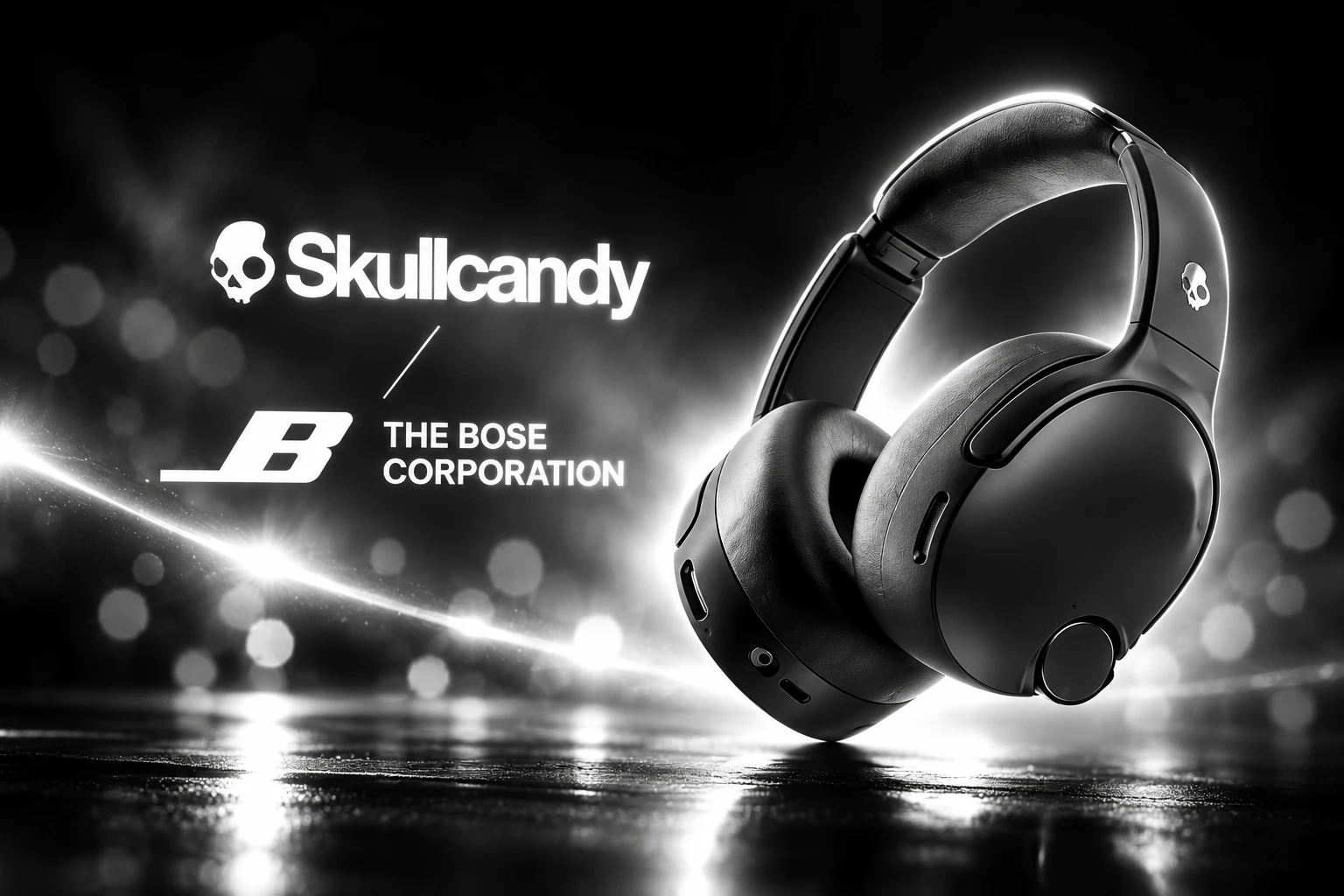
Bose bought Skullcandy on October 21 from a Mill Road Capital fund, and it will keep the Park City lifestyle brand separate inside its premium consumer audio unit. Financial terms stay confidential.
The sale closes a decade of private-equity ownership that began at $196.6 million, and it follows the same brand-buying pattern Bose used when it added McIntosh and Sonus faber in 2024. Framingham already knew the products. Sound by Bose had been living inside Skullcandy’s newest earbuds and headphones before anyone signed a purchase agreement.
Bose Takes Skullcandy off Mill Road’s Books
Bose Corporation acquired Skullcandy from a Mill Road fund on October 21, 2026, with Jones Day as legal counsel. Skullcandy stays a separate brand. Its office stays in Park City, Utah, in the Kimball Junction area where the company has long been based.
Chief executive Lila Snyder tied the purchase to a wider shift. Bose, she said, now reaches listeners through its own products, through tech licenses, and through a growing set of brands, and it can do that because it is privately held. Skullcandy chief executive Brian Garofalow, who took the job in 2023 after brand roles at Boardriders, Igloo, and Dometic, called the deal a win for the company’s fans and said Bose’s audio work would flow into more of its gear.
WHAT THE COMPANIES CONFIRMED
- The seller: A fund managed by Mill Road Capital Management, a Connecticut private investment firm, sold the company.
- The price: Bose and Mill Road are keeping the 2026 terms confidential, including the dollar figure.
- The structure: Skullcandy joins Bose’s premium consumer audio business as its own brand, not as a Bose sub-label.
- The home: The company remains based in Park City, with no relocation announced.
Bose’s own “about” copy now lists four consumer names in one breath: Bose, McIntosh, Sonus faber, and Skullcandy. That list is the strategy. The youth-and-boardsports language in the release is how the new parent describes the rung it did not already own.
The Decade Mill Road Spent on Skullcandy
Skullcandy has been sold before, and the last sale was a fight. In June 2016 the board agreed to take the Nasdaq-listed company private with Incipio, a phone-case maker, at $5.75 a share, a deal then valued at about $177 million. Mill Road disclosed a stake the next day and bid higher. Incipio came back at $6.10. Mill Road answered with $6.35 a share in cash, about 4% above Incipio’s last offer and 43% above the June 22, 2016 close, the last session before the first deal leaked.
Incipio walked. The Mill Road merger closed on October 3, 2016, for about $196.6 million. Jason Hodell, then the finance and operations chief, became CEO a week later. The stock, which had listed under SKUL, went dark.
Public filings stop after that. The last full year of reported results, 2015, showed net sales of $266.3 million. Mill Road’s hold then ran a decade, long for a buyout fund, and long enough for the firm to strip the company back to one brand and wait for a strategic buyer that wanted the name more than a quarterly chart.
SKULLCANDY’S OWNERSHIP CLOCK
- 2003: The company is founded in Park City on a chairlift idea, as a lifestyle audio brand aimed at snowboard and skate shops.
- July 2011: It lists on Nasdaq at $20 a share, above a $17 to $19 marketed range.
- 2015: Net sales reach $266.3 million, the last full year of public reporting.
- June 2016: The board signs with Incipio at $5.75 a share, then entertains a rival bid from Mill Road.
- October 3, 2016: Mill Road completes the take-private at $6.35 a share, about $196.6 million.
- 2023: Brian Garofalow becomes chief executive.
- October 21, 2026: Bose buys the company from the Mill Road fund and leaves it in Park City.
The $20 IPO price and the $6.35 exit are the public record of how far the stock had fallen before Mill Road stepped in. What the brand was worth to Bose in 2026 is the figure no one published.
Crusher 1080 Carried Bose Tech in July
The acquisition did not start with a cold call. Bose had already been selling Skullcandy the part of the product Skullcandy was weakest at. Garofalow said in July that the company was strong at community and culture, and that it was not “the greatest at the engineering part of innovation with products.” Bose’s license filled that gap while leaving the skull on the cup.
The first widely sold fruit of that work was the Method 360 ANC earbuds with Sound by Bose, launched on April 15, 2025. They opened at a $99.99 introductory price against a $129.99 MSRP, with hybrid ANC, a slider case, and fit fins licensed from Bose. Battery life is rated at up to 40 hours with ANC off. A 10-minute charge is rated for two hours of playback. The buds are IPX4. Motorola had already put Sound by Bose on Moto Buds+ at the same $129.99 MSRP, so Skullcandy was joining a license program, not inventing one.
On July 15, 2026, Skullcandy launched the Crusher 1080 ANC at $279.99 in black, candy, primer, and cement. Skullcandy called it the first headphone to combine Bose QuietControl adaptive ANC, TrueSpatial with head tracking, and the WaveForm audio engine, on top of the dual-driver Crusher bass the brand is known for. Battery life is rated at up to 60 hours. The Bose contribution is processing code, not Bose-built drivers. Skullcandy’s hardware runs Bose’s software. That split is how a $279.99 cup can wear flagship ANC without carrying a flagship Bose price.
THE TWO SOUND BY BOSE MODELS
| Product | Launch | Price | What Bose supplied |
|---|---|---|---|
| Method 360 ANC earbuds | April 15, 2025 | $129.99 MSRP ($99.99 intro) | Sound by Bose tuning, hybrid ANC, licensed fit fins |
| Crusher 1080 ANC headphones | July 15, 2026 | $279.99 | QuietControl, TrueSpatial, WaveForm processing |
Those two SKUs were the due diligence. Bose had watched its stack sell under another name, at prices its own QuietComfort line does not occupy, to people who pick a headphone for bass and color. Buying the brand is how it keeps that channel if the license ever looks too thin.
Two Tech Deals, Then the Lifestyle Brand
Skullcandy is the loud consumer prize. It is not the only thing Bose has bought on Snyder’s watch, and it is not even the only thing it bought in 2026.
On November 19, 2024, Bose acquired McIntosh Group from Highlander Partners, taking McIntosh and Sonus faber in one close. Terms were confidential. Jones Day acted for Bose, the same counsel later named on Skullcandy. McIntosh stayed in Binghamton, N.Y. Sonus faber stayed in Vicenza, Italy. The luxury unit was set up apart from the Bose name so the blue meters would not migrate onto a $200 travel cup.
The 2026 shopping list then moved upstream, into tools other companies ship. On June 9 Bose bought StreamUnlimited Engineering, a Vienna firm that sells streaming software, hardware modules, and certifications to makers of connected audio products. On October 1 it bought Firelight Technologies, maker of FMOD, the Melbourne interactive-audio platform used in games. Nick Smith, who runs Bose Audio Technology, said gaming was the near-term opening, with VR, AR, and cars as later tests. Firelight’s founder, Brett Paterson, said the FMOD roadmap stays open to the same developers.
Twenty days later came Skullcandy. Snyder put the three consumer names in one group when she talked about the deal, and she did not describe Skullcandy as a discount Bose.
What does the brand stand for? Does it have meaning for consumers? Is it relevant to a group of consumers that, frankly, we otherwise aren’t reaching? If you think about McIntosh, Sonus Faber, and Skullcandy, they all fit into that realm. Skullcandy gives us access to a customer base that we think we’re largely missing with the Bose brand.
Lila Snyder, Chief Executive Officer, Bose Corporation
That is the pattern in her own words. Bose does not stretch its logo down-market or up-market. It buys the logo that already lives there, then feeds it research the smaller brand could not fund. Apple did a version of this with Beats. Harman did it with JBL before Samsung bought Harman. Snyder is running the same play in both directions at once, luxury in 2024 and lifestyle in 2026, with a licensing arm in the middle that already touched Motorola and Skullcandy before this close.
Why Skullcandy Is Staying in Park City
Snyder said Park City is the center of board-sports culture, and that Bose wants Skullcandy “right at the heart of it, as they always have been.” The first product, Garofalow has said, was designed on a ski chairlift. That origin story is now a corporate asset. Moving the staff to Framingham would spend it.
Bose also needs the price gap. Snyder noted that Skullcandy gear is cheaper than Bose and cheaper than the McIntosh brands, which lets the parent compete at both ends without putting the Bose name on a budget bud. The Method 360 ANC at a $129.99 MSRP already did some of that work as a licensee. Ownership makes the rest of the catalog, including speakers and workout buds that never got a Bose badge, a Bose problem and a Bose option.
WHAT BOSE SAYS IT WILL PROVIDE
- The brand: Skullcandy keeps its name, design language, and athlete ties rather than becoming a Bose sub-line.
- The town: The company stays in Park City, which Snyder treated as part of the purchase, not as leftover real estate.
- The stack: Bose says it will give Skullcandy more of its audio tech, plus global distribution and commercial relationships.
- The identity: The release promises “freedom to continue evolving in ways that are authentic to its identity and consumers.”
Keep those promises on paper and the deal looks like a house of brands. Break them and Skullcandy becomes a distribution channel with a skull on it. Independence, in this structure, is not a courtesy to Utah. It is the thing Bose paid for, because a Bose logo on a lime earbud would not reach the listener Snyder says she is missing.
Skepticism on that point writes itself. Remaining a separate brand is easy to announce and hard to audit from outside. The sound stack is already converging. The open product question is whether QuietControl and WaveForm stay on the $279.99 Crusher and the $129.99 Method, or whether they drip into the cheaper buds and party speakers that actually fill baskets. The release does not name those SKUs.
One Owner Now Covers Three Audio Tiers
Put the consumer names in a row and the 2024-2026 run is a ladder, not a one-off youth raid. McIntosh and Sonus faber sit at the top, Bose in the travel-premium middle, Skullcandy at the lifestyle step where ANC was never the pitch. StreamUnlimited and FMOD sit off to the side, selling the plumbing to other people’s products.
BOSE’S CONSUMER BRAND LADDER
| Brand | Role | How Bose got it | Example |
|---|---|---|---|
| McIntosh and Sonus faber | Luxury home and car audio | Bought from Highlander Partners, November 19, 2024 | Amplifiers, turntables, hand-built speakers |
| Bose | Premium travel ANC | Original company, founded 1964 | QuietComfort headphones and earbuds |
| Skullcandy | Lifestyle, boardsports, lower prices | Bought from Mill Road, October 21, 2026 | Crusher 1080 ANC at $279.99 |
The listener who wanted silence on a plane already had Bose. The listener who wanted bass you can feel, in a color you can see, already had Skullcandy, and for the past year and a half that listener was already hearing Bose code. Mill Road spent ten years waiting for someone who needed the second listener badly enough to buy the whole company. Bose, after McIntosh, after StreamUnlimited, after FMOD, was that someone.
Frequently Asked Questions
Who Founded Skullcandy?
Rick Alden founded Skullcandy in Park City, Utah, in 2003. The first idea was a headphone that could plug into an MP3 player and a mobile phone at the same time, a dual-jack setup he patented after fumbling with gear on a chairlift. He ran the company as CEO until 2011, came back briefly as interim chief in 2013, and was cashed out with every other holder when Mill Road closed at $6.35 a share in 2016.
How Much Did Skullcandy Raise in Its IPO?
Skullcandy went public in July 2011 on Nasdaq under the ticker SKUL at $20 a share, above a marketed range of $17 to $19, raising $83.3 million in gross proceeds for the company. Goode Partners had put in a minority check in 2008 through a $29.8 million convertible note and preferred stock. The public years ended when Mill Road took the firm private on October 3, 2016.
What Happened to Skullcandy’s Astro Gaming Brand?
Skullcandy bought Astro Gaming, a console headset maker, in April 2011 for $10.8 million, a few months before the IPO. After the take-private, Mill Road sold that line. Logitech bought Astro Gaming in August 2017 for $85 million in cash, leaving Skullcandy as a single-brand headphone and speaker company, which is the business Bose just bought.
Is Bose a Public Company?
No. Bose is privately held. Snyder cited that structure as the reason it can make long-term bets such as Skullcandy without a public share price. The company was founded in 1964 by Amar Bose, and it has been buying other audio names rather than taking itself public to fund them.
Snyder called the licensed Skullcandy models “the beginning of what we think we can do together.” Bose has not said which cheaper Skullcandy SKUs get that stack next, and it has not said what it paid Mill Road to own the brand that was already carrying its sound.

Kering’s Growing Houses Cannot Outrun a Shrinking Gucci

Studio Staff and Bitcoin Buyers Built the Eminem Leak Case

A Mutated H1N1 Strain Is Hitting Younger Immunity First

Albert Heijn Returns at One-Third as Rivals Take Share

Art Basel Paris Ends After One Public Day

Thameslink Will Pad 60,000 Ironing-Board Seats From 2027

How Tall Was Adolf Hitler Really? Debunking the Myth of his Height

Micron Sells the Memory Shortage as Five-Year Contracts

Royal Caribbean Sends Los Angeles Ships to Singapore and Brisbane

U.S. Forces Clear Hormuz Mines, Then Hit Minelayers Again
-
 NEWS2 months ago
Thameslink Will Pad 60,000 Ironing-Board Seats From 2027
-
 SCIENCE3 years ago
How Tall Was Adolf Hitler Really? Debunking the Myth of his Height
-
 NEWS2 months ago
Micron Sells the Memory Shortage as Five-Year Contracts
-
 NEWS2 months ago
Royal Caribbean Sends Los Angeles Ships to Singapore and Brisbane
-
 BUSINESS2 months ago
U.S. Forces Clear Hormuz Mines, Then Hit Minelayers Again
-

 BUSINESS2 months ago
Sweetmore Bakeries Buys Fantasy Baking for Bar Work
-

 BUSINESS2 months ago
L Catterton Installs a Kraft Heinz Operator at Kettle Cuisine
-

 NEWS2 months ago
CISA’s 100 Water System Hacks Hit One-Operator Plants