
NEWS
The FDA GRAS Rule Quietly Expands a Food Chemical Exemption
An FDA GRAS proposal would require ingredient notices while expanding the threshold of regulation to substances added directly to food.

The Food and Drug Administration’s August plan to make GRAS notices mandatory also rewrites the threshold of regulation so some substances mixed directly into food could skip additive review. The August 11, 2026 proposed rule is one file, docket FDA-2025-N-3262, signed by Health and Human Services Secretary Robert F. Kennedy Jr.
HHS billed the filing as a Make America Healthy Again win on secret ingredients. The same text would let a use that stays under a low-dose cap avoid both food-additive rules and the new notice duty.
The Same Rule That Demands Notice Also Writes an Exit
Since 1958, a substance that is “generally recognized as safe” under its intended use is not a food additive that needs FDA premarket approval. For years a firm could reach that conclusion and sell without telling the agency. The proposal would change that procedure. Anyone putting a human or animal food substance into interstate commerce on a GRAS claim would have to file a notice unless an exception applies.
One exception is written into the same package. In the executive summary, FDA says the rule would convert voluntary GRAS notices into mandatory ones, set a time-limited path for uses already on the market, and revise the threshold of regulation, or TOR, “to include uses of substances in food and as a food contact substance.”
That last clause is the off-ramp. TOR has been a packaging tool. The proposal would open it to substances used in food, then state that a qualifying use is exempt from regulation as a food additive and from the GRAS notice that the rest of the rule would require.
Acting FDA Commissioner Kyle Diamantas said the notice plan closes “critical information gaps” and gives the agency “greater visibility into substances entering the food supply.” Visibility is the GRAS half. TOR is how a low-dose use could stay off that new public list.
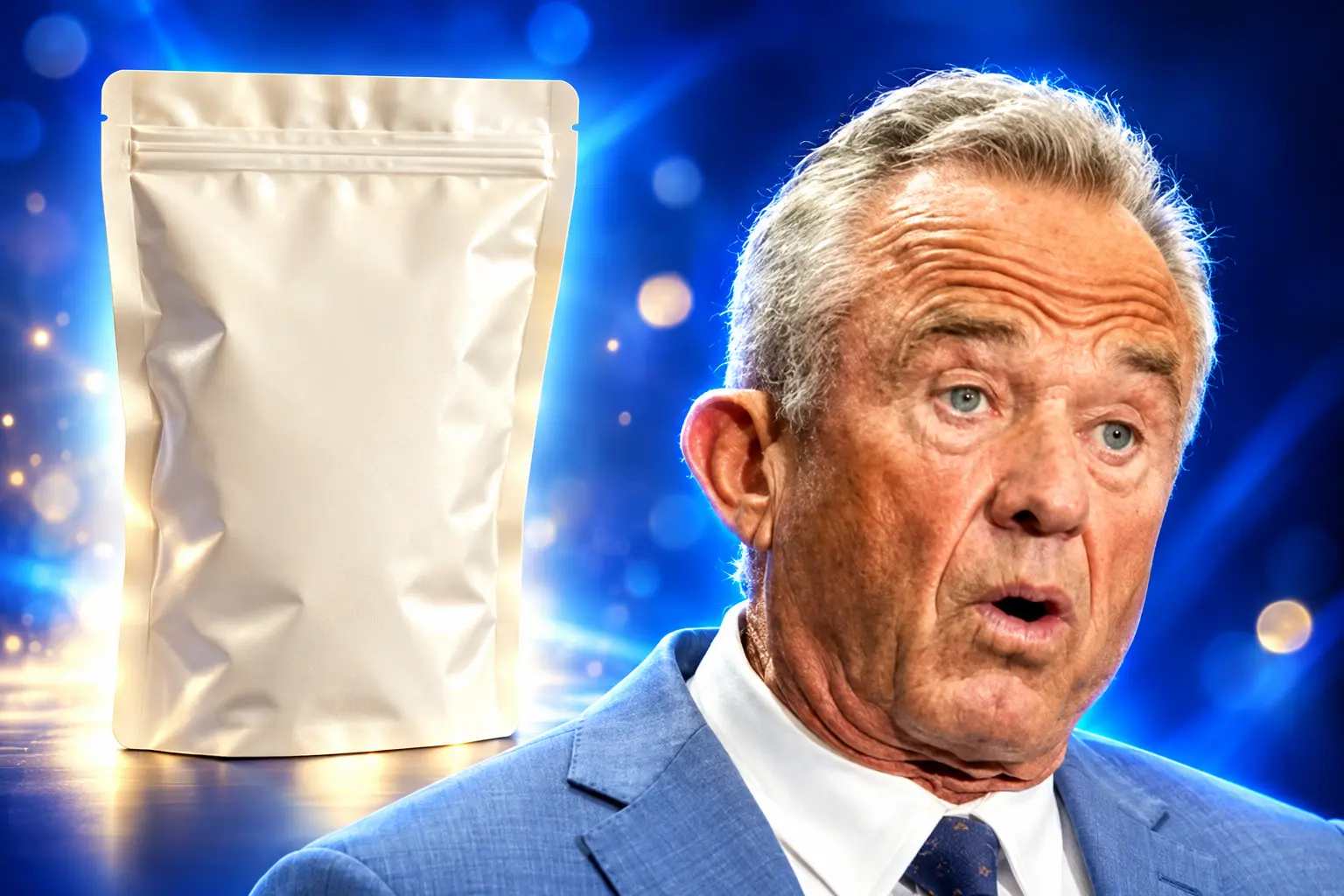
How the Threshold Test Would Work for Ingredients Mixed Into Food
Today’s TOR, at 21 CFR 170.39, applies to a substance in a food-contact article, such as packaging or processing equipment, that migrates into food. The current threshold of regulation criteria require that the substance has not been shown to be a carcinogen, that dietary concentration stay at or below 0.5 parts per billion (1.5 micrograms per person per day on a diet of 1,500 grams of solid food and 1,500 grams of liquid), that it have no technical effect in the food, and that the use have no significant adverse impact on the environment. FDA may still refuse if it sees a public health risk.
The August text would retitle the section “Threshold of regulation for substances used in food or as a food-contact substance.” Proposed 170.39(a) says a substance used in food or as a food-contact substance “will be exempted from regulation as a food additive or from the GRAS notification requirement under § 170.205” if it meets the new tests, because it “becomes a component of food at levels that are below the threshold of regulation.”
The proposed revisions to the threshold of regulation also change the dose math and drop a gate that had kept TOR away from true ingredients.
CURRENT TOR VERSUS THE AUGUST PROPOSAL
| Test | Rule now | August proposal |
|---|---|---|
| What it covers | Food-contact articles (packaging, equipment) | Substances used in food or as a food-contact substance |
| Dietary cap | 0.5 parts per billion, or 1.5 micrograms per person per day | 0.025 micrograms per kilogram of body weight per day |
| Effect in the food | Must have no technical effect in or on the food | That requirement is omitted |
| GRAS notice | Not written as an exception to notices | Exempts the use from the proposed mandatory GRAS notice |
| Cancer screen | Not shown to be a carcinogen; impurity TD50 screen | Still bars known or suspected carcinogens; impurity lifetime risk above one in one million |
FDA still “may decline to grant an exemption” if information shows a public health risk. Carcinogens remain outside the door. The body-weight cap replaces a flat per-person figure, which can be tighter for a small child than 1.5 micrograms per person. Those limits are real. They do not restore the old rule that the chemical cannot be doing a job in the food itself.
Kennedy’s Announcement Never Named the Exemption
On August 10, 2026, Kennedy announced what HHS called a major food-policy reform: an FDA proposed rule requiring mandatory notification for GRAS conclusions. The department fact sheet lists four things the proposal does. Companies would notify FDA of GRAS conclusions. The public inventory of notices would grow. The agency would see more of what enters the food supply. Transparency would rise for consumers and industry. It also describes a time-limited, streamlined path for substances already sold on older self-GRAS claims.
The fact sheet does not mention TOR, section 170.39, a 0.5 parts per billion cap, or substances added directly to food. Public comments, it says, run through December 9, 2026.
The next day’s Federal Register text, which Kennedy signed as secretary, is where the TOR rewrite appears, including the clause that a qualifying use is excused from the notice program the rest of the document creates. At the HHS event he described industry capture of GRAS in a line that has been clipped on repeat since August.
Industry hijacked the loophole and drove a convoy of chemical trucks through it straight into the American food supply.
Robert F. Kennedy Jr., HHS Secretary, August 10, 2026 announcement
He also said the administration was closing that GRAS path “once and for all.” The proposal does not create premarket approval. A GRAS substance is still, by statute, outside the additive petition system. Firms could keep selling while a notice is pending. Failure to file would be a factor in which substances FDA picks for post-market review. The TOR rewrite is how some uses might never join that notice queue.
On X, the fight is still about whether GRAS is already shut. Supporters treat the August event as the end of self-certification. Almost none of that traffic mentions the threshold rewrite in the same PDF, which is how a victory clip and a quieter exemption can travel together.
A Grain-Bag Chemical Already Reached Kids’ Cereal
TOR is not a blank page. The inventory still carries exemption No. 2005-006, requested by Ciba Specialty Chemical Corp. on June 17, 2005, for sodium perchlorate monohydrate as a conductivity enhancer in antistatic agents for polymeric finished articles. The sodium perchlorate monohydrate exemption listing limits the substance to 1.2 percent by weight of the finished polymer, in contact with Food Type VIII only, the dry-food category.
FDA’s own perchlorate questions-and-answers page says manufactured perchlorate is used in rocket propellant, explosives, fireworks, and road flares, and that small amounts, not above 1.2 percent by weight of the finished polymer, may be used in certain containers and equipment that touch only certain dry foods. The food-contact job is antistatic. The same anion is the rocket-propellant chemical.
Perchlorate can block iodide uptake in the thyroid. FDA says fetuses, infants, and newborns face the greatest potential risk because thyroid hormone is needed for brain development. EPA’s reference dose is 0.7 micrograms per kilogram of body weight per day. FDA’s later diet estimates for infants and toddlers ran from 0.36 to 0.48 micrograms per kilogram per day, under that reference dose as an average.
THE PERCHLORATE FILE
- July 17, 1995: FDA issues TOR for substances used in food-contact articles, with the 0.5 parts per billion dietary cap.
- June 17, 2005: Ciba requests a TOR exemption for sodium perchlorate monohydrate in antistatic polymer articles.
- 2005: FDA issues TOR No. 2005-006, capped at 1.2 percent by weight, Food Type VIII.
- 2008 to 2012: FDA tests 5,464 food samples for perchlorate, after 937 samples in 2005 to 2006, and reports no overall change across foods.
- 2016: An FDA dietary-intake paper from those later samples is published; dry baby-cereal composites include rice-cereal results of 173 ppb and 98.3 ppb.
- May 4, 2017: FDA denies a petition to revoke TOR 2005-006 and keeps the dry-food antistatic use, with the inventory later corrected to match the use the agency had reviewed.
Advocates who parsed the cereal rows, including Tom Neltner, now director of Unleaded Kids, and independent consultant Maricel Maffini, focused on dry baby cereal rather than the all-food average. In 2005, 1 of 20 composite dry-cereal baby-food samples, 5 percent, exceeded 3 ppb. In 2008 to 2012, 12 of 80 composites, 15 percent, exceeded 3 ppb. FDA’s all-food finding and the cereal subset are different cuts of the same surveys. The agency kept the exemption.
Neltner said the 2017 decision did not weigh endocrine harm. “They put their blinders on and approved the exemption based on data that never considered the harms posed by endocrine disruptors,” he said. That history is why critics read a wider TOR as more than a paperwork tweak.
Direct Uses Would No Longer Need a Technical-Effect Bar
The buried change is the missing sentence. Current 170.39 says the substance must have “no technical effect in or on the food to which it migrates.” That is how TOR stayed a migrant rule. A flavor, preservative, emulsifier, enzyme, stabilizer, or binder is in the recipe to do work. Under today’s text, that work fails the test.
The proposed (a)(1) through (a)(3) keep a cancer screen, a dietary-exposure cap, and an environmental test. They do not keep the no-technical-effect line. Once that line is gone, a direct food use can be argued as “below the threshold” in the same way a packaging migrant is argued now, and the use would also be excused from the GRAS notice in proposed 170.205.
Maffini, who has worked on TOR for years, said the low-dose premise does not match how many chemicals act. “The FDA and industry have this position that if there’s only a little bit of something in the diet, then it’s not going to be problematic, but that isn’t supported by science of any kind,” she said. She added that she does not know how the agency will “square that circle because there are many ingredients that at very low levels also cause serious issues in the body.”
She flagged flavorings in ultra-processed foods, compounds designed to hit receptors in the mouth. Maria Doa, a scientist at the Environmental Defense Fund, put the politics in one line: “They’re widening another loophole, but trying to say they made our food safer.” Then: “They did not make our food safer.”
Critics also note cumulative dose (many small uses stacked) and a remaining impurity path for carcinogens if the calculated lifetime risk stays under one in one million. The proposal does not create a label so a shopper can see that a TOR-exempted substance is in a product. That is not in the HHS fact sheet.
One Hundred Forty-Four Exemptions Already Sit on an FDA List
TOR is already a working inventory, not a theory. FDA’s public list of exemptions under 170.39, last updated in July 2026, showed 144 records. New files were still being added this year, including a BASF optical brightener in polystyrene and a Henkel chelating agent in can-end cements, both barred from infant formula and human milk in the use limitations.
WHAT THE INVENTORY AND THE GRAS TALLY SHOW
- Active TOR files: 144 exemptions on the July 2026 inventory, all written for food-contact uses under today’s 170.39.
- Secret GRAS set: A 2026 Environmental Working Group analysis with Maffini found 111 food chemicals without FDA notice, 49 of them listed in thousands of products in the Agriculture Department’s Branded Foods Database.
- Voluntary notices: Companies sent FDA 863 GRAS notices between 2000 and 2024; EWG’s 2025 read of that era is that nearly 99 percent of new food chemicals arrived through GRAS rather than full additive review.
- Still food-contact only: Every current TOR file, including 2005-006, is a packaging or equipment use. Direct-ingredient TOR does not exist until a final rule creates it.
If notices become mandatory and public, a company that used to self-GRAS a low-dose processing aid has a reason to ask whether the same use can be a TOR exemption instead. That is the second move inside one rule: shine a light on GRAS, and widen a dimmer door at the same time. FDA would still have to grant each TOR request. The inventory shows it grants them, year after year, when the file stays inside the old packaging box.
Public Comments Close on December 9
The proposal is not in force. Electronic comments on docket FDA-2025-N-3262 must be in by 11:59 p.m. Eastern Time on December 9, 2026. Late comments will not be considered. The Unified Agenda still listed the GRAS notice rule, RIN 0910-AJ02, as economically significant and at the proposed-rule stage.
Kennedy’s August line about closing GRAS “once and for all” is the clip. The PDF he signed is the text that would also let a below-cap substance used in food skip the notice that clip promised. Commenters who want the notice mandate without the wider TOR have until December 9 to say so on the record.
Disclaimer: This article is news reporting and analysis of a proposed FDA food-ingredient rule. It is informational only and is not medical, nutritional, or legal advice, and it is not a determination that any food, package, or chemical is safe or unsafe for any person. Readers who have health questions about perchlorate, thyroid function, infant feeding, or chemical exposures should consult a licensed physician or other qualified clinician, and companies with compliance questions should consult qualified food-and-drug counsel. Figures, docket status, and inventory counts reflect the cited agency and research documents as of the dates given in the article and may change if the proposal is revised, withdrawn, or finalized.

Kering’s Growing Houses Cannot Outrun a Shrinking Gucci

Studio Staff and Bitcoin Buyers Built the Eminem Leak Case

A Mutated H1N1 Strain Is Hitting Younger Immunity First

Albert Heijn Returns at One-Third as Rivals Take Share

Art Basel Paris Ends After One Public Day

Thameslink Will Pad 60,000 Ironing-Board Seats From 2027

How Tall Was Adolf Hitler Really? Debunking the Myth of his Height

Micron Sells the Memory Shortage as Five-Year Contracts

Royal Caribbean Sends Los Angeles Ships to Singapore and Brisbane

U.S. Forces Clear Hormuz Mines, Then Hit Minelayers Again
-
 NEWS2 months ago
Thameslink Will Pad 60,000 Ironing-Board Seats From 2027
-
 SCIENCE3 years ago
How Tall Was Adolf Hitler Really? Debunking the Myth of his Height
-
 NEWS2 months ago
Micron Sells the Memory Shortage as Five-Year Contracts
-
 NEWS2 months ago
Royal Caribbean Sends Los Angeles Ships to Singapore and Brisbane
-
 BUSINESS2 months ago
U.S. Forces Clear Hormuz Mines, Then Hit Minelayers Again
-

 BUSINESS2 months ago
Sweetmore Bakeries Buys Fantasy Baking for Bar Work
-

 BUSINESS2 months ago
L Catterton Installs a Kraft Heinz Operator at Kettle Cuisine
-

 NEWS2 months ago
CISA’s 100 Water System Hacks Hit One-Operator Plants