
BUSINESS
LVMH Fashion Sales Fall 5% After a Court Win Backfires
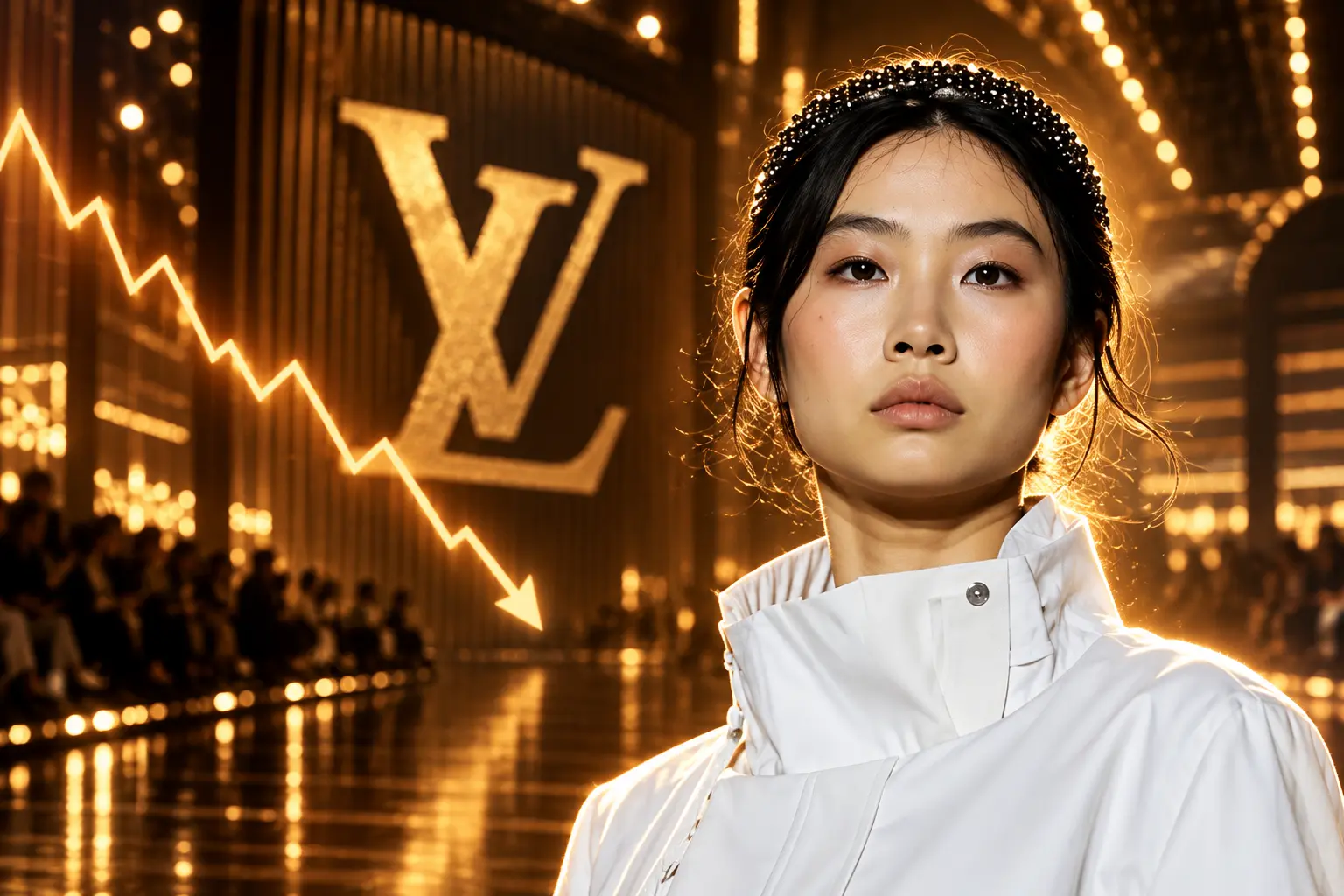
LVMH fashion sales fell 5% in Q3 after a one-quarter rebound, as Louis Vuitton’s China trademark win and weak Chinese demand hit the flagship.

LVMH fashion sales fell 5% in the third quarter, reversing a one-quarter return to growth at the group’s largest business. Fashion and leather goods took in €8.245 billion (about $9.2 billion) in the three months to September 30, the company said on October 12. Group organic revenue still rose 1% to €18.5 billion, because every other division grew.
Louis Vuitton sat just below that 5% decline. The same house had just won a China trademark fight that finance chief Cécile Cabanis said hurt the start of the quarter, on top of a shipping snag that cost a bit more than a point of growth.
Fashion’s One-Quarter Recovery Did Not Hold
The fashion division had posted 1% organic growth in the second quarter, its first gain after seven straight quarters of decline. That print was read as a turn. The third quarter put the unit back in reverse, and the drop was concentrated in the brand that still sets the pace for the whole house.
LVMH revenue of €57.1 billion for the first nine months was up 2% organically and down 2% as reported, against €58.09 billion a year earlier. Scope changes cut 1% and currency cut 3% over nine months. In the third quarter those signs flipped: currency added 2% and scope subtracted 2%. Fashion still accounts for 46% of nine-month sales, at €26.391 billion, down 2% organically and 4% as reported.
HOW THE DIVISIONS MOVED
| Business group | Q3 revenue (€ million) | Q3 organic | 9M organic |
|---|---|---|---|
| Wines & Spirits | 1,429 | +6% | +5% |
| Fashion & Leather Goods | 8,245 | -5% | -2% |
| Perfumes & Cosmetics | 2,008 | +1% | 0% |
| Watches & Jewelry | 2,500 | +6% | +8% |
| Selective Retailing | 4,070 | +8% | +6% |
| Total LVMH | 18,504 | +1% | +2% |
Fashion’s second-quarter rebound had come off a low base. Organic sales in that unit fell 2% in the first quarter, then rose 1% in the second, then fell 5% in the third. The euro figure for the latest quarter, €8,245 million, sat under €8,497 million a year earlier. Cabanis, on the call, called self-help the priority “for performance to improve,” and said the maisons were already showing progress.
A 10.3 Million Yuan Win With a Sales Bill
In May 2025 Louis Vuitton sued Molly Tea, a Shenzhen-based tea chain, over a four-petal floral mark used in its logo and stores. On June 29, 2026, the Suzhou Intermediate People’s Court found infringement of seven registered graphic marks and ordered the chain to stop and to pay RMB 10.3 million in damages and costs, about $1.5 million. The court also found Molly Tea had acted with “significant malicious intent,” after the China National Intellectual Property Administration had rejected the chain’s own floral filings since 2024 as too close to earlier marks, including Louis Vuitton’s. Louis Vuitton first registered the pattern in China in 1986.
The legal file was tidy. The public file was not. When the judgment reached Chinese platforms on July 2, users treated a global luxury house going after a local drinks brand as a mismatch of power, and some argued the quatrefoil echoed older Chinese floral motifs such as Tang-era baoxianghua. By July 7 the Weibo tag on the 10.3 million yuan suit had drawn 400 million views. Molly Tea’s founder said the company would appeal and changed the colour of its WeChat mini-program mark. The chain has more than 2,000 stores.
THE MOLLY TEA CASE
- May 2025: Louis Vuitton files the trademark suit against Molly Tea in China.
- June 29, 2026: The Suzhou court orders the chain to stop using the four-petal mark and to pay RMB 10.3 million.
- July 2, 2026: The ruling spreads on Chinese platforms and the backlash starts.
- July 7, 2026: The main Weibo hashtag reaches 400 million views.
- October 12, 2026: Cabanis tells analysts the episode had a negative sales impact at the start of the third quarter.
Cabanis would not put a number on it. “It’s very difficult to quantify the precise impact, but, net-net, it’s probably fair to say that it had a negative impact, at least at the beginning of the quarter,” she said. A separate hit was mechanical. A freight partner’s disruption weighed on Louis Vuitton by just over one percentage point, she said, and the one-off logistic problem for Louis Vuitton was listed in the investor deck as resolved. Strip that point out and the house still trailed the division. The court award is a rounding error next to €8.245 billion. The cost that showed up in the quarter was the mood around the win.
What Cécile Cabanis Said About China
Chinese clients, counted wherever they shop, were down by a mid-teens percentage in the quarter, Cabanis told analysts. That is a different cut from the regional map. Group sales in Asia excluding Japan fell 5%, after rising 7% in the first quarter and 4% in the second. American clients were up a mid-single-digit rate. Europeans rose modestly. Japanese and Middle Eastern clients were down mid-single digits. She also pointed to a Middle East headwind that had not cleared.
ORGANIC SALES BY REGION
| Region | Q1 | Q2 | Q3 | 9M |
|---|---|---|---|---|
| United States | +3% | +6% | +5% | +4% |
| Japan | -3% | +14% | +6% | +5% |
| Asia (excl. Japan) | +7% | +4% | -5% | +3% |
| Europe | -3% | 0% | +4% | 0% |
Over nine months the geographic mix barely moved: Asia excluding Japan 27%, the United States 25%, Europe excluding France 18%, other markets 14%, France 8%, Japan 8%. The third quarter is where Asia flipped. Cabanis described a Chinese “feel-good” factor that deteriorated at the very beginning of the period, then said trends at the end of the quarter and into the start of the fourth ran ahead of the three-month average, including among Chinese clients. She said the group would not pull back from China because of the tea case.
The third quarter brought a more challenging Chinese consumer backdrop with a ‘feel-good’ factor deteriorating at the very beginning of the quarter, and this added to a Middle East situation that is still a headwind. We hope these situations will subside, but in the meantime, self-help is a priority for performance to improve.
Cécile Cabanis, LVMH chief financial officer, on the Q3 earnings call
She also said the China shift was delaying the recovery rather than breaking it. The regional table is the hard version of that claim: the United States, Japan and Europe all grew in the third quarter, and Japan’s 6% rise followed a 14% burst in the second. Fashion, the division most tied to Chinese demand, was the one that could not absorb the 5% regional decline.
Celine, Dior and the Houses That Still Grew
LVMH does not publish brand sales. Cabanis still gave a ranking. Louis Vuitton was a little worse than the division’s 5% decline. Dior was flat in the quarter, after what the deck called good growth over nine months. Loro Piana was “still enjoying very strong growth.” Rimowa was “also an outperformer.” Celine, she said, is “improving fast and building real momentum in the US.”
Asked whether Jonathan Anderson’s first Dior product had disappointed, she said no. Women’s ready-to-wear was the cleanest read on appetite for his work, and the house was seeing traction there, especially in the United States. Men’s ready-to-wear was “less advanced.” On bags, the work was on existing icons, with more new ones still ahead. A House of Dior flagship opened in September on Via Monte Napoleone in Milan, after Osaka in May. “We believe that Jonathan has a very clear vision for Dior and where he wants to take the brand. He’s been building very nicely and consistently quarter after quarter. So no, we are not disappointed.”
THE FASHION SCORECARD CABANIS GAVE
- Louis Vuitton: Sales just below the division’s 5% drop, after a shipping hit of just over one point and a negative start tied to the Molly Tea case; the house marked 130 years of the Monogram with a new Emblème jacquard, and Cabanis still pointed to bags, store openings, and collections by Nicolas Ghesquière and Pharrell Williams.
- Dior: Flat in the third quarter, with women’s ready-to-wear and leather the strongest proof of Anderson’s mix, and a new Milan flagship in September.
- Celine: US sales up double digits, footwear up double digits, and the Soft Triomphe bag called out; Michael Rider’s collections were “a major success,” and Cabanis said the house now has “the right level of traction to become a growth driver.”
- Loro Piana and Rimowa: Both described as strong; Loro Piana opened a knitwear centre in Ghemme, Italy, and Rimowa launched Classic Titanium and Grid cases.
- Fendi, Loewe, Givenchy: Maria Grazia Chiuri’s first Fendi mix is still early, though a softer Baguette is selling; Loewe’s Amazona 180 and new Whisker bag are the pockets of momentum; Sarah Burton’s ready-to-wear is helping Givenchy.
Those are the self-help lines Cabanis wants judged while China is soft. They are also smaller than Louis Vuitton. A flat Dior and a fast Celine do not cancel a flagship that prints below minus 5%. The creative bets are real, and they are still a hedge, not a replacement.
Sephora, Jewelry and Champagne Carried the Group
Selective retailing, led by Sephora, rose 8% organically in the quarter and 6% over nine months, to €12.476 billion. Sephora added stores in Belgium and Croatia, kept exclusive launches including Rhode and several C-beauty lines, and took share in several countries, the group said. Most of DFS, the travel-retail chain, has been sold. Le Bon Marché’s sales rose. On September 1, Marc Jacobs was sold to WHP Global, a perimeter cut that sits inside the fashion figures going forward.
Watches and jewelry rose 6% in the quarter and 8% over nine months, to €7.725 billion, with jewelry doing the heavy lifting. Tiffany kept pushing HardWear, Knot and Sixteen Stone and showed the Blue Book 2026 Hidden Garden high-jewelry line in Venice after New York. Bvlgari’s Eclettica high-jewelry and watch line “generated record-breaking revenue,” the release said, and the house staged Kaleidos in Shanghai. TAG Heuer leaned on Formula 1 in Madrid. The jewelry run did slow from the second quarter’s 11% organic jump, and from 9% in the first half, which is the same China gravity in a smaller box.
Wines and spirits rose 6% in the quarter and 5% over nine months, to €4.027 billion. Champagne and wines were up 6% over nine months; cognac and spirits were up 4%. Moët & Chandon is in a second season as official champagne of Formula 1. Hennessy had “good momentum in Asia,” and the US saw a new VS ready-to-serve range. Perfumes and cosmetics inched up 1% in the quarter and were flat over nine months, with Parfums Christian Dior and Guerlain named as the supports.
The group that printed 1% organic growth is, in other words, a fashion miss wrapped in a working portfolio. Champagne, Sephora and jewelry did the job Louis Vuitton did not.
October 22 Puts Hermès on the Same Test
Kering and Hermès both publish third-quarter figures on October 22. HSBC has modeled organic growth of 5.3% at Hermès, down from 6.7% in the second quarter, and a 1.6% decline at Kering. Those prints will show whether LVMH’s China quarter was the sector’s quarter. The Q3 2026 revenue presentation and the call already frame LVMH’s own answer: keep the icons, keep the new designers, and wait for Chinese mood to come back.
Cabanis said the group would keep putting money into China. She also said self-help is the lever that has to work until the feel-good factor does. Louis Vuitton still has the Monogram, a resolved shipping line, and a court order in Suzhou. Fashion still has to show that the 5% drop was a bad quarter, not the slope after a one-quarter rebound.
Disclaimer: This article is news reporting on LVMH’s published third-quarter sales and related public remarks. It is for information only and is not investment advice, a recommendation to buy or sell any security, or a forecast of LVMH, Kering or Hermès results. Readers who may act on company figures or luxury-sector estimates should consult a licensed financial adviser who can weigh their own objectives and risk. Revenue figures, organic rates and brand comments reflect the company’s October 12, 2026 release, its investor presentation and the earnings call, and those numbers can be revised in later filings.

Kering’s Growing Houses Cannot Outrun a Shrinking Gucci

Studio Staff and Bitcoin Buyers Built the Eminem Leak Case

A Mutated H1N1 Strain Is Hitting Younger Immunity First

Albert Heijn Returns at One-Third as Rivals Take Share

Art Basel Paris Ends After One Public Day

Thameslink Will Pad 60,000 Ironing-Board Seats From 2027

How Tall Was Adolf Hitler Really? Debunking the Myth of his Height

Micron Sells the Memory Shortage as Five-Year Contracts

Royal Caribbean Sends Los Angeles Ships to Singapore and Brisbane

U.S. Forces Clear Hormuz Mines, Then Hit Minelayers Again
-
 NEWS2 months ago
Thameslink Will Pad 60,000 Ironing-Board Seats From 2027
-
 SCIENCE3 years ago
How Tall Was Adolf Hitler Really? Debunking the Myth of his Height
-
 NEWS2 months ago
Micron Sells the Memory Shortage as Five-Year Contracts
-
 NEWS2 months ago
Royal Caribbean Sends Los Angeles Ships to Singapore and Brisbane
-
 BUSINESS2 months ago
U.S. Forces Clear Hormuz Mines, Then Hit Minelayers Again
-

 BUSINESS2 months ago
Sweetmore Bakeries Buys Fantasy Baking for Bar Work
-

 BUSINESS2 months ago
L Catterton Installs a Kraft Heinz Operator at Kettle Cuisine
-

 NEWS2 months ago
CISA’s 100 Water System Hacks Hit One-Operator Plants