
NEWS
Meloni’s Classroom Cap Will Move Pupils, Not Averages
Italy’s planned classroom cap leaves the 11.6 percent national share untouched and instead forces pupil transfers in northern schools already above the old 30.

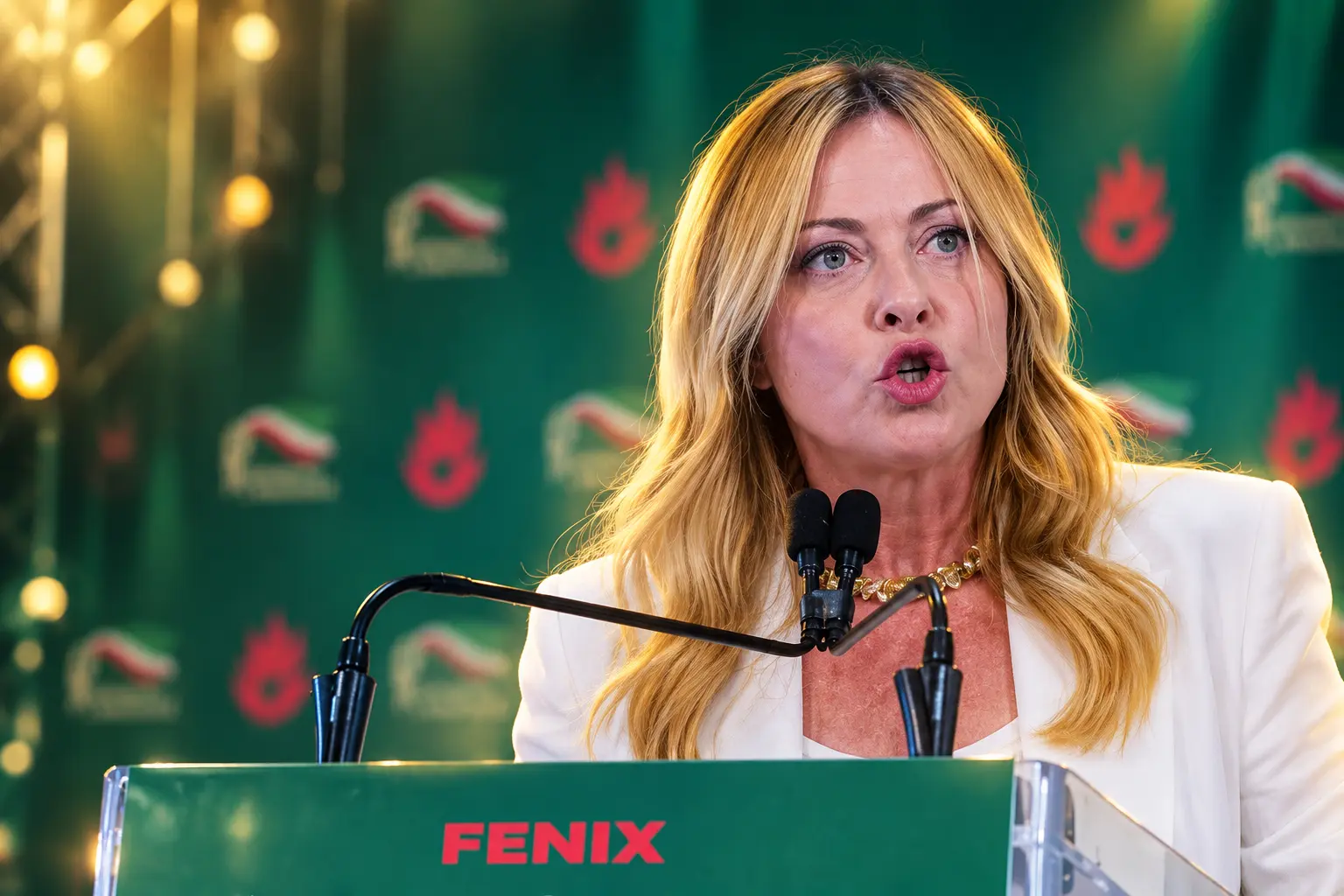
Giorgia Meloni said on Sunday, September 20, 2026, that Italy will set a legal cap on foreign students per class and ban burqas and niqabs in schools. She told the Fenix youth festival in Rome, staged by Gioventù Nazionale, the youth wing of Brothers of Italy, that Italian children must not become a minority at their own desks.
She did not name the figure. A ministry circular has used 30 percent since 2010. Turning that paper limit into statute is what would move children, because thousands of schools already sit above it and most of the pupils counted as foreign were born in Italy.
A 16-Year Circular Becomes a Statute
Education Minister Giuseppe Valditara has been drafting the school package for more than a month. Meloni’s speech gave it a public order to reach the Council of Ministers, as early as Friday, September 25, 2026, or in the days after. The bill, as described by people working on it, would put a maximum number of foreign pupils in each class, make Italian lessons compulsory for parents of children with serious trouble settling in, and bar full-face coverings at school.
The class limit is the piece with machinery behind it. On January 8, 2010, then-minister Mariastella Gelmini sent schools a note that set a 30 percent cap as a rule for pupils without Italian citizenship. Regional directors could raise it when those pupils already spoke Italian. Continuity of teaching and “the absence of alternatives” were also grounds to go above the line. The education ministry still lists that 2010 circular on non-Italian pupils among its intercultural rules.
Valditara told the Chamber of Deputies on September 16, 2026, that the circular suffered from non-application rather than a clean failure. In 2024 his ministry added a separate 20 percent mark for newly arrived pupils, past which a school must assign an extra teacher for Italian. The new text is meant to do what those notes could not: split pupils first across classes in the same building, then, if a school has too few sections, hand the overflow to the regional school office.
HOW THE CAP MOVED FROM PAPER TO A BILL
- January 8, 2010: Gelmini’s circular n. 2 sets a 30 percent presence of non-Italian pupils per class as a rule, with language derogations.
- 2024: A ministry intervention adds a 20 percent threshold for newly arrived pupils and an extra teacher beyond it.
- September 16, 2026: Valditara tells parliament the 2010 note was not applied and that pupils with language trouble must be spread across classes or schools.
- September 20, 2026: Meloni announces a statute on a maximum number, parent Italian lessons, and a ban on burqas and niqabs.
- September 25, 2026: Earliest date given for the package to reach cabinet.
Presidential decree 394 of 1999 already says foreign minors have a right to education in the same forms as Italian citizens and tells teacher boards to avoid so-called ghetto classes. Articles 3 and 34 of the Constitution add equality and the line that school is open to all. A statute that sorts children by passport still has to live with those rules.
11.6 Percent Nationally, and Then the Map
Fondazione ISMU’s 31st report on migration, covering school year 2024/25, counts 931,323 pupils without Italian citizenship, 11.6% of a school population just over 8 million. Twenty years earlier the share was 3.5 percent. In a class of 25, that average is fewer than three children without an Italian passport.
The average is not where the cap would land. ISMU puts the highest incidence in primary school at 13.7 percent, then nursery at 12.7 percent and middle school at 12.6 percent, with upper secondary near 9 percent. Two-thirds of the pupils without Italian citizenship were born in Italy. Ten years earlier that Italian-born share was 51.7 percent.
WHERE PUPILS WITHOUT ITALIAN CITIZENSHIP ARE ENROLLED
| Region or city | Pupils without Italian citizenship, 2024/25 | Share of the national non-Italian total |
|---|---|---|
| Lombardy | about 236,000 | 26% |
| Emilia-Romagna | 112,839 | ISMU headcount |
| Veneto | 94,669 | ISMU headcount |
| Lazio | 80,051 | ISMU headcount |
| Piedmont | 78,256 | ISMU headcount |
| Milan (city) | 79,039 | largest city total |
Some 65 percent of these pupils are in the North. The national documentation centre’s briefing on the same ISMU chapter records about 236,000 non-Italian pupils in Lombardy, then Rome at 63,782, Turin at 39,465 and Brescia at 32,747. Lombardy added about 15,000 such pupils over four school years. Romania is the largest single origin; EU passports account for 44.4 percent of the non-Italian enrolment.
Ministry figures for 2021/22, on 55,026 schools, found 2,125 institutes between 30 and 40 percent non-Italian and 1,822 already at 40 percent or more, nearly 4,000 schools above the circular’s line. In metropolitan Milan, 8.6 percent of schools sat between 30 and 40 percent extra-EU and 9.8 percent were over 40 percent, a count that excludes EU pupils. About 1,000 classes, some 750 of them in primary, have been identified with more than 20 percent first-generation pupils, out of more than 300,000 classes in the country.
Who Counts as Foreign in the Cap
Meloni spoke of “foreign students.” The draft Valditara has been circulating does not treat every child with a migrant family the same way. EU law treats pupils with a Union passport as equivalent to Italians for schooling, so that 44.4 percent slice is outside a nationality cap. Second-generation children who already speak Italian are also in line to be left out if language tests, including low INVALSI Italian scores, are the filter.
Valditara has described the target as children who cannot say good morning or good evening in Italian. That is a language screen, not a headcount of passports. It is also narrower than the political sentence that Italian children have become a minority, because many classmates without Italian citizenship grew up in the same hospitals and nurseries as the children Meloni was addressing.
WHO THE DRAFT LEAVES OUTSIDE A HARD COUNT
- EU passports: Union rules treat these pupils as equivalent to Italians, about 44.4 percent of non-Italian enrolment.
- Italian-born speakers: Two-thirds of pupils without Italian citizenship were born in Italy, and those who already have the language are in line for exemption.
- Tested Italian: The working criterion is weak Italian, including poor INVALSI scores, not a foreign-sounding name.
- The remaining target: Non-EU pupils, often first-generation, who cannot follow the lesson in Italian.
Parent Italian lessons, copied from a German rule, sit beside that screen. They apply to families whose children have serious trouble settling in, not to every foreign household. The political speech still ran on “foreign” and “Italian,” which is the gap principals will have to police with registers and tests.
Regional Offices Will Have to Move Pupils
A school that is already 40 percent non-Italian cannot put every child into classes under 30 percent without changing who is on the roll. Adding extra sections does not fix the mix if the catchment is the mix. Pupils have to leave, or Italian-speaking pupils have to be brought in from other basins, which means new catchment lines and, in practice, buses.
The draft says the first split happens inside one school. A quarter of Italian elementary schools struggle to run more than one section, so many cases go upstairs to the regional office, which is supposed to “sort” pupils into nearby institutes. Valditara has said he will not send a child 20 kilometres, because the constitutional right to education would be in play. Nearby is still another building, another timetable, another walk for a six-year-old whose family lives across the street from the school that took the enrolment.
Alberto Guariso, a lawyer who works on discrimination cases, put the bind in arithmetic terms: the distribution cannot be imposed by law when a school sits in a district of foreign families, and sending those families kilometres away is the idea Gelmini already floated, then never applied. Dividing children by citizenship, he said, would be absurd and discriminatory, because the teaching problem is language, not difference as such. Salvatore Curreri, a constitutional law professor at the University of Enna, pointed to Article 34 and warned that a rule that uprooted minors and their families far from home could overshoot its own integration aim.
Neighborhood Schools Cannot Turn Children Away
Antonello Giannelli, president of the National Association of School Principals, did not contest the teaching point. He contested the map.
In teaching terms the issue is well founded and shareable, but it is hard to find a technical solution. School has to take the enrolments of children from the neighbourhood, especially in nursery and primary. If foreigners are the majority in that area, what do we do? Do we send them away?
Antonello Giannelli, president, National Association of School Principals, to ANSA
That is why the 30 percent circular never took hold, he said. A circular is a recommendation; a law would have more force, and then principals would see how to live with it. He added that the problem cannot be solved by talking only to schools, because some districts concentrate foreign families for housing reasons that no class register can unwind. On signs in class, Giannelli said he personally thinks there should be no distinctive marks and that a person should be recognisable, noting that France already takes that line.
Rossano Sasso, a Futuro Nazionale deputy and former education undersecretary, had pressed Valditara in the Chamber four days before Meloni’s speech, saying that if 12 pupils in a class of 25 do not speak Italian well, the teacher is asked to perform a miracle, and that schools where foreign pupils outnumber Italians are growing. Valditara shot back that the 2010 circular was not his, and that the opposition sounded nostalgic for ghetto classes, one set for foreigners and one for Italians. Elly Schlein, the Democratic Party leader, told Meloni to name an election date. Angelo Bonelli of the Green and Left Alliance said the prime minister was chasing Roberto Vannacci rather than teacher pay.
Vannacci, whose Futuro Nazionale party campaigns on remigration, said he absolutely agrees with the school measures and that they should have come years ago. People must be visible, he added, calling it a security matter as well. That right-flank amen does not write the implementing circular regional offices will need when a primary school in a Milan periphery is already past 40 percent extra-EU.
Faces Uncovered, and a Garment Few Pupils Wear
Meloni paired the cap with a ban on burqas and niqabs. “At school you go with your face uncovered, and in Italy no one, in the name of a real or supposed tradition, can decide that a young woman must hide,” she said. “Equality between men and women is not negotiable. It is not negotiable on our streets, and it is not negotiable in our schools.” She called a classroom where Italian children feel cornered as the minority a lie sold as integration, convenient for people who preach from sitting rooms and send their own children somewhere else.
A burqa covers the body and the eyes with mesh; a niqab covers the face and leaves a slit. A hijab covers hair and neck and leaves the face open. Meloni’s governing line was the uncovered face. Some transcripts of the same speech also said hijab; the package described around the cabinet is a full-face ban in schools. In August, Valditara had already looked at the full-face veil through an amendment to a security bill. In July, Futuro Nazionale moved a resolution against it in the Chamber’s culture committee, rewritten at the government’s request and passed with centre-right votes. The League has a Senate bill that would punish forcing someone to cover their face with one to two years in prison and fines of €10,000 to €30,000 ($11,000 to $33,000), and would block citizenship after a conviction.
France banned concealing the face in public in April 2011, a rule later upheld in Strasbourg. Austria has required visible faces in public since 2017, and from September 2026 it also bars girls up to 14 from wearing at school a veil that covers the head in the Islamic tradition. Denmark has, since 2018, a public face-covering ban, and it lets upper-secondary schools cap pupils of non-Western origin or from poorer districts at 50 percent, a model Rome has watched. France cannot quota by origin because the state does not collect ethnic school statistics; it redraws catchments instead. Italy would be putting a number into statute and then arguing in court about who the number describes.
Teachers who have spent years with foreign pupils keep saying the garment in the speech is not the thing they meet at the blackboard. Language load is. Full-face coverings are rare in Italian classrooms, which is why a ceiling collapse in a Veneto primary, or the price of petrol, rushed into the same argument the moment the veil line left the stage. The international right heard a civilisation clause. The operational file on Valditara’s desk is still a list of classes, tests, and addresses.
The Cabinet Still Has No Final Text
Meloni also said technical and vocational institutes will be allowed to use the name liceo, so the label itself says those tracks are of equal worth. That renaming can pass on its own. The class cap cannot. Until the decree is published, regional offices do not know whether they are counting passports, first-generation arrivals, or children who failed an Italian test, and families do not know whether the school across the street will still have a desk in September 2027, when Italy votes.
WHAT WE KNOW
- The announcement: On September 20, 2026, Meloni said a cabinet measure will set a legal maximum of foreign pupils per class, require Italian for some parents, and ban burqas and niqabs in schools.
- The stock of pupils: ISMU counts 931,323 pupils without Italian citizenship in 2024/25, 11.6 percent nationally, two-thirds of them born in Italy, 65 percent of them in the North.
- The old rule: Gelmini’s 2010 circular already set 30 percent as a rule, with language derogations, and nearly 4,000 schools were above that line in 2021/22.
WHAT IS UNCONFIRMED
- The exact cap: Meloni did not state a percentage; 30 percent is the circular and the working draft, aimed at pupils with little Italian, not at every foreign passport.
- The veil’s legal object: Full-face coverings are the stated target; whether a hair-covering hijab is in the text is not settled in the public drafts.
- The transfer radius: Valditara says nearby schools, not 20 kilometres; the decree has not defined nearby, or who pays for the ride.
If the statute copies the circular’s 30 percent and applies it only to children who cannot follow Italian, most schools will not notice. The ones that will are the northern primaries already past the old line, where the regional office becomes a sorting desk and a child changes building so the percentage on a register comes out clean.

Kering’s Growing Houses Cannot Outrun a Shrinking Gucci

Studio Staff and Bitcoin Buyers Built the Eminem Leak Case

A Mutated H1N1 Strain Is Hitting Younger Immunity First

Albert Heijn Returns at One-Third as Rivals Take Share

Art Basel Paris Ends After One Public Day

Thameslink Will Pad 60,000 Ironing-Board Seats From 2027

How Tall Was Adolf Hitler Really? Debunking the Myth of his Height

Micron Sells the Memory Shortage as Five-Year Contracts

Royal Caribbean Sends Los Angeles Ships to Singapore and Brisbane

U.S. Forces Clear Hormuz Mines, Then Hit Minelayers Again
-
 NEWS2 months ago
Thameslink Will Pad 60,000 Ironing-Board Seats From 2027
-
 SCIENCE3 years ago
How Tall Was Adolf Hitler Really? Debunking the Myth of his Height
-
 NEWS2 months ago
Micron Sells the Memory Shortage as Five-Year Contracts
-
 NEWS2 months ago
Royal Caribbean Sends Los Angeles Ships to Singapore and Brisbane
-
 BUSINESS2 months ago
U.S. Forces Clear Hormuz Mines, Then Hit Minelayers Again
-

 BUSINESS2 months ago
Sweetmore Bakeries Buys Fantasy Baking for Bar Work
-

 BUSINESS2 months ago
L Catterton Installs a Kraft Heinz Operator at Kettle Cuisine
-

 NEWS2 months ago
CISA’s 100 Water System Hacks Hit One-Operator Plants