
NEWS
Issa’s Piracy Bill Follows Hollywood’s Loss at Cox
Five months after Cox, Rep. Darrell Issa’s American Copyright Protection Act would make large ISPs, DNS resolvers, and VPNs carry court-ordered site blocks.

Rep. Darrell Issa filed H.R. 10364 on September 14, 2026, five months after the Supreme Court told copyright owners they could not collect piracy damages from a broadband provider. The American Copyright Protection Act would let those owners obtain court orders that force large internet providers, public DNS resolvers, and VPN services to block foreign piracy sites.
The measure was referred to the House Judiciary Committee the same day, with no cosponsors. It is the first U.S. blocking bill to put virtual private networks in the definition of who must carry out the order.
After Cox, Hollywood Came Back With a Blocking Statute
On March 25, 2026, the Court reversed a $1 billion jury award that Sony Music Entertainment and other labels had won against Cox Communications. Cox serves about 6 million subscribers. During the period at issue, the monitoring firm MarkMonitor sent the company 163,148 notices tying subscriber IP addresses to alleged infringement, and a jury later found Cox liable for 10,017 songs.
Justice Clarence Thomas wrote for the Court. A provider is contributorily liable, he said, only if it intended the service to be used for infringement, shown by inducement or by offering a service tailored to that use. Cox did neither. Internet access has many lawful uses, and knowledge that some customers infringe is not enough.
Under our precedents, a company is not liable as a copyright infringer for merely providing a service to the general public with knowledge that it will be used by some to infringe copyrights.
Justice Clarence Thomas, Cox Communications v. Sony Music Entertainment, March 25, 2026
The result was unanimous. Justices Sonia Sotomayor and Ketanji Brown Jackson concurred in the judgment. Cox spokesman Todd Smith called it a decisive win for broadband and said the opinion affirms that internet service providers are not liable as a copyright infringer for customer conduct and “are not copyright police.”
That is the hole the Issa bill tries to fill. If labels cannot collect statutory damages of up to $150,000 per work from a carrier that keeps serving accused pirates, they want a court that can order the pipe, the resolver, and the VPN to cut the site off instead.
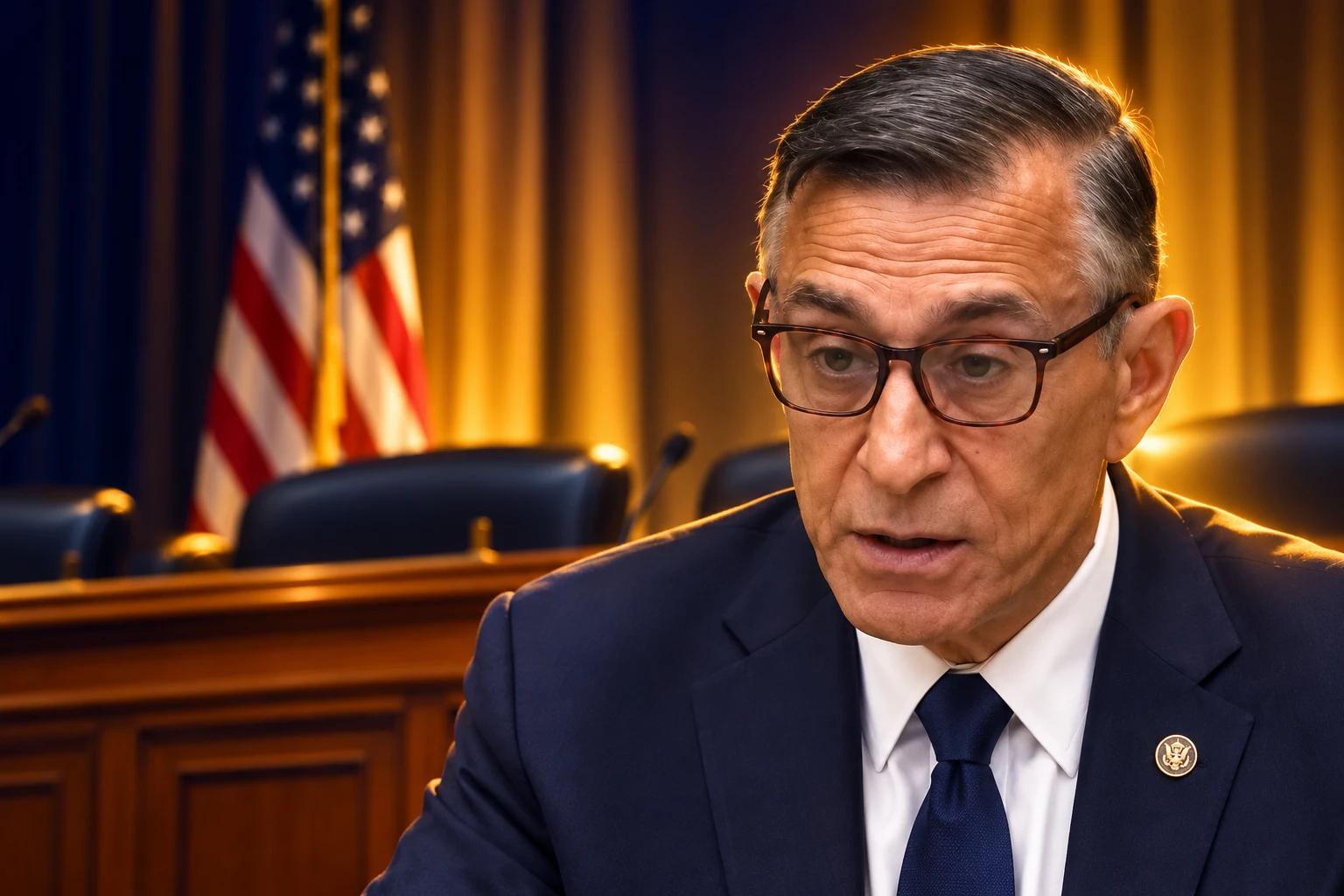
H.R. 10364 Names ISPs, DNS Resolvers, and VPNs
The circulating copy of the introduced bill, dated September 14, 2026, would add a new Chapter 16 to title 17 of the U.S. Code. The Government Publishing Office had not yet posted the text on Congress.gov by late September, but the draft that moved among lawmakers is a complete two-step process, not a takedown notice.
A copyright owner first asks a designated federal district court to declare that a foreign site is a “foreign piracy site,” proved by a preponderance of the evidence. The owner must show the operator is abroad or cannot be found in the United States after a reasonable search, that notice went to the operator and the registrar, and that the location is primarily designed for infringement, has only limited other commercial use, or is marketed to promote infringement.
If that declaration stands, the owner may petition for a blocking order. Named providers would have to take “all commercially reasonable steps” to stop users from reaching the site from the United States. The Copyright Office would get a notice for the Federal Register. The owner would post a bond set by the court to cover costs and damages if a provider is wrongly enjoined.
WHAT THE FILED TEXT SETS
| Rule | Filed text |
|---|---|
| Covered providers | Broadband, DNS resolvers, and VPNs |
| Size cutoff | Under 100,000 monthly U.S. users or subscribers are out |
| Standard of proof | Preponderance of the evidence |
| Time to respond | At least 14 days after the petition is filed |
| Time to comply | 14 to 30 days after notice of the order |
| Order length | Up to 12 months, renewable for another 12 months |
| Wrongful-block cap | $250,000 if the copyright owner caused the error |
Root nameserver operators and top-level domain registries are carved out. So are cafes, airports, libraries, universities, and stores that only resell someone else’s connection to people on the premises. A judge may appoint a special master to test whether the owner met its burden.
A foreign operator that wants the declaration lifted has a steep on-ramp. It must submit to the court’s jurisdiction, waive most objections to venue and service, and post a bond large enough to cover a judgment on the alleged infringement. That is the leverage: unblocking means walking into a U.S. courtroom.
The 100,000-User Line and the 14-Day Clock
Issa chairs the House Judiciary Subcommittee on Courts, Intellectual Property, Artificial Intelligence, and the Internet. At a June 30, 2026 hearing titled “A Midlife Crisis? IP and the Internet After 40,” he asked whether blocking could move “at the speed of sound” or “at the speed of light,” and whether it could land inside a 45-minute live sports window, “soon enough to make it no longer profitable for those who pop up and sell their clandestine wares.”
The filed text tries to answer that with a second clock. A “time-sensitive event” is a work first shown to the public at the same time as, or not more than 24 hours after, the first authorized public performance. Section 1608 lets a judge shorten the usual deadlines for those events. In ordinary cases, a named provider still gets at least 14 days to appear and respond, then 14 to 30 days after notice to put the order in place.
The 100,000 monthly-user cutoff is the other gate. It pulls in national broadband companies, the large public resolvers, and any VPN with a sizable U.S. base. It leaves hobby networks and shop Wi-Fi alone. A third party whose lawful site is blocked because the copyright owner made an error can seek damages, capped at $250,000, and only if that error caused the injury.
Those limits are the bill’s reply to the SOPA fight. They do not change who has to do the blocking once an order issues.
Why an ISP Block Is Easy to Walk Around
An ISP can sinkhole a domain on its own resolver. A customer who points the same laptop at a public DNS service still reaches the site. Google Public DNS and Cloudflare’s 1.1.1.1 sit on the live side of that line; root servers and the.com registry sit on the carved-out side. A blocking order that never leaves the broadband pipe is, in practice, a suggestion.
A VPN is the next hop. The product’s promise is that the ISP cannot see the destination. If the VPN itself is told to refuse the host, that promise becomes the enforcement point. An earlier Issa discussion draft covered ISPs and DNS resolvers. The September text adds “virtual private networks” by name.
How a global VPN would block “from the United States” is not spelled out. The duty is commercially reasonable steps, not a mandated filter design, and the bill does not require providers to break encryption. That still leaves a product built to hide destinations with a court paper telling it to start looking.
Meredith Rose, senior policy counsel at Public Knowledge, said the DNS piece is the one that does not stop at the border. One filing, on an expedited clock, could produce a global cut because a public resolver answers queries everywhere, not only for U.S. broadband customers. She called the project a sweeping infrastructure for censorship that goes after pipes instead of the people who run the overseas sites.
Today, @repdarrellissa introduced the “American Copyright Protection Act of 2026” which would allow rightsholders to secure “blocking orders” against foreign websites accused of copyright infringement.
— Public Knowledge (@publicknowledge) September 15, 2026
The version of the story that spread on X treated H.R. 10364 as a finished nationwide wall that a VPN cannot pass. The filed text is a court process. A VPN would have to be named in an order, clear the 100,000-user line, and take commercially reasonable steps. No such order exists, because the bill is not law.
Lofgren Filed First, and a Senate Draft Is Waiting
Issa’s bill is not the only blocking text on the Hill. Rep. Zoe Lofgren, a California Democrat, introduced the Foreign Anti-Digital Piracy Act, H.R. 791, on January 28, 2025. The Congressional Research Service summary describes a petition for a preliminary order, then a blocking order aimed at broadband providers, with the copyright owner paying reasonable compliance costs. It does not put VPNs in the operative definition the way Issa’s text does.
A separate Senate draft, the Block Bad Electronic Art and Recording Distributors Act, was circulated in July 2025 by Sens. Thom Tillis, Chris Coons, Marsha Blackburn, and Adam Schiff. The Council for Innovation Promotion, in a June 29, 2026 letter to Issa’s subcommittee, backed a judicial blocking regime and named FADPA and Block BEARD as bills that reach only foreign sites primarily dedicated to infringement, require a full court process, and shield intermediaries that comply.
THREE LIVE BLOCKING TRACKS
| Bill | Lead sponsors | When it landed | Who the summaries cover |
|---|---|---|---|
| American Copyright Protection Act, H.R. 10364 | Rep. Darrell Issa (R-Calif.) | September 14, 2026 | Broadband, DNS resolvers, and VPNs |
| Foreign Anti-Digital Piracy Act, H.R. 791 | Rep. Zoe Lofgren (D-Calif.) | January 28, 2025 | Broadband providers, per the CRS summary |
| Block BEARD Act | Sens. Tillis, Coons, Blackburn, and Schiff | July 2025 draft | Foreign sites primarily dedicated to infringement, with a judicial process |
The Motion Picture Association has been asking for this tool since April 2024, when Chairman and CEO Charles Rivkin told CinemaCon the group would work with Congress to enact judicial site-blocking legislation in the United States. He pointed to FMovies, which he said drew more than 160 million visits a month, with a third of that traffic still coming from the United States because other countries already block and the U.S. does not.
An MPA letter for Issa’s June 2026 hearing said more than 50 countries have imposed site-blocking and that the United States still lacks a mechanism. By late September the association had not issued a statement on the filed Issa text, and Issa’s office had not put out a press release on the introduction.
Italy Blacklisted Innocent Sites for 320 Days
Public Knowledge and Re:Create, a coalition that backs balanced copyright rules, argue the European record is the preview. Rose said overblocking in Europe has taken down hotels, car shops, retail sites, telehealth programs, and a nunnery, and that small firms have the fewest tools to get a bad block lifted. America’s small businesses, she said, cannot be treated as acceptable collateral for entertainment and sports companies.
Brandon Butler, executive director of Re:Create, said the Issa bill “is anything but American,” because it copies a one-sided European process that, in his view, has produced censorship. Forcing pipes, resolvers, and VPNs to filter traffic, he said, threatens privacy and invites abuse against small businesses, nonprofits, and users far from the U.S. case.
OVERBLOCKS RE:CREATE CITES
- Italy’s Piracy Shield: Re:Create says 510 benign sites blocked in Italy, including a Catholic convent and a telehealth platform.
- Time to clear: Innocent sites stayed blacklisted for 320 days on average, cutting small firms off from customers.
- Spain on match days: 5.8 percent of the popular internet was blocked during LaLiga matches, including Harvard University and Greenpeace.
Issa’s $250,000 cap and the bond are the bill’s answer to that record. Opponents say a small shop that goes dark for months still cannot wait on a later check, and that a public resolver block does not stay inside one country even when the order does.
Issa Retires With the Bill Still in Committee
Site-blocking in Congress has a long shadow. The Protect IP Act, PIPA, was filed on May 12, 2011. The Stop Online Piracy Act, SOPA, followed on October 26, 2011. Both died after protests in 2012. The new bills try to look narrower: foreign sites, a judge, a preponderance standard, a user cutoff, and a damages cap. They still ask networks to refuse destinations on pain of a court order.
FROM SOPA TO THE ISSA FILING
- May 12, 2011: PIPA is introduced in the Senate.
- October 26, 2011: SOPA is introduced in the House.
- 2012: Public protests halt both bills.
- April 2024: Rivkin pledges an MPA campaign for U.S. judicial site-blocking.
- January 28, 2025: Lofgren files FADPA.
- March 25, 2026: The Court reverses the Cox damages award.
- June 30, 2026: Issa’s subcommittee hearing tees up live-event speed.
- September 14, 2026: H.R. 10364 is introduced and sent to Judiciary.
Issa is retiring from the House at the end of 2026. If this text does not move in the current session, he will not be in office to refile it. Lofgren’s bill and the Senate draft would still be on the table. None of the three has been reported out of committee.
Cox took the damages stick away from copyright owners. H.R. 10364 is the replacement they are asking Congress to hand them, written so the order can follow a user off the ISP, through public DNS, and into a VPN. For now it is a referral, a circulating PDF, and a fight that has not reached the floor.
Disclaimer: This article is news reporting and analysis of proposed legislation and a completed Supreme Court case. It is for information only and is not legal advice, a prediction of how any court would rule on a future blocking petition, or guidance on copyright compliance. Readers who may be affected by a blocking order, a copyright claim, or network design choices should consult a qualified attorney licensed in the relevant jurisdiction before acting. Bill status, committee action, and the figures cited here reflect the public record available on the dates of the underlying filings and statements and may change if Congress amends the text or if agencies and courts issue later orders.

Kering’s Growing Houses Cannot Outrun a Shrinking Gucci

Studio Staff and Bitcoin Buyers Built the Eminem Leak Case

A Mutated H1N1 Strain Is Hitting Younger Immunity First

Albert Heijn Returns at One-Third as Rivals Take Share

Art Basel Paris Ends After One Public Day

Thameslink Will Pad 60,000 Ironing-Board Seats From 2027

How Tall Was Adolf Hitler Really? Debunking the Myth of his Height

Micron Sells the Memory Shortage as Five-Year Contracts

Royal Caribbean Sends Los Angeles Ships to Singapore and Brisbane

U.S. Forces Clear Hormuz Mines, Then Hit Minelayers Again
-
 NEWS2 months ago
Thameslink Will Pad 60,000 Ironing-Board Seats From 2027
-
 SCIENCE3 years ago
How Tall Was Adolf Hitler Really? Debunking the Myth of his Height
-
 NEWS2 months ago
Micron Sells the Memory Shortage as Five-Year Contracts
-
 NEWS2 months ago
Royal Caribbean Sends Los Angeles Ships to Singapore and Brisbane
-
 BUSINESS2 months ago
U.S. Forces Clear Hormuz Mines, Then Hit Minelayers Again
-

 BUSINESS2 months ago
Sweetmore Bakeries Buys Fantasy Baking for Bar Work
-

 BUSINESS2 months ago
L Catterton Installs a Kraft Heinz Operator at Kettle Cuisine
-

 NEWS2 months ago
CISA’s 100 Water System Hacks Hit One-Operator Plants